Learning to Be Chinese: Welcoming the God of Wealth on the Fifth Day of the Year- 3 Key Tips to Grab a Year of Prosperity!
I. Introduction
To truly “learn to be Chinese,” understanding Spring Festival customs is essential—and welcoming the God of Wealth on the fifth day is one of the most vibrant and meaningful rituals. It’s not superstition, but a time-honored cultural code that carries Chinese people’s wishes to bid farewell to the old, usher in the new, and pray for a prosperous, smooth year. Moreover, it’s a great window to learn about Chinese culture and practice traditions.
Since I was a child, I’ve celebrated this day with my grandma—watching her sweep the house, arrange offerings, and welcome the God of Wealth. Now I finally understand: the urgent sound of firecrackers in the early morning of the fifth day is a special ritual for welcoming the God of Wealth, hiding the deep-rooted desire for blessings in Chinese people’s hearts, as well as many details and the underlying logic of this ritual.
For those who want to celebrate Chinese New Year like locals and understand Chinese customs, welcoming the God of Wealth on the fifth day is a complete ritual that includes background, practical steps, and taboos. Drawing on my grandma’s decades of experience, this guide is tailored for beginners, walking you through the ritual step by step from three dimensions—understanding the tradition, mastering the steps, and avoiding mistakes—to help you eliminate confusion and learn easily.
To perform this ritual well, the first step (and the first of the “3 key tips”) is to understand its core logic and the system of Wealth Gods. Next, we’ll start with the theory, combined with my grandma’s explanation of folk customs, to break down the core background of welcoming the God of Wealth on the fifth day, starting with the basic question: “Why choose the fifth day?”
II. Theory: The Basics of Welcoming the God of Wealth
1. Timing: Why the Fifth Day?
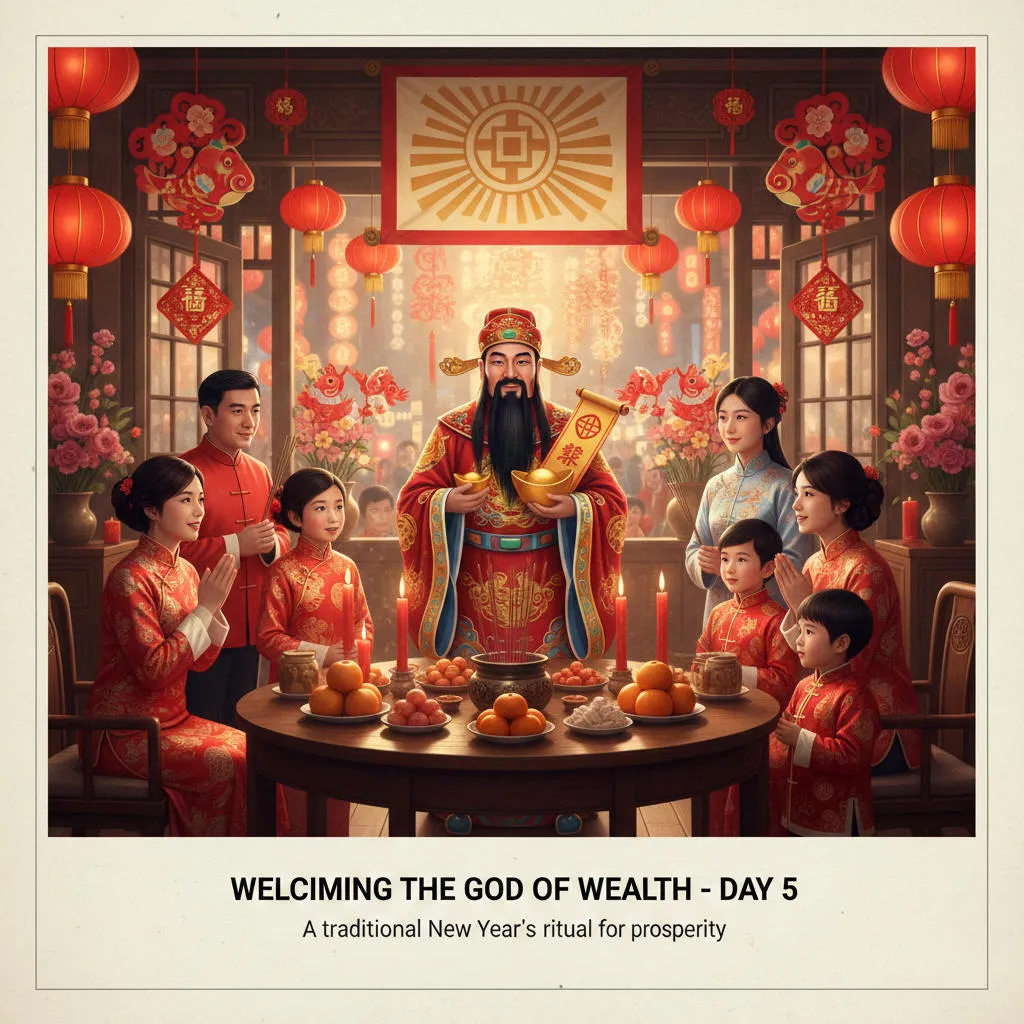
To understand the core logic of welcoming the God of Wealth on the fifth day, we first need to figure out why this specific day is chosen—it’s also the first key question we need to answer in the introductory theory section. Folk beliefs hold that the fifth day of the first lunar month is the “auspicious day” for the Five Paths of Wealth Gods[②]. Legend has it that on this day, the Five Paths of Wealth Gods descend to earth to bestow blessings, making it the perfect day to gather and welcome them.
Welcoming the God of Wealth and praying for fortune on this day is the most auspicious blessing ceremony of the year, which is also the core reason why Chinese people focus on welcoming the God of Wealth on this day. The fifth day is also known as “Po Wu” (Breaking Taboos)[④]. “Po” (breaking) means breaking the taboos from New Year’s Eve to the fourth day: sweeping away bad luck, sending poverty away, and welcoming wealth and blessings. It’s a key node of “bidding farewell to the old and ushering in the new,” and welcoming the God of Wealth, as the core ritual of Po Wu, carries Chinese people’s beautiful wish of “saying goodbye to poverty and welcoming prosperity.”
There are slight differences in the timing of welcoming the God of Wealth in different regions: people in northern China usually do it in the early morning, while those in some southern regions do it at dawn. Although the timing varies, the intention is the same—all are to express wishes for good fortune in the new year.
My grandma often recites an old poem to me: “Seek wealth on the fifth day, fulfill your wish in a moment; don’t let others welcome the god first!” She says this poem depicts how eager ancient people were to welcome the God of Wealth, fearing that they would miss a year of good fortune if they were a little late.
Last Year of the Horse, I helped my grandma prepare offerings before Zishi[③] (11:00 PM – 1:00 AM). Watching her pray devoutly, I suddenly realized: this eagerness hides Chinese people’s sincere longing for a prosperous life, and it also confirms the importance of welcoming the God of Wealth on the fifth day in folk customs.
2. The God of Wealth: Who Do Chinese People Usually Welcome?
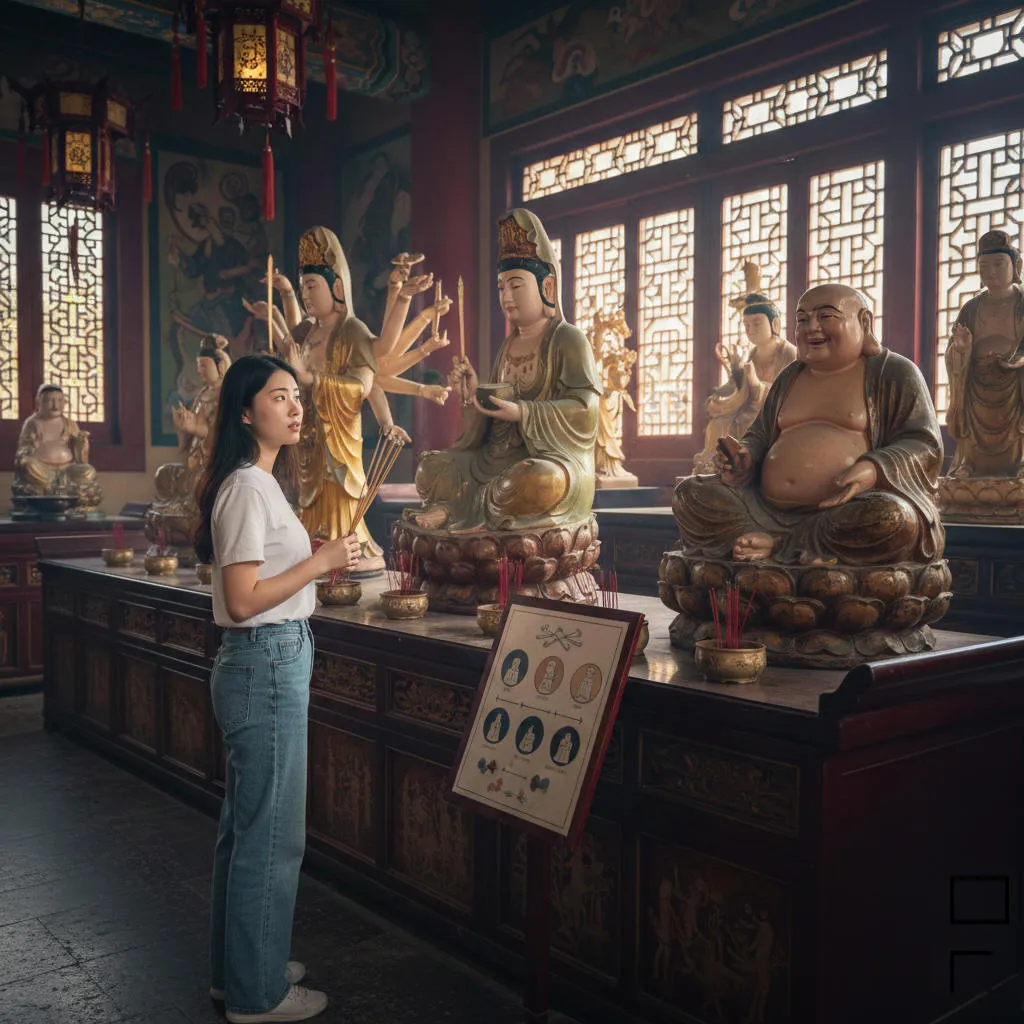
After understanding the timing, another key preparation before welcoming the God of Wealth is to recognize different Wealth Gods, so that you can pray more targetedly. The Wealth Gods commonly welcomed by Chinese people are mainly divided into three systems—the Five Paths of Wealth Gods[②], Martial Wealth Gods[⑥], and Civil Wealth Gods[⑦]. These three systems do not conflict with each other, and each has its own focus in meaning.
This is also the core theory that must be mastered before practicing the ritual of welcoming the God of Wealth. Different groups of people can choose the suitable Wealth God according to their own needs. Beginners don’t need to overthink—just choose the one that fits you and pray with sincerity.
(1) First System: The Five Paths of Wealth Gods
Core feature: Based on the five elements and directions, it focuses on “blessings from all regions and wealth from all directions.” There’s no need to distinguish complex images, so beginners can practice it directly. It’s suitable for all ordinary families to pray for general fortune, and it’s also the most commonly used and easiest way to welcome the God of Wealth among folks.
It consists of 1 main Wealth God and 4 auxiliary Wealth Gods. The main Wealth God is Zhao Gongming, and the 4 auxiliary Wealth Gods are his subordinates, each in charge of fortune in one direction, complementing each other and indispensable—this is what my grandma has told me since I was a child.
Main Wealth God · Zhao Gongming: He is also one of the Martial Wealth Gods. He is depicted with a dark face, thick beard, an iron crown on his head, and armor on his body. He holds a steel whip in one hand and ingots in the other, riding a black tiger (also known as “Black Tiger Mysterious Altar”). Popularized by “Fengshen Yanyi” (Investiture of the Gods), he was appointed as the main god in charge of wealth in the world. He can not only ensure profitable business, but also drive away diseases, ward off disasters, and uphold justice, making him the core leader of the Five Paths of Wealth Gods.
As my grandma often says, welcoming Zhao Gongming in ordinary families can both attract wealth and protect the home, which is suitable for most people’s needs when welcoming the God of Wealth.
(2) Second System: Martial Wealth Gods
Core feature: Focusing on “protecting wealth, guarding the home, and avoiding disputes,” they are mostly depicted as powerful and resolute. They are suitable for businessmen, people engaged in business transactions, or families who hope to protect their home and stay away from conflicts. The core is “protecting wealth + guarding the home,” taking into account both fortune and peace.
– Martial Wealth God · Guan Gong: Symbolizing loyalty and trustworthiness, he is especially suitable for businessmen to welcome. It implies “taking righteousness as profit”—he can not only bless prosperous business and stable customers, but also protect the home and stay away from disputes. Many businessmen worship Guan Gong in their stores.
– Martial Wealth God · Zhao Gongming: He has dual identities as the main god of the Five Paths of Wealth Gods and a Martial Wealth God. His core role is to bless profitable business, drive away diseases, ward off disasters, and protect the home from evil. He is the most revered Martial Wealth God among folks, suitable for all people who hope to protect their wealth and home.
For beginners: If you are engaged in business or sales, prioritize Martial Wealth Gods[⑥]; if you are an ordinary family, choose Zhao Gongming—he can both attract wealth and protect the home. There’s no need to prepare complex worship rituals; just arrange the offerings[⑤] and pray with sincerity, which is exactly what my grandma has always done.
(3) Third System: Civil Wealth Gods
Core feature: Focusing on “gaining wealth through wisdom and accumulating wealth steadily,” they are mostly depicted as elegant and dignified. They are suitable for ordinary people, office workers, entrepreneurs, or anyone who hopes to accumulate wealth through their own wisdom and efforts. The core is “stable wealth + wise wealth,” praying for steady improvement in fortune.
– Civil Wealth God · Bi Gan: Fair and impartial, without selfishness or bias, he is regarded as a symbol of “fair wealth attraction.” He is suitable for ordinary people and office workers to welcome, praying for stable fortune, smooth everything, and no disputes—especially suitable for office workers who hope to get a salary increase.
– Civil Wealth God · Fan Li: A wise man who became rich through business. He was good at managing money, accumulating wealth, and making steady progress, representing “gaining wealth through wisdom.” He is suitable for those who pray to accumulate wealth through their own wisdom, develop business steadily, and retain wealth for a long time—entrepreneurs can prioritize choosing him.
After mastering the suitable scenarios for different Wealth Gods (the first of the 3 key tips), combined with the preliminary poverty-sending ritual, you can smoothly start the subsequent practical link of welcoming the God of Wealth (the second of the 3 key tips). My grandma often says, “Only when you understand the folk customs can you perform the ritual well.” Next, follow my grandma’s old methods to practice sending poverty and welcoming the God of Wealth step by step—beginners can do it without mistakes!
III. Practice: Step-by-Step to Send Poverty & Welcome Wealth
1. Preliminary Practice: The Poverty-Sending Ritual in the Year of the Horse to Clear the Way for Wealth
Sending poverty away is an indispensable preliminary ritual for welcoming the God of Wealth. Its core is to send away the Five Poverty Spirits[①] (also known as Five Ghosts, specifically referring to bad luck in wisdom, learning, writing, fate, and relationships), sweep away the bad luck at home, and clear the way for welcoming the God of Wealth.
This custom can be traced back to the Six Dynasties. The ancients hoped to get rid of poverty and welcome prosperity through this ritual. This wish is highly consistent with the expectation of welcoming the God of Wealth, and it is still an important prelude to welcoming the God of Wealth on the fifth day today. Combined with traditional and modern living scenarios, the method of sending poverty away is simple and easy to operate. I practice it with my grandma every year, and beginners can refer to it directly.
Core steps of sending poverty away (preferably done at dawn, in line with the custom of sweeping dust on Po Wu):
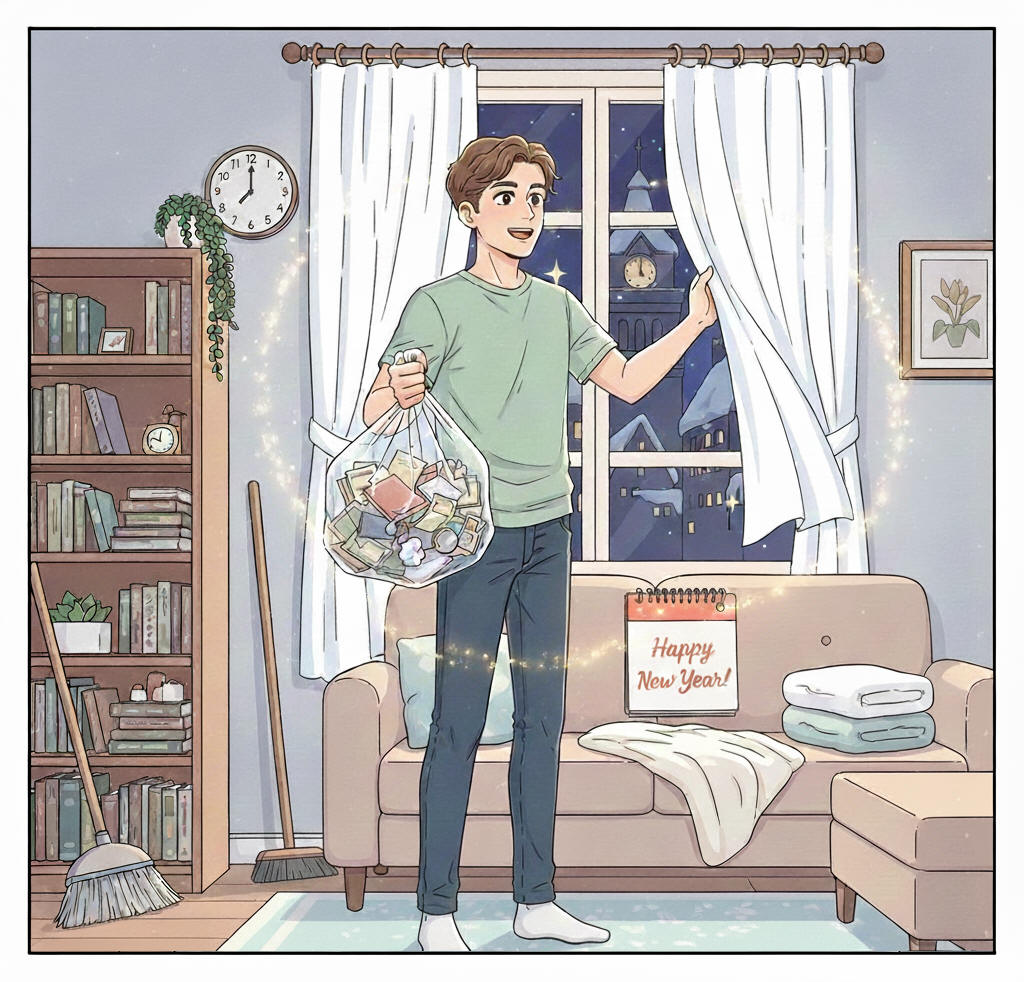
- Core Step 1: Sweep to gather bad luck: At dawn, take a broom and sweep from the bedroom to the living room, then from the living room to the door (never sweep in the opposite direction). Gather the garbage and dust from New Year’s Eve to the fourth day in the corner of the door, put them into a garbage bag together, implying “gathering all bad luck and sending it away at once.” Focus on cleaning the corners—there’s no need for a full-house cleaning.
- Core Step 2: Send poverty away and recite auspicious words: Hold the garbage bag with both hands and walk outside the house (for high-rise residents, you can go to the doorway). While handing over the garbage bag, softly recite auspicious words (core: “Poverty ghost leaves, blessings come, bad luck goes, wealth arrives!”) and repeat 2-3 times.
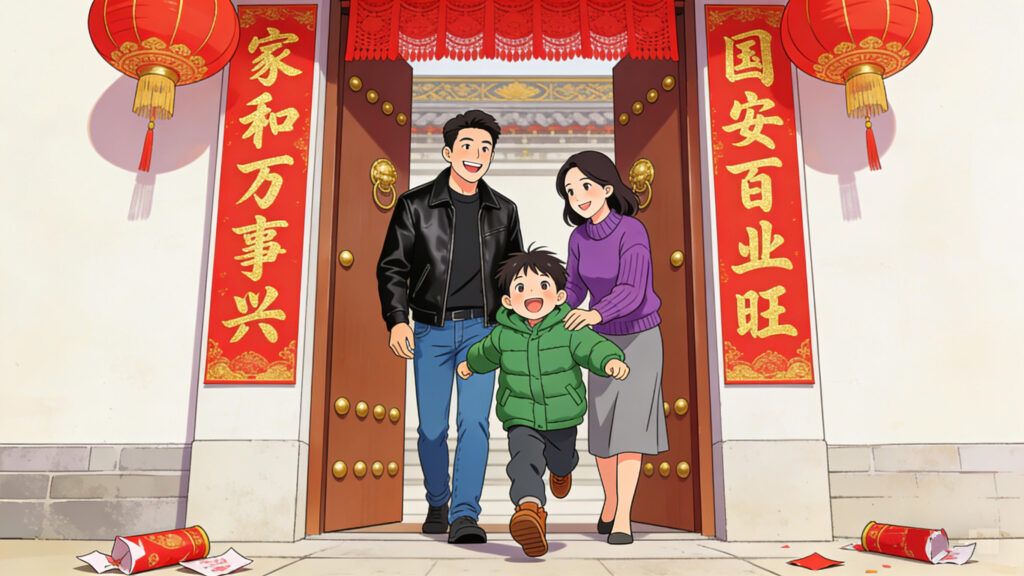
- Core Step 3: Conclude with a ritual touch: After throwing away the garbage, light electronic firecrackers (traditional firecrackers are prohibited in high-rises) and set them off from inside to outside; if you don’t have electronic firecrackers, you can clap 3 times and recite the auspicious words again to express your sincerity in sending poverty away and welcoming wealth.
Tips for beginners: High-rise residents can wrap the garbage in red paper to send poverty away, and it’s not advisable to set off firecrackers on the balcony—you can replace it with clapping and reciting auspicious words; office workers can simply clean the doorway and recite an auspicious word before going out in the morning.
The core is sincerity—there’s no need to stick to rigid forms, just adapt to modern life. After sending poverty away and sweeping away bad luck, we will officially enter the core link of welcoming the God of Wealth. Drawing on my grandma’s decades of practical experience, I have broken down the ritual into 5 parts. Beginners can follow the steps and do it without mistakes.
2. Core Practice: The Wealth-Welcoming Ritual, Step by Step
Important reminder: There’s no need to pursue “perfection” when welcoming the God of Wealth. As long as you follow the steps and pray with sincerity, everyone can seize a year of good fortune. Sending poverty away has already removed the “obstacles,” and next comes the most anticipated part—welcoming the God of Wealth.
Based on my grandma’s decades of practical experience, I have simplified the complex ritual into a “beginner-friendly, mistake-free version,” which is carried out in the order of “preliminary preparation → time selection → core steps → mistake avoidance reminders → modern fun ways.” No need to memorize by rote—just follow along to seize the fortune.
(1) Preliminary Preparation: Arrange Offerings for Welcoming the God of Wealth, Sincerity First
Many beginners feel confused about preparing offerings. In fact, my grandma often says: “The God of Wealth doesn’t care about fancy gifts—sincerity is the most precious.” Combining my grandma’s practical habits, I have sorted out a “basic must-have + flexible replacement” list. You can start with 3 items, and even home-cooked ingredients can show your sincerity.
– Basic offerings (3 items are enough, implying a complete welcome of wealth): 1 fish (preferably carp, which sounds like “profit” in Chinese; if there’s no carp, you can use crucian carp or grass carp instead; if it’s inconvenient to prepare raw fish, cooked fish or dried fish are also acceptable), 1 drink (both God of Wealth wine and warm water are fine—cold water is forbidden), 1 small plate of home-cooked dishes (green vegetables or tofu are perfect).
Supplementary adaptation: Priority is given to raw fish; there’s no need to cook it, implying “endless vitality and lasting wealth”; vegetarians can replace it with tofu, green vegetables paired with fruits, and if there’s no Wealth God cake, you can use steamed buns or bread instead.
– Optional extras (add if you want more ritual sense): 1 plate of fruits (apples = peace and wealth, oranges = good luck), 1 red candle (lighting the way for wealth). There’s no need to buy expensive offerings—simple home-cooked matches are enough.
A little anecdote: Last Year of the Horse, when I helped my grandma prepare offerings, we couldn’t find carp, so we used crucian carp instead, and the new year was still smooth and prosperous. It shows that the core of offerings is sincerity—no need to overthink.
(2) Time Selection: Choose the Right Moment for Better Results
No need to worry anymore: “Do I have to welcome wealth at Zishi[③]?” “Will I miss the fortune if I miss Zishi?” Combining traditional customs and modern work schedules, you can choose from 3 time slots, suitable for the elderly, children, and office workers. The core is “adapting to your own schedule and not being perfunctory with sincerity.”
– Preferred time: Zishi (23:00-01:00), the first of the 12 Chinese zodiac hours. It’s the moment of transition between the old and the new, with the strongest energy, making it the most auspicious time to welcome the God of Wealth—suitable for young people and those with flexible schedules.
– Alternative time: Early morning of the fifth day (6:00-8:00). The sky is just bright, and the yang energy is gradually rising—no need to stay up late or exert too much effort. It’s suitable for the elderly, children, and people with regular schedules. Welcoming wealth when the sun rises implies “fortune rising with yang energy.”
– Emergency time: Any time during the day on the fifth day (preferably avoid 12:00 PM to 2:00 PM). If you miss the first two time slots, you can also arrange the offerings and recite auspicious words in your free time during the day. The God of Wealth doesn’t care about the time—only your sincerity.
(3) Core Steps: Complete in 4 Steps, Without Hurry
- Core Step 1: Arrange the offerings: Place the offerings on the main position of the living room, on a clean table, with the fish in the middle. Light the red candle and recite auspicious words silently; after placing them, silently say “God of Wealth, please take your seat, I sincerely hope for wealth to come.”
- Core Step 2: Wash hands and pray: Wash your hands thoroughly, stand facing the offerings, close your eyes with your hands clasped together, and recite auspicious words softly. Sincerity is the most important thing—there’s no need to memorize complicated scripts.
- Supplementary note: There’s no need to compulsorily recite complex mantras when welcoming the God of Wealth. The core of folk customs is “sincerity.” Beginners should prioritize simple and popular auspicious words; those who want a more ritualistic experience can recite Taoist scriptures or mantras, which can be omitted if beginners are not familiar with them.
- Simple auspicious words for beginners (zero threshold): Minimal version “God of Wealth enters the door, wealth comes all year round; Five Paths of Wealth Gods come, wealth arrives from all directions”; Universal version “Heaven’s gate opens, earth’s gate opens, Five Paths of Wealth Gods enter the door”; Scene-specific versions can be adjusted according to your own identity.
- Advanced scriptures/mantras (optional): Excerpt from the God of Wealth Scripture “Sincerely bow and pay homage. In charge of all wealth in the world, bestowing boundless blessings and prosperity. The Great True Lords of the Five Paths of Wealth Gods”; The core sentence of the Five Paths of Wealth Gods Mantra can be recited in a simplified way.
- Core Step 3: Welcome the God of Wealth: After reciting the auspicious words, light electronic firecrackers (traditional firecrackers are prohibited in high-rises) and set them off while walking towards the door; if you don’t have electronic firecrackers, you can clap 3 times and recite the auspicious words again.
- Core Step 4: Conclude and embrace blessings: After setting off the firecrackers, bow 1-2 times to the offerings again; keep the offerings for 1-3 hours to avoid spoilage, then the whole family can eat them together to share the wealth and blessings.
(4) Mistake Avoidance Reminders: Don’t Make These 3 Mistakes—Don’t Let Wealth Slip Away!
Key point for avoiding mistakes: Many beginners accidentally block their wealth because they don’t know the details. Based on my grandma’s reminders and small lessons from people around me, I have sorted out 3 common mistakes that beginners are most likely to make. Avoid these, and you can steadily seize the wealth.
1. Offerings should not be damaged, spoiled, or cold—they must be fresh and clean; 2. Avoid noise and inauspicious words when welcoming wealth, and keep pious; 3. Do not move the offerings casually after placing them—arrange them only after the ceremony is over.
Supplementary mistake avoidance: Do not pray for improper wealth such as gambling—the God of Wealth blesses “wealth from hard work”; beginners do not need to deliberately memorize scripts, just recite softly with sincere intentions, no need to pursue “perfect pronunciation.”
(5) Modern Fun Ways to Welcome Wealth: Loved by Young People, Full of Ritual Sense Without Hassle
Welcoming the God of Wealth is not just a custom for the elderly. Now young people also have their own unique ways—simple, easy to do, and full of atmosphere. They can be paired with the core ritual to seize double the wealth, and they look good in photos for social media. Beginners can refer to them.
In addition to following my grandma to do the core ritual, we young people also add some small fun activities: ① Clean the room (sweep away bad luck to let wealth enter); ② Send wealth-welcoming blessings to relatives and friends (share wealth and blessings); ③ Set a small struggle goal for the new year (wealth from hard work); ④ Paste wealth-welcoming stickers and take atmospheric photos.
Every year after welcoming the God of Wealth, I sit around with my family, say a few auspicious words, and eat a piece of fruit from the offerings. That sincere wish for good luck is particularly touching—in fact, welcoming the God of Wealth is not just about welcoming wealth, but also about looking forward to a smooth and prosperous new year.
It should be specially noted that after the wealth-welcoming ritual is successfully completed, the dietary and behavioral taboos on the fifth day must not be ignored. Doing these well can better consolidate the seized wealth, which is also the key content we will focus on in the next chapter—Taboos.
IV. Taboos: Diet and Taboos for Welcoming the God of Wealth on the Fifth Day
After practicing the core rituals of sending poverty away and welcoming the God of Wealth in the Practice Chapter, the dietary customs and behavioral taboos on the fifth day are equally important—they can not only consolidate the seized wealth, but also better express the wish for blessings. Combined with my own experience, I will detailedly explain the dietary customs in northern and southern China and the taboos that need to be noted, taking into account both tradition and modernity.
1. Northern Dietary Customs: Eat Dumplings to Welcome Wealth and Avoid Misfortune
Eating dumplings on the fifth day is an important custom for welcoming the God of Wealth in northern China. This custom originated from the ancient tradition of “sweeping dust and warding off evil spirits” on Po Wu. Dumplings are shaped like ingots, which not only symbolize attracting wealth, but also are commonly known as “pinching the villain’s mouth”—pinching the edges of the dumpling wrappers when making dumplings implies pinching the villain’s mouth to avoid disputes in the coming year.
Every year at noon on the fifth day, my grandma makes dumplings, and I help her by her side. She always talks about this old tradition. My grandma also has many small customs when making dumplings, and the choice of dumpling fillings also hides the meaning of blessing: choosing chives implies “long-lasting wealth”; choosing Chinese cabbage implies “prosperity in all wealth”; choosing pork implies “smoothness in all things.”
Every year on the fifth day, my grandma makes extra dumplings, implying “more wealth and more blessings”; when wrapping coins, she washes them in advance to ensure hygiene. She says “The God of Wealth loves cleanliness; only when we prepare sincerely can we seize the blessings.” Last year, I ate a coin, and my grandma smiled and said that I would be full of wealth in the new year.
2. Southern Dietary Customs: Eat Noodles and Wealth God Cake to Pray for Continuous Wealth
Different from dumplings in the north, the diet on the fifth day in southern China mainly consists of noodles and Wealth God Cake. There are slight differences in different regions, but the core is to pray for smooth wealth and family reunion. The simple diet hides the same wish for blessings as in the north.
I have a friend from the south who eats noodles with Wealth God Cake with his family every fifth day of the Year of the Horse. He says this can not only pray for continuous wealth, but also retain the blessing of family reunion. Eating noodles on the fifth day in the south mainly symbolizes “continuous wealth”—noodles are shaped like strings of money, also known as “money strings,” so eating noodles implies “money strings entering the door.”
Many southern families eat a bowl of hot noodle soup with green vegetables and eggs on the morning of the fifth day, which is not only warm, but also can express the wish for blessings. In addition to noodles and Wealth God Cake, some southern regions also eat glutinous rice balls on the fifth day, implying “reunion and rolling wealth”; some regions also eat New Year cake, implying “rising year by year and increasing wealth.”
3. Taboos on the Fifth Day: Try Not to Do These Things to Avoid Blocking Wealth
In addition to expressing the wish for wealth through different diets in the north and south, there are also some traditional taboos to note when welcoming the God of Wealth on the fifth day, to avoid blocking wealth due to improper behavior. My grandma says that there was an ancient saying “Going out on Po Wu brings poverty for a lifetime”—the old tradition held that it was inappropriate to visit relatives and friends on the fifth day.
In addition, it is inappropriate to be lazy and not clean on the fifth day, to avoid keeping bad luck and blocking the God of Wealth. However, with the development of the times, these taboos have gradually faded. Now I occasionally go out on the fifth day, but I always clean the room first before visiting relatives and friends, respecting the tradition without affecting normal life.
There are also a few core taboos to understand (beginners do not need to memorize them by rote, just focus on “not blocking wealth”):
① Do not break bowls and dishes, which symbolizes “losing wealth”; if you accidentally break them, you can silently say “May misfortunes turn into blessings” to resolve it;
② Do not have a haircut, which symbolizes “cutting off wealth”—it is recommended to avoid the fifth day;
③ Do not do needlework, which symbolizes “piercing wealth”—beginners should try to avoid it.
These taboos do not need to be strictly observed. The core is to retain the intention of “sweeping the house and welcoming blessings,” and practice flexibly in combination with modern life. There is no need to affect your mood by overthinking the taboos.
V. Conclusion: Learn to Welcome the God of Wealth, Understand the Chinese Wisdom of Seeking Blessings
Over the years, I have practiced the custom of welcoming the God of Wealth on the fifth day with my grandma every year. From being ignorant and curious at first to practicing earnestly later, I have gradually understood the profound meaning behind this custom, and also understood the core of the “3 key tips” we emphasized earlier—knowing the God of Wealth, mastering the steps, and avoiding taboos are essentially respect and expectation for life.
Welcoming the God of Wealth has never been a superstitious act of “worshipping gods,” but a Chinese yearning for wealth through hard work and a sense of ritual of “bidding farewell to the old and ushering in the new”—sending away the Five Poverty Spirits is to bid farewell to the poverty and misfortunes of the past; welcoming the God of Wealth is to start looking forward to a prosperous life in the future.
Practicing the custom of welcoming the God of Wealth is not superstition, but learning to understand the Chinese wisdom of seeking blessings and learning to place expectations for life in a sense of ritual. This is also an important step in “learning to be Chinese.” Every folk custom of the Spring Festival is a cultural inheritance, and welcoming the God of Wealth is no exception.
It carries the Chinese love for life, expectation for prosperity, as well as the care and companionship among family members—it is a cultural code engraved in the bones of Chinese people. Welcoming the God of Wealth on the fifth day of the Year of the Horse, may everyone who wants to learn to celebrate Chinese New Year understand Chinese culture in these simple rituals and seize their own wealth and blessings; may we all keep this tradition, live up to time and ourselves, and have a smooth, prosperous and successful new year.
VI. Glossary
① Five Poverty Spirits: Also known as Five Ghosts, specifically referring to five kinds of misfortunes that symbolize poverty and misfortune (poverty in wisdom, learning, writing, fate, and relationships). They are the core objects of the poverty-sending ritual on the fifth day. In practice, they are sent away by sweeping dust and taking out garbage, implying sweeping away bad luck and welcoming wealth.
② Five Paths of Wealth Gods: One of the most revered images of Wealth Gods among folks in metaphysics, corresponding to the five directions of east, south, west, north, and middle. It consists of 1 main Wealth God (Zhao Gongming) and 4 auxiliary Wealth Gods, each in charge of wealth in one direction, symbolizing “wealth from all directions and blessings from all regions.” It is the most common and easiest way to welcome the God of Wealth.
③ Zishi: The first of the 12 traditional Chinese zodiac hours, corresponding to 23:00-01:00 Beijing time. In metaphysics, it is regarded as a “transition moment between the old and the new” with the strongest energy, suitable for holding blessing rituals such as welcoming the God of Wealth and praying for blessings. It is the preferred time to welcome the God of Wealth.
④ Po Wu: The common name for the fifth day of the first lunar month. The core is “breaking taboos”—breaking the taboos from New Year’s Eve to the fourth day through rituals such as sweeping dust, sending poverty away, and welcoming the God of Wealth, implying “bidding farewell to the old and ushering in the new, and welcoming wealth and treasures.” It is the core folk background of the poverty-sending and wealth-welcoming rituals on the fifth day.
⑤ Offerings: Sacrifices placed when welcoming the God of Wealth. The core is to express sincerity—they do not need to be expensive, and home-cooked ingredients are acceptable, symbolizing “worshipping the God of Wealth and praying for wealth.” In practice, the offerings must be fresh and clean, avoiding damage and spoilage, and should not be moved casually after placement.
⑥ Martial Wealth Gods: One of the three major categories of the Wealth God system. They are mostly depicted as powerful and resolute, with the core meaning of “protecting wealth, guarding the home, and avoiding disputes.” They mainly include two core Wealth Gods: Zhao Gongming and Guan Gong, suitable for businessmen, people engaged in business transactions, or families who hope to protect their homes.
⑦ Civil Wealth Gods: One of the three major categories of the Wealth God system. They are mostly depicted as elegant and dignified, with the core meaning of “gaining wealth through wisdom and accumulating wealth steadily.” They mainly include two core Wealth Gods: Bi Gan and Fan Li, suitable for ordinary people, office workers, and entrepreneurs.
⑧ Scripture: A special document used in Taoism to praise the merits of gods, express respect and pray for blessings. It can be optionally recited (excerpts are acceptable) when welcoming the God of Wealth. The core is to convey sincerity, and it can be omitted if beginners are not familiar with it.
⑨ Mantra: A short incantation used in Taoism for praying and invoking gods. The mantras for welcoming the God of Wealth are mostly used to invoke the God of Wealth to bestow blessings (such as the Five Paths of Wealth Gods Mantra). There is no mandatory requirement in folk customs, and beginners can replace them with simple and popular auspicious words.
② Five Paths of Wealth Gods: One of the most revered images of Wealth Gods among folks in metaphysics, corresponding to the five directions of east, south, west, north, and middle. It consists of 1 main Wealth God (Zhao Gongming) and 4 auxiliary Wealth Gods, each in charge of wealth in one direction, symbolizing “wealth from all directions and blessings from all regions.” It is the most common and easiest way to welcome the God of Wealth.
③ Zishi: The first of the 12 traditional Chinese zodiac hours, corresponding to 23:00-01:00 Beijing time. In metaphysics, it is regarded as a “transition moment between the old and the new” with the strongest energy, suitable for holding blessing rituals such as welcoming the God of Wealth and praying for blessings. It is the preferred time to welcome the God of Wealth.
④ Po Wu: The common name for the fifth day of the first lunar month. The core is “breaking taboos”—breaking the taboos from New Year’s Eve to the fourth day through rituals such as sweeping dust, sending poverty away, and welcoming the God of Wealth, implying “bidding farewell to the old and ushering in the new, and welcoming wealth and treasures.” It is the core folk background of the poverty-sending and wealth-welcoming rituals on the fifth day.
⑤ Offerings: Sacrifices placed when welcoming the God of Wealth. The core is to express sincerity—they do not need to be expensive, and home-cooked ingredients are acceptable, symbolizing “worshipping the God of Wealth and praying for wealth.” In practice, the offerings must be fresh and clean, avoiding damage and spoilage, and should not be moved casually after placement.
⑥ Martial Wealth Gods: One of the three major categories of the Wealth God system. They are mostly depicted as powerful and resolute, with the core meaning of “protecting wealth, guarding the home, and avoiding disputes.” They mainly include two core Wealth Gods: Zhao Gongming and Guan Gong, suitable for businessmen, people engaged in business transactions, or families who hope to protect their homes.
⑦ Civil Wealth Gods: One of the three major categories of the Wealth God system. They are mostly depicted as elegant and dignified, with the core meaning of “gaining wealth through wisdom and accumulating wealth steadily.” They mainly include two core Wealth Gods: Bi Gan and Fan Li, suitable for ordinary people, office workers, and entrepreneurs.
⑧ Scripture: A special document used in Taoism to praise the merits of gods, express respect and pray for blessings. It can be optionally recited (excerpts are acceptable) when welcoming the God of Wealth. The core is to convey sincerity, and it can be omitted if beginners are not familiar with it.
⑨ Mantra: A short incantation used in Taoism for praying and invoking gods. The mantras for welcoming the God of Wealth are mostly used to invoke the God of Wealth to bestow blessings (such as the Five Paths of Wealth Gods Mantra). There is no mandatory requirement in folk customs, and beginners can replace them with simple and popular auspicious words.
Do I have to welcome the God of Wealth at Zishi on the fifth day? Is there still an effect if I miss Zishi?
No, it is not necessary to welcome wealth at Zishi. Zishi is the most auspicious time to welcome wealth, but if you miss it, you can also welcome wealth in the early morning of the fifth day. The core is to express your intention to welcome wealth—there is no need to worry about the time.
Practical adaptation: You can choose according to your own schedule. Office workers can choose the early morning or free time during the day, no need to stay up late deliberately.
If I don’t have carp, Wealth God Cake and other offerings, can I replace them with other ingredients?
Yes, you can replace them. The core of the offerings is to express respect for the God of Wealth and the intention to welcome wealth. If there is no carp, you can replace it with ordinary fish; if there is no Wealth God Cake, you can replace it with cake, steamed buns, etc. There is no need to strictly follow the ingredient requirements—home-cooked meals are acceptable. In practice, beginners can adapt flexibly, focusing on fresh and clean offerings and sincere intentions.
Living in a high-rise building, I can’t set off firecrackers. How can I complete the rituals of sending poverty away and welcoming the God of Wealth?
You can replace them with electronic firecrackers, clapping or reciting auspicious words. When sending poverty away, clean the room and take out the garbage, reciting “Poverty ghost leaves, blessings come” while taking it out; when welcoming the God of Wealth, just arrange the offerings and recite auspicious words.
Notes: High-rise residents must pay attention to fire safety, avoid using traditional firecrackers—sincere intentions are enough.
Must I strictly observe the taboos on the fifth day? Will visiting relatives and friends block wealth?
No, there is no need to strictly observe them. The core of traditional taboos is “sweeping away bad luck and welcoming blessings.” With the development of the times, these taboos have gradually faded. Visiting relatives and friends on the fifth day will not block wealth. It is recommended to clean the room first before going out to visit, respecting the tradition without affecting normal life. In practice, you can practice flexibly according to your own life rhythm.
Do I need to specially enshrine a statue of the God of Wealth when welcoming him? What if I don’t have one?
No, there is no need to specially enshrine a statue of the God of Wealth. Beginners do not need to deliberately prepare a statue—just arrange the offerings and pray with sincerity; if you have a statue, you can place it directly in front of the offerings, keeping it clean and tidy. Not having a statue will not affect the effect of welcoming wealth—the core is sincerity.
Must the offerings for welcoming the God of Wealth be eaten on the same day? What if I can’t finish them?
No, they do not have to be eaten on the same day. After keeping the offerings for at least 1 hour, you can eat them as appropriate. If you can’t finish them, you can store them properly (avoiding spoilage) and eat them after heating later. Do not discard them directly (which symbolizes wasting wealth). The core is to “cherish the offerings and retain wealth.” In practice, you can prepare offerings according to the family’s appetite to avoid waste.
Can I welcome the God of Wealth with my family?
Yes, and it is highly recommended to do it with your family. Completing the steps of sending poverty away, arranging offerings, and praying with your family can not only enhance the affection among family members, but also symbolize “the whole family working together to seize wealth.” In practice, you can divide the work: the elderly can explain the customs, young people can prepare the offerings and set off electronic firecrackers, and children can recite auspicious words, making the ritual more meaningful.
Can I share the offerings with relatives and friends after welcoming the God of Wealth?
Yes, you can share them with relatives and friends. The meaning of the offerings is “receiving blessings and wealth.” Sharing them with relatives and friends is equivalent to “sharing wealth and blessings,” which is an auspicious thing. In practice, you can pack the offerings and share them with relatives and friends to convey good wishes, but you must ensure that the offerings are fresh to avoid eating spoiled ingredients.
What are the differences in welcoming the God of Wealth for different groups of people (office workers, students, businessmen)?
The core difference lies in the suitable Wealth God and the prayer wish, while the practical steps are basically the same. Office workers should prioritize Civil Wealth Gods, praying for smooth work and salary increase; students can welcome the Five Paths of Wealth Gods, praying for progress in studies and a bright future; businessmen should prioritize Martial Wealth Gods, praying for prosperous business and stable customers. In practice, you can choose according to your own identity, and there is no need to adjust the steps.
Can I directly welcome the God of Wealth if I forget to send poverty away?
Yes, you can. Sending poverty away is a preliminary ritual for welcoming the God of Wealth, with the core of sweeping away bad luck. But if you forget to send poverty away, you can still directly welcome the God of Wealth without excessive anxiety. In practice, before welcoming the God of Wealth, you can simply clean the dust at the door and recite an auspicious word for sending poverty away to make up for it. The core is to express the sincerity of welcoming wealth—the God of Wealth does not care about the form, only the sincerity.
Do I need to recite mantras or similar content when welcoming the God of Wealth?
No, there is no need to compulsorily recite complex mantras. The core of folk customs is “sincerity.” Beginners can use the simple and popular auspicious words mentioned in the article, reciting them 2-3 times and adjusting them according to their own wishes; only in traditional Taoist rituals are special scriptures or mantras used. Those who want a more ritualistic experience can choose to recite them, which requires washing hands and calming the mind, and being focused and pious. Beginners can omit them if they are not familiar with them—sincere intentions are more important than form.
For vegetarians, can the offerings be all vegetarian when welcoming the God of Wealth?
Yes, it has no impact at all. Vegetarian offerings can include tofu, green vegetables, fruits, and warm water, symbolizing “pure and auspicious wealth attraction.” The God of Wealth values sincerity more than whether the offerings contain meat. Vegetarians can practice it with confidence, adapting to their own habits.
Must the auspicious words for welcoming the God of Wealth be recited loudly?
No, there is no need to recite them loudly. You can recite them softly or silently. The core is sincere intentions—avoid noise and commotion. Even if you just silently pray in your heart, you can convey the sincerity of welcoming wealth. There is no need to pursue “loudness for effect.”