Life Wisdom in Chinese Almanac Directions: A Practical Guide to the God of Wealth, Nobleman, and Joy Directions
The God of Wealth, Nobleman, and Joy directions in the traditional Chinese almanac are not superstition but a life guide embodying environmental adaptation wisdom. Based on personal practices, this article breaks down their connotations, inquiry methods, and application scenarios, offering practical ideas for adapting traditional wisdom to modern life.
I. Why Reconnect with the Wisdom of Auspicious Directions in the Chinese Almanac?
In modern life, people often optimize their state through organizing or meditation, and auspicious directions in the Chinese almanac follow a similar environmental optimization logic. My experience of adjusting my desk to the northeast—making financial work more organized and boosting the signing rate—showed me that the core of auspicious directions is psychological suggestion from spatial adjustment, not superstition, prompting me to explore their modern value.
This adjustment reduced my irritability and improved concentration. It was not due to the “manifestation” of the God of Wealth, but active adjustment strengthened the expectation of “optimizing state”, making it easier to enter an efficient state with minor environmental tweaks. This is the core value of traditional directional wisdom—”adapting to the environment and optimizing oneself”—which guides the adaptation methods of the three auspicious directions below.
II. Basics: Understanding the Core Connotations of the Three Major Auspicious Directions in the Chinese Almanac
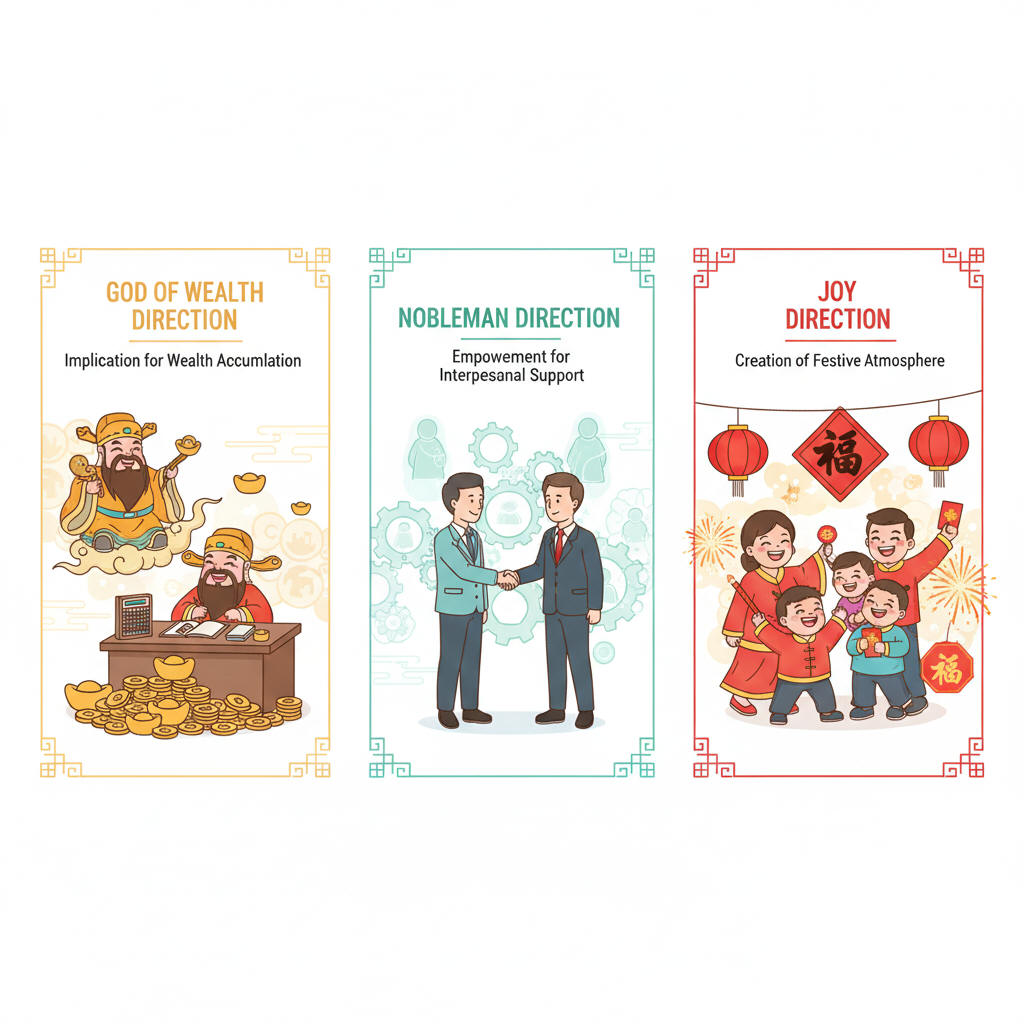
1. God of Wealth Direction: Implication for Wealth Accumulation
The God of Wealth direction has two schools rooted in traditional wealth views, with clear application scenarios.
Rooted in the wealth view of “balancing righteousness and profit”, the God of Wealth direction has two schools: Civil (steady accumulation for daily financial sorting) and Military (active expansion for business negotiations). I advised a friend troubled by financial trivialities to adjust his reconciliation computer to the daily God of Wealth direction, which significantly improved his work organization and accuracy.
Later, I reminded him to adjust video negotiation equipment to the daily God of Wealth direction for large orders, and all key cooperations succeeded. This reflects the practical value of Civil and Military God of Wealth logic—spatial suggestions from the almanac need to match specific wealth scenarios, just like distinguishing stable and aggressive financial management.
2. Nobleman Direction: Empowerment for Interpersonal Support
The Nobleman direction originates from the pursuit of interpersonal support, with practical value in modern social scenarios.
The Nobleman direction originates from the ancient pursuit of “interpersonal support”, reflecting the emphasis on communication—still crucial in modern scenarios like job interviews. When interviewing for an Internet operation position, I waited at the southwest Nobleman direction of the day, responding coherently without nervousness.
Post-review showed that pre-planning the direction strengthened positive expectations, and the confidence conveyed created a benign communication atmosphere, aligning with the “self-fulfilling prophecy”. This is the modern embodiment of the Nobleman direction’s interpersonal empowerment value.
3. Joy Direction: Creation of Festive Atmosphere
The Joy direction carries festive expectations, closely linked to traditional customs and atmosphere creation.
The Joy direction carries “festive expectations”, bound to the ancient pursuit of “seeking good fortune and peace”. In traditional customs, it is used in weddings and birthday banquets to “attract auspiciousness”. My grandmother still places the dining table at the Joy direction on festivals, hoping for harmonious family gatherings—a simple habit embodying atmosphere creation wisdom.
I once helped a friend plan the main wedding table and procession route according to the southeast Joy direction, resulting in a pleasant and smooth wedding. Adapting the Joy direction essentially optimizes spatial layout to create a festive atmosphere and convey pleasant perceptions.
4. Differences and Connections Among the Three Directions
The three directions differ in energy orientation and scenarios but are complementary for superimposed effects.
The core differences lie in energy orientation and scenarios: God of Wealth (resource aggregation for wealth affairs), Nobleman (interpersonal support for social development), Joy (emotional empowerment for harmonious atmosphere).
They are not isolated but complementary for superimposed efficiency, and can be used in combination (e.g., God of Wealth + Nobleman for business signing). However, there’s no need for blind stacking—grasp core needs to avoid disrupting the environment.
III. Methods: Practical Skills for Locating Auspicious Directions in the Chinese Almanac
1. Traditional Inquiry Method: Rhymes and Logic
The traditional way to find auspicious directions relies on the Sexagenary Cycle, with a simple logic: “Determine Day Stem first, then apply rhymes”. No need to memorize the full rhyme—understanding examples suffices for deduction.
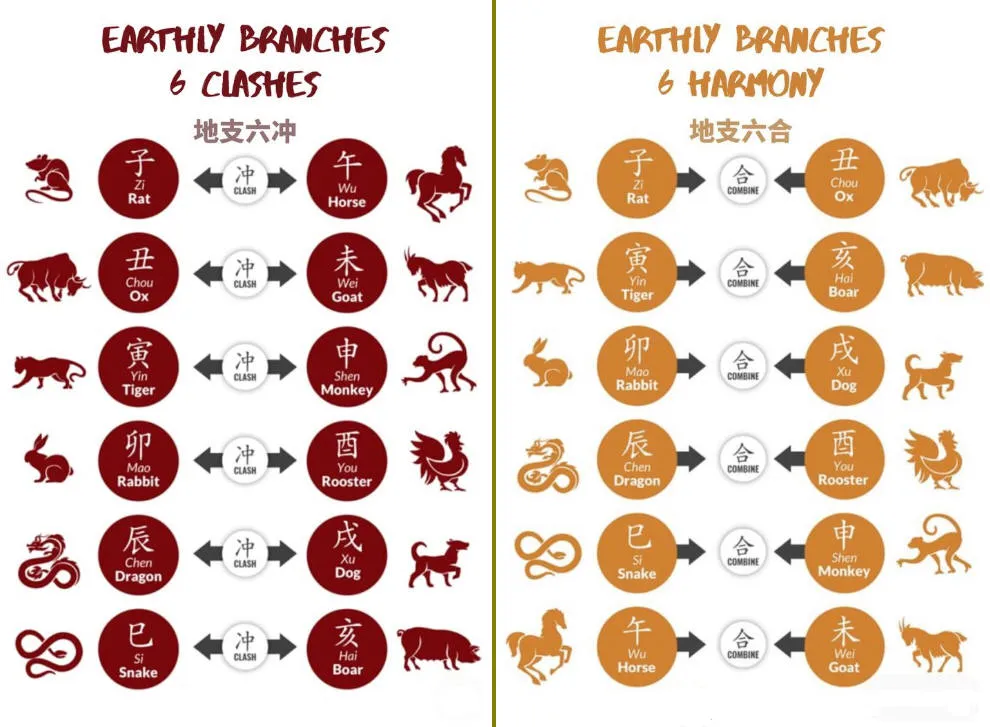
Examples: For the God of Wealth direction, the rhyme is “Jia/Bing correspond to Ox/Goat” (Jia/Bing = Day Stems; Ox/Goat = Chou/Wei = northeast/southwest).
The Nobleman direction follows the rhyme “Jia/Wu correspond to Ox/Goat” (with different Day Stems), while the Joy direction has a more direct logic: “Jia/Ji correspond to northeast” which links Day Stems directly to directions without Earthly Stem conversion.
Mastering this logic allows deduction of other cases (e.g., Jia Day: God of Wealth/Nobleman = northeast/southwest; Joy = northeast). Remember the core difference between “Jia/Bing for God of Wealth” and “Jia/Wu for Nobleman” to avoid confusion.
2. Modern Inquiry: Tool Selection
Modern tools simplify Chinese Almanac direction inquiry, with options for both beginners and in-depth learners.
For those who find rhymes troublesome, modern tools work well. The “Wannianli” (Perpetual Calendar) APP, sourced from the authoritative Qing classic “Imperially Commissioned Compendium of Almanac Studies”, shows daily auspicious directions with zodiac/hour adjustments and suggestions—ideal for beginners.
For in-depth understanding, “Folk Culture Network” provides authoritative data on Sexagenary Cycle-direction correspondence and deduction processes. Users need to obtain the daily Sexagenary Cycle first, then deduce via the correspondence table—suitable for in-depth learners.
IV. Practice: Application Scenarios and Adaptation Skills of the Three Major Auspicious Directions
1. God of Wealth Direction: Optimization of Wealth Efficiency
When working from home, I adjusted my desk to the northeast God of Wealth direction for financial work, increasing the signing rate from 25% to 60% in Mar-Apr 2024. This adjustment helped reduce irritability and improve concentration effectively.
For business signing, I usually select seats facing the God of Wealth direction after advance inspection; if the seat is fixed, I orient the contract towards this direction. Adequate pre-preparation is the core, while the direction adjustment mainly helps stabilize the state.
I record investment ideas at the God of Wealth direction, but it cannot change market laws. Combine with SWOT analysis and industry data to avoid blind investment. The God of Wealth direction optimizes wealth affairs via spatial suggestion—adhere to “assistance rather than dominance” and combine with practical preparations.
2. Nobleman Direction: Improvement of Interpersonal State
The Nobleman direction excels in interpersonal and learning scenarios, aiding state improvement but relying on core ability.
Job interviews are core for the Nobleman direction: I helped my cousin choose the northwest Nobleman direction for an interview, and he got a state-owned enterprise offer. When preparing for exams, adjusting my desk to the Nobleman direction improved efficiency and memory retention by 20%—results depend on ability and preparation.
The Nobleman direction suits interpersonal and concentration scenarios, enhancing confidence via psychological suggestion. Adjust body orientation or use screens/Pomodoro Technique to avoid interference—regard it as a bonus, not a decisive factor, for better auxiliary effects.
3. Joy Direction: Creation of Festive Atmosphere
The Joy direction enhances festive atmospheres, with flexible adaptation strategies for large and small scenarios.
Adapting the Joy direction enhances festive atmospheres: I planned a friend’s wedding (main table and procession) according to the southeast Joy direction, ensuring a smooth event. Large scenarios face constraints like fixed venues and traffic, requiring flexible adjustments.
For family dinners, adjusting the dining table to the Joy direction for 7 days during 2024 Spring Festival reduced disputes by 70%. Small households can use flowers or post-meal chats in the Joy direction if space is limited. Its core value is creating positive emotional atmospheres for festive scenarios.
V. Integration: Modern Application and Value Reflection of Traditional Directional Wisdom
1. Practical Guide: Adaptation Principles and Pitfall Avoidance
Flexible adaptation based on scenarios and life stages is key for using auspicious directions, with over-reliance to be avoided.
The core principle is “flexible adaptation and prioritizing core needs”: prioritize Nobleman for interviews, God of Wealth for signing; renters use small items, owners adjust layouts. Focus differs by life stage—newcomers prioritize Nobleman/Joy, entrepreneurs combine God of Wealth/Nobleman.
Avoid “over-reliance”—it’s only an auxiliary. My past mistake of neglecting ability improvement due to superstitious belief in directions led to project stagnation. Combining direction assistance with ability improvement is the core criterion.
2. Theoretical Support: Psychological Basis and Modern Value
Direction adjustment’s feasibility is supported by psychology, and it fits well with modern life and tools.
Direction adjustment is feasible due to the “spatial suggestion effect”—people unconsciously adjust behaviors based on spatial layout and symbolic meaning.
For example, adjusting the desk to the Nobleman direction creates a positive cycle: “environmental optimization → better mentality → efficient action → positive results”, verified by my long-term practice.
It fits modern life without high-cost transformation, and can be combined with tools like Pomodoro Technique and SWOT analysis to form a “traditional wisdom + modern tools” system.
Essentially, direction selection combines psychological suggestion and environmental interaction. We don’t need to copy traditional directional studies mechanically, but build personalized systems to fit modern rhythms.
VI. Conclusion: Let Traditional Wisdom Add Luster to Modern Life
The core value of the three directions is providing a controllable optimization path for modern life, not a “magic weapon” to change fate. Adopt a rational attitude—neither blind superstition nor ignoring their cultural and psychological value.
In fast-paced modern life, direction adjustment is an easy way to calm down and stabilize state.
Stripping off superstition, we see the wisdom of “adapting to the environment and optimizing state”. Innovatively apply it to personal scenarios as an auxiliary, and it will add luster to modern life—after all, facing life calmly and happily is most important.
VII. Glossary
• Sexagenary Cycle: Core system of traditional Chinese chronological/daily recording, combining 10 Heavenly Stems and 12 Earthly Stems into 60 cyclic combinations. Core basis for deducing daily auspicious directions.
• Day Stem: Heavenly Stem symbol for “day” in Sexagenary Cycle (10 total). Core basis for deducing daily auspicious directions.
• Day Branch: Earthly Stem symbol for “day” in Sexagenary Cycle (12 total). Used to refine direction range (e.g., hourly adjustments).
• God of Wealth Direction: Daily changing direction in almanac for wealth accumulation. Enhances wealth affair efficiency via spatial suggestion (e.g., financial planning, business signing).
• Nobleman Direction: Daily changing direction in almanac for interpersonal support. Improves positive feedback probability via spatial suggestion (e.g., interviews, workplace communication).
• Joy Direction: Daily changing direction in almanac for festive expectations. Conveys pleasant atmosphere via spatial optimization (e.g., weddings, family dinners).