Lantern Festival: The Millennium-Old Taoist Wisdom and Folk Heritage Hidden in the Lights
I. Introduction
Also known as Shangyuan Festival, the Lantern Festival falls on the 15th day of the first lunar month.
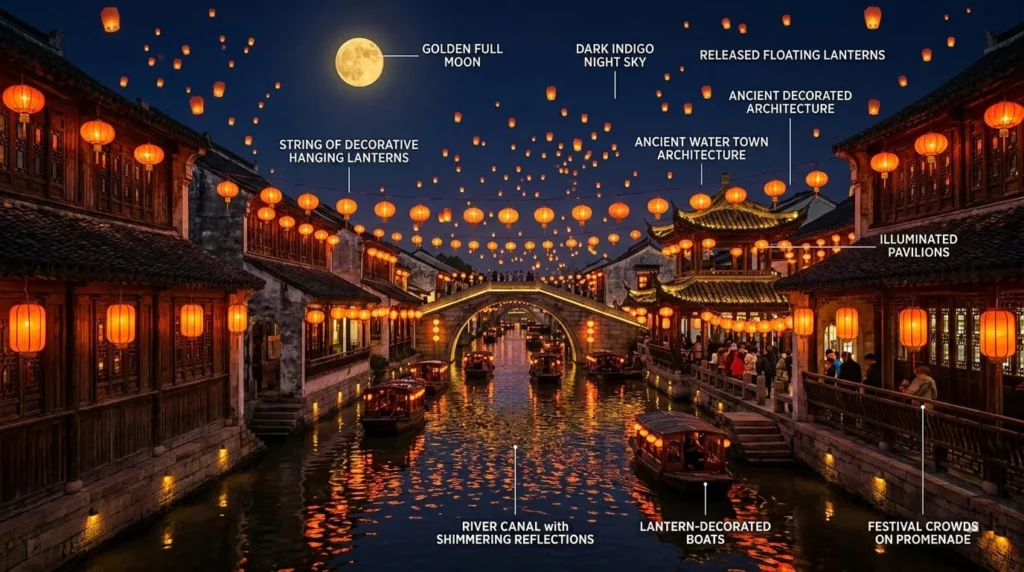
On this day, the bright moon hangs high and lanterns glow brightly. As the grand finale of the Spring Festival, it is a traditional festival integrating imperial sacrifices, Taoist beliefs and folk life.
From imperial lantern-lighting in the Western Han Dynasty to national carnival in the Tang and Song Dynasties, the Lantern Festival has evolved for thousands of years.
It carries the Chinese people’s eternal longing for light, reunion and good fortune—from the Taoist “Heavenly Official Bestows Blessings” to folk prayers for reunion.
Finally, it has become a spiritual symbol engraved in national culture and the grand finale folk celebration of the Spring Festival.
II. Name System and Cultural Orientation of the Lantern Festival
The Lantern Festival has multiple names, each corresponding to different cultural scenarios.
But its core meaning always centers on “prayer for blessings and family reunion.”
Among these names, those related to Taoism have the deepest cultural significance.
They are also the core embodiment of the Lantern Festival’s cultural heritage, closely linked to its Taoist connotations.
1. Common Folk Name: Lantern Festival
Lantern Festival is the most commonly used name among the people. It gets its name from the festival’s core food custom—eating yuanxiao or tangyuan.
It is straightforward, close to daily life and widely popular.
In northern China, yuanxiao is rolled; in southern China, tangyuan is wrapped. Though different in preparation, both embody the longing for family reunion.
They enhance the festival’s folk charm and become the most intuitive cultural symbol of the Lantern Festival for the public.
2. Special Names of the Lantern Festival: Shangyuan Festival, Yuanxi and Lantern Festival
Besides the commonly used “Lantern Festival,” the holiday has three special names.
They embody the Lantern Festival’s Taoist connotations, literary charm and folk scenes, enriching its cultural layers.
Shangyuan Festival, the core Taoist name for the Lantern Festival, comes from the Taoist “Three Yuans Theory” ①.
It marks the birthday of the Heavenly Official of Shangyuan and is the first of the “Three Yuans Festivals,” carrying the core meaning of “Heavenly Official Bestows Blessings.”
Yuanxi is a common ancient literary alias for the Lantern Festival, specifically referring to the night of the 15th day of the first lunar month.
It is often depicted in Tang and Song poems, carrying the romantic literary connotation of the festival.
Lantern Festival is an alias focusing on folk scenes. It gets its name from the core custom of “lighting and appreciating lanterns,” highlighting the festival’s visual characteristics and carnival attribute.
III. Origin and Development Context of the Lantern Festival
The Lantern Festival has no single origin. It is the product of long-term integration of imperial sacrifices, Taoist beliefs and folk customs.
Its development has gone through three key stages, gradually moving from the imperial court to the people and from solemn sacrifices to a national carnival.
1. Western Han Dynasty: The Embryonic Form of Imperial Sacrifice
During the reign of Emperor Wu of the Western Han Dynasty, a grand “Taiyi Sacrifice” was held at Ganquan Palace to worship Taiyi, the supreme god of the universe.
This is the earliest embryonic form of the Lantern Festival. At that time, it was stipulated that the sacrifice would be held from dusk until dawn on the 15th day of the first lunar month.
The palace was lit brightly, with lanterns burning throughout the night. The ceremony was presided over by the emperor himself, accompanied by civil and military officials.
It was to express respect for Taiyi and pray for the peace of the universe and the prosperity of the country. This also laid a foundation for the later folk custom of lighting lanterns during the Lantern Festival.
At this time, the Lantern Festival was only a royal sacrificial ceremony, not popular among the people.
2. Wei, Jin, Southern and Northern Dynasties: The Finalization of Taoist Three Yuans Belief
During the Wei, Jin, Southern, and Northern Dynasties, Taoism prevailed, and the Three Yuans Belief gradually took shape and spread widely.
Taoist classics clearly established the 15th day of the first lunar month as the birthday of the Heavenly Official of Shangyuan.
Since then, the religious attribute of the Lantern Festival as “Shangyuan Festival” was officially confirmed.
Imperial sacrificial customs and folk prayer customs began to integrate deeply, and the Lantern Festival gradually moved out of the imperial court and into the people.
People imitated the imperial court to light lanterns and pray for blessings, adding a folk atmosphere to the festival.
3. Tang and Song Dynasties: The Maturity of the National Carnival Era
During the Tang and Song Dynasties, the Lantern Festival entered an era of nationwide celebration and became one of the grandest folk festivals at that time.
The Tang Dynasty revered Taoism as the state religion and lifted the curfew for three days during the Lantern Festival.
The government held large-scale lantern shows, and the people competed to hang lanterns. Various types of palace lanterns, rotating lanterns and flower lanterns filled the streets and alleys, and the custom of lighting lanterns spread from the imperial court to the whole people.
In the Song Dynasty, with the prosperity of urban economy, the scale of the Lantern Festival expanded.
The lantern-displaying time was extended to 5 days, and new customs such as guessing lantern riddles, eating tangyuan, and dragon and lion dances were born.
IV. Core Folk Customs and Prayer Connotation of the Lantern Festival
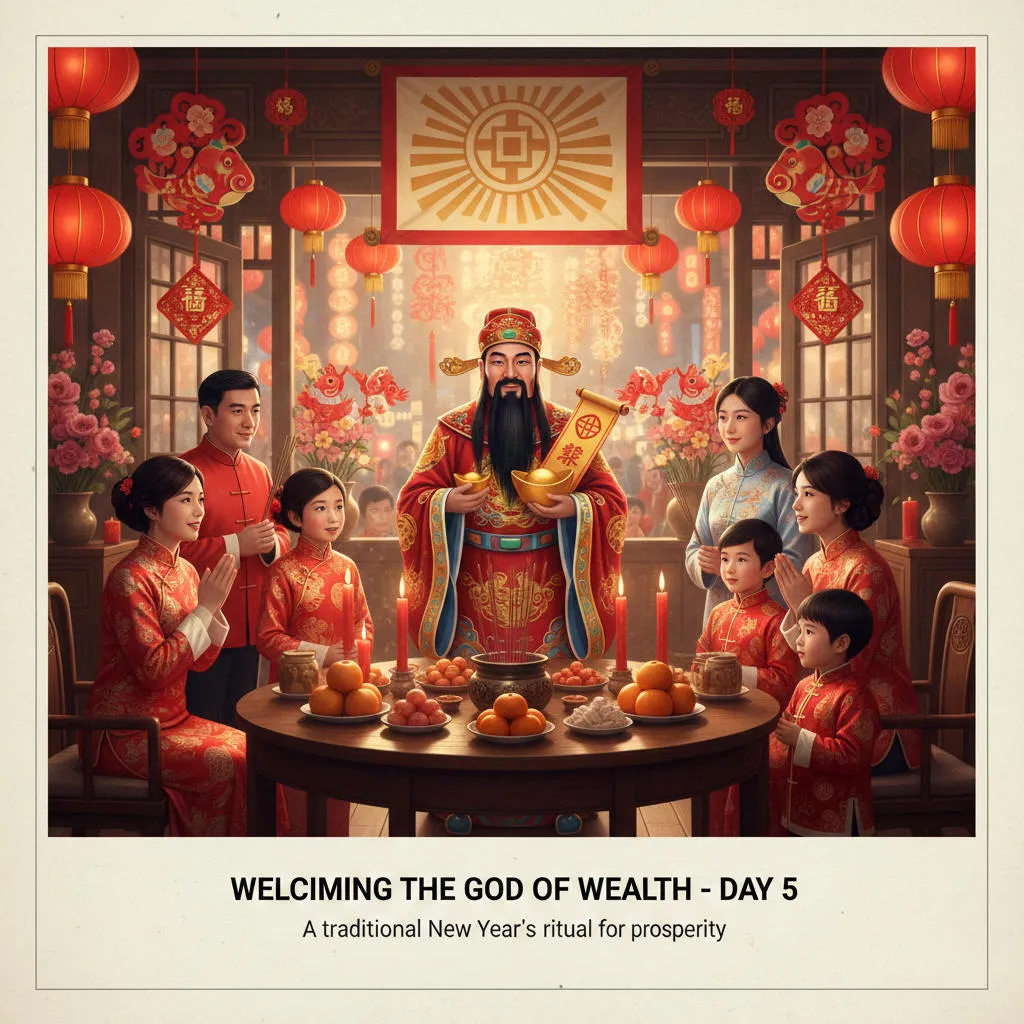
All folk activities of the Lantern Festival revolve around “welcoming blessings, reuniting families, and dispelling misfortune.”
They deeply integrate Taoist wisdom and the concept of communication between humans and gods.
1. Lighting and Appreciating Lanterns
In Taoism, lantern light embodies “yang” energy. It can dispel the cold and bad luck of winter and guide the Heavenly Official on his descent to earth.
It is the core medium for communication between humans and gods during the Lantern Festival.
Families can hang red lanterns to pray for blessings. Cities can hold energy-saving lantern shows to inherit folk culture.
It is recommended to use LED lamps and degradable materials to combine traditional customs with modern environmental protection concepts.
2. Eating Yuanxiao / Tangyuan
Yuanxiao is rolled in northern China, and tangyuan is wrapped in southern China. Both are round, symbolizing family reunion.
They also reflect the Taoist philosophical idea of “yin-yang harmony and perfect unity.”
Yuanxiao is mostly sweet with a chewy texture; tangyuan can be sweet or savory with a soft texture.
Behind the differences is the Chinese people’s shared longing for family reunion during the Lantern Festival.
3. Guessing Lantern Riddles
Guessing lantern riddles is an elegant yet accessible activity that emerged in the Song Dynasty.
Riddles are pasted on lanterns, testing wisdom and adding joy to the festival. It is a representative folk custom that bridges elegance and popularity.
Lantern riddles are also called “lantern tigers,” with ingenious riddles and appropriate answers.
They are still popular in Lantern Festival activities in various places.
4. Zigu and Other Prayer Ceremonies
Welcoming Zigu: Zigu is the goddess of the toilet in folk legend ③.
On the night of the Lantern Festival, people set up incense altars to welcome Zigu, praying for family peace and women’s well-being.
Walking to Dispel Diseases: People go out in groups to touch city walls or bridges to pray for blessings.
Sending Lanterns: Elders give red lanterns to younger generations, symbolizing wishes for more children and blessings.
V. Legendary Stories and Cultural Interpretation of the Lantern Festival
The folk customs, origin and Taoist connotations of the Lantern Festival are vividly reflected in folk legends.
These legends are rooted in imperial history, Taoist beliefs and folk traditions, making the festival’s cultural connotation tangible.
1. Dongfang Shuo and Maid Yuanxiao
According to legend, during the reign of Emperor Wu of the Western Han Dynasty, a maid named Yuanxiao was overcome with homesickness.
Dongfang Shuo devised a plan to make Emperor Wu order the whole city to light lanterns and eat yuanxiao on the 15th day of the first lunar month.
This cleverly explained the origin of the two core folk customs and combined the imperial sacrificial scene with the folk wish for reunion.
2. Heavenly Official Bestows Blessings
This legend is a folk interpretation of the Taoist “Three Yuans Belief.”
According to the “Scripture of the Three Officials,” the Heavenly Official descends to earth on the 15th day of the first lunar month to bestow grace.
People set up fasts and burn incense to pray for blessings, reflecting the Taoist concept of “coexistence of humans and gods.”
3. Chang’e and the Lantern Festival
A romantic legend links the Lantern Festival to the story of Chang’e flying to the moon.
Legend has it that Chang’e lit lanterns to miss her husband Hou Yi on the full-moon night.
People imitated her, which enriched the cultural connotation of the Lantern Festival.
VI. Cultural Connotation and Philosophical Core of the Lantern Festival
The cultural core of the Lantern Festival is the perfect integration of the Taoist concept of “harmony between humans and nature” ④ and folk life.
1. Philosophical Core: Yin-Yang Balance
Yin-yang balance is the core philosophical essence of the Lantern Festival, rooted in the Taoist concept of “harmony between humans and nature” ④.
On the 15th day of the first lunar month, yin energy reaches its peak, and yang energy begins to emerge.
The core customs of the Lantern Festival, such as lighting lanterns and admiring the moon, conform to this natural law.
2. Faith Core: Three Yuans Belief
The Three Yuans Belief is the core of the Lantern Festival’s faith. As the first of the “Three Yuans Festivals,” Shangyuan Festival focuses on “bestowing blessings.”
Taoist classics record that the Heavenly Official is responsible for bestowing blessings on the world, and the 15th day of the first lunar month is his birthday.
3. Cultural Characteristic: National Carnival
National carnival is the most distinctive cultural feature of the Lantern Festival, reflecting the inclusiveness of Chinese culture.
In ancient times, it broke down hierarchical and gender barriers. Everyone could go out to participate in festival activities.
Ancient women, who usually stayed at home, could also freely go out to admire lanterns during the festival.
VII. Conclusion
Over thousands of years, the form of the Lantern Festival has evolved, but the Chinese people’s longing for light, reunion and good fortune has remained unchanged.
It carries both the profound wisdom of Taoism and the warmth of folk life.
As a precious cultural treasure of the Chinese nation, it is passed down from generation to generation, inheriting the cultural heritage.
VIII. Glossary
① Three Yuans Theory: A core Taoist concept. It holds that the universe is composed of Heaven, Earth and Water, corresponding to three festivals overseen by three officials.
It is the core source of the title “Shangyuan Festival” and the foundation of the Lantern Festival’s faith connotation.
② Taiyi: The supreme god of the universe revered by Taoism. The custom of lighting lanterns during the Lantern Festival originated from the sacrifice to Taiyi.
③ Goddess of the Toilet: A deity in folk legend, specifically Zigu. She can divinate sericulture, farming and future fortune.
④ Harmony between Humans and Nature: A core Taoist concept advocating harmonious coexistence of humans, nature and the universe.
⑤ Supporting Yang and Dispelling Bad Luck: A Taoist concept. It refers to promoting yang energy and dispelling cold and bad luck through specific practices like lighting lanterns.
Is there any difference between the Lantern Festival and Shangyuan Festival?
No essential difference. They are different names for the same festival.
Lantern Festival is the common folk name, focusing on food customs. Shangyuan Festival is the elegant Taoist name, emphasizing the Taoist connotation of “Heavenly Official Bestows Blessings.”
Besides praying for blessings, does lighting lanterns have other meanings?
Yes, it also contains the Taoist meaning of “supporting yang and dispelling bad luck” ⑤.
Lantern light symbolizes “yang” energy, dispelling winter’s cold and conforming to the natural law of yin-yang balance.
What is the “Three Yuans Theory”? What is its connection with the Lantern Festival?
It is a core Taoist concept, referring to the three officials of Heaven, Earth and Water corresponding to three festivals.
The 15th day of the first lunar month is Shangyuan Festival (Lantern Festival), the birthday of the Heavenly Official, with the core of “bestowing blessings.”
Is the custom of welcoming Zigu still suitable to be held now?
Welcoming Zigu is an ancient folk prayer custom, focusing on praying for peace and smoothness.
Now its form can be simplified, retaining its cultural connotation and avoiding feudal superstition.