Hour Pillar: Unlock Cross-Cultural Life Destiny and Direction
I. Use the Hour as a Key to Anchor Your Life Coordinates
Life’s ultimate questions always revolve around “direction” and “destination.” Amid cultural integration, overseas Chinese seek both the foundational support of Eastern numerology and supplementary verification from Western perspectives.
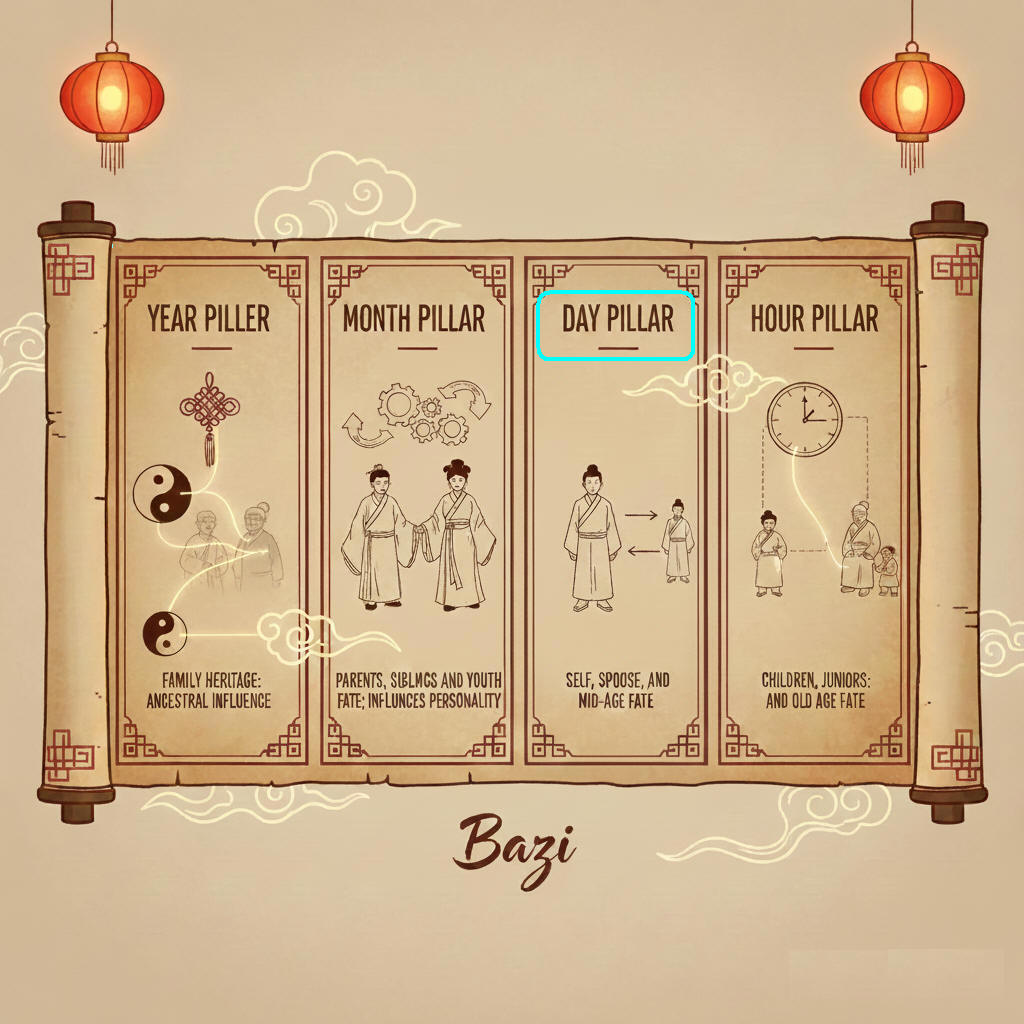
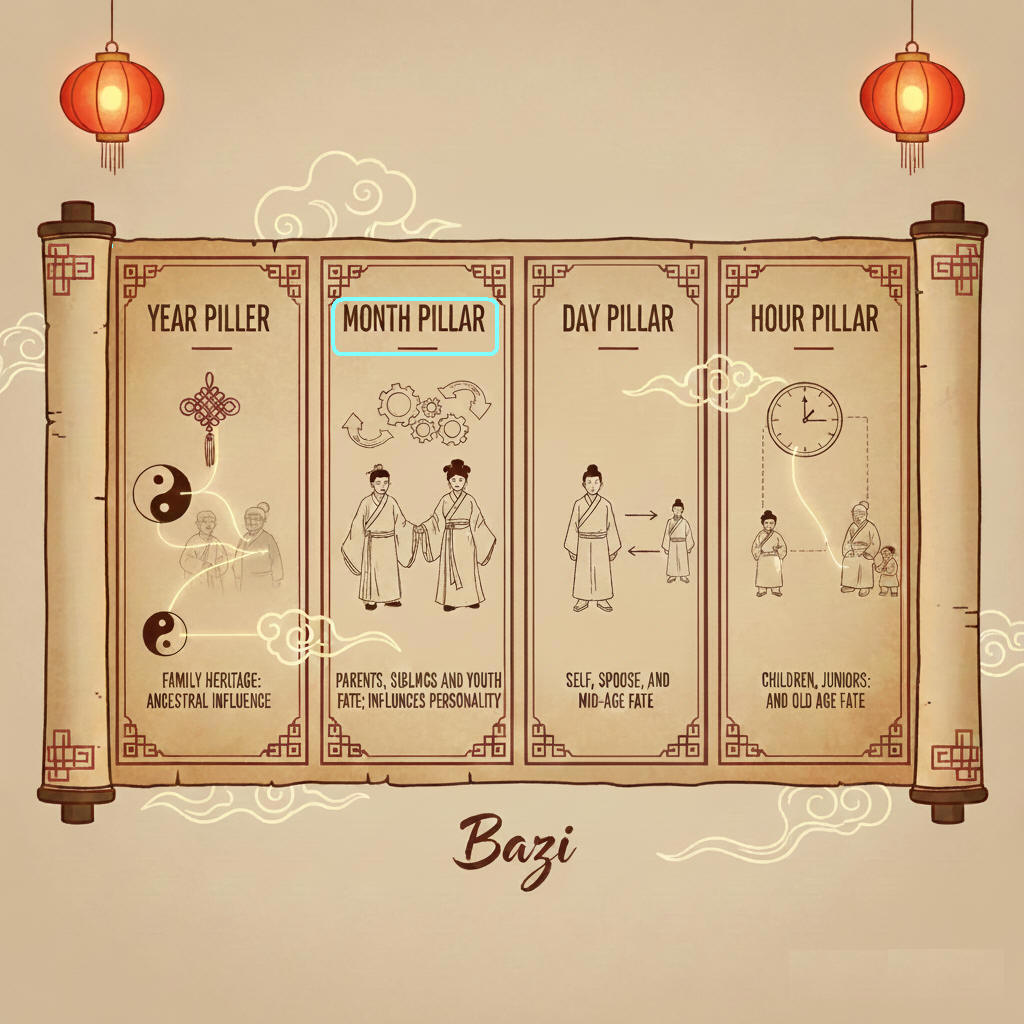
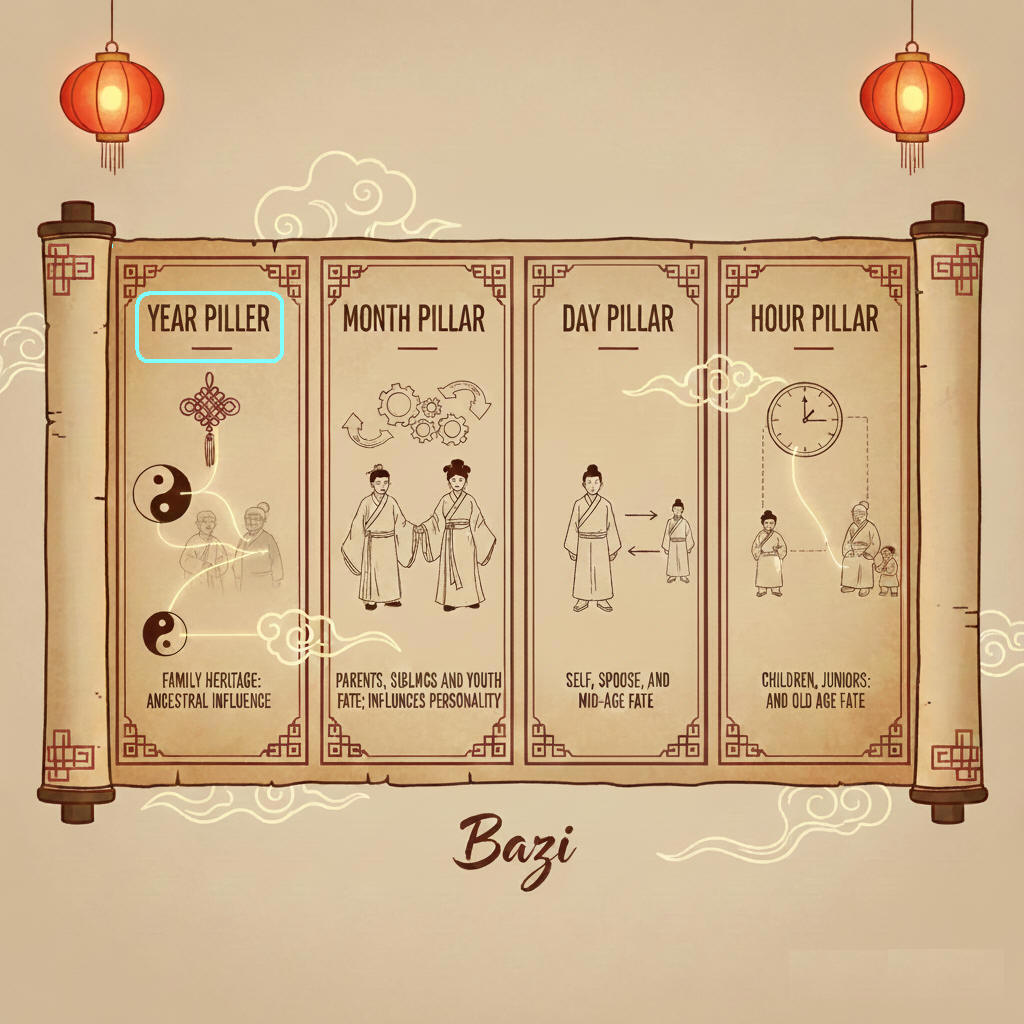
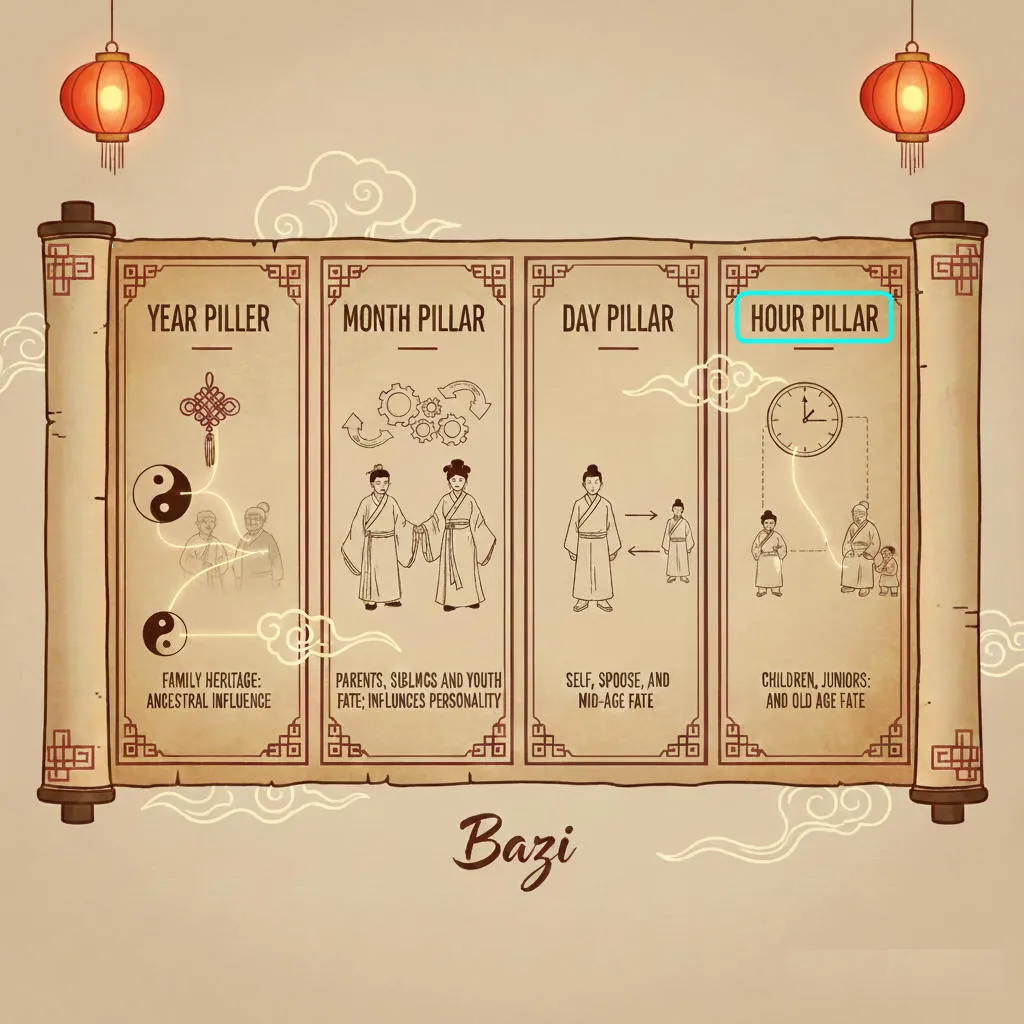
As one of the Four Pillars of BaZi①, the Hour Pillar (Shi Zhu) holds the core code to life’s destination. It corresponds to the end of a day and symbolizes the outcome of a lifetime. Unlike the Year Pillar (family roots), Month Pillar (life pattern), and Day Pillar (self), it governs the ultimate life trajectory and provides an internal anchor.
Using the Hour Pillar as a guide unlocks cross-cultural life coordinates. This article systematically analyzes its wisdom, offering overseas Chinese a clear, actionable framework for interpretation and application.
II. The Hour Pillar: Theoretical Analysis of Eastern Numerology Destiny
1. Essence of the Hour Pillar: The Core of Finality in the Four Pillars System
Composed of the Heavenly Stem (Tian Gan) and Earthly Branch (Di Zhi)② of one’s birth hour, the Hour Pillar (Shi Zhu) represents life’s final pattern and achievements. It is the core carrier of theoretical analysis.
The authoritative BaZi text “Sanyuan Tonghui” states: “The Hour is the place of rest, the final destination of life,” accurately defining its core position.
The Four Pillars (Si Zhu) have distinct functions:
• Year Pillar (Nian Zhu): Determines family roots and early-life fortune;
• Month Pillar (Yue Zhu): Reveals life pattern and mid-life opportunities;
• Day Pillar (Ri Zhu): Reflects self-nature and marital relationships;
• Hour Pillar (Shi Zhu): Conceals late-life circumstances and ultimate legacy.
2. Analysis of Ten Gods in the Hour Pillar: Three Dimensions of Ultimate Impact
As core BaZi symbols, Ten Gods (Shi Shen)③ are classified by the Day Master (Heavenly Stem of the Day Pillar)④. Their presence in the Hour Pillar shapes career, late-life, and legacy outcomes for overseas Chinese.
Tailored to overseas Chinese lives, the specific impacts of each Ten God in the Hour Pillar are as follows:
I. Zheng Guan (Direct Officer): Governs responsibility and rules. As a Useful God (Xi Yong Shen)⑥, it endows one with management abilities, suitable for regulated overseas scenarios.
• Career: Thrives in multinational management or overseas public service;
• Late-Life: Stable life with filial children and clear cross-border retirement plans;
• Legacy: Promotes Chinese family traditions and ethics.
II. Qi Sha (7 Killings/Indirect Officer): Governs courage and competition. When controlled, it manifests as leadership; when unrestrained, it brings pressure and disputes.
• Career: Excels in cross-border trade or high-risk overseas entrepreneurship;
• Late-Life: Avoid health and interpersonal disputes; enjoy wealth with a balanced fate;
• Legacy: Passes on perseverance to pioneering children.
III. Zheng Cai (Direct Wealth): Governs stable wealth and pragmatism. As a Useful God⑥, it ensures abundant late-life financial fortune.
• Career: Suits overseas Chinese restaurants or real estate investment;
• Late-Life: Stable cross-border assets and comfortable life;
• Legacy: Preserves tangible assets and family security experience.
IV. Pian Cai (Indirect Wealth): Governs unexpected wealth and cross-border opportunities, with volatile financial fortune.
• Career: Succeeds in cross-border e-commerce or overseas investment;
• Late-Life: Needs risk hedging for fluctuating wealth;
• Legacy: Teaches resource integration and network management.
V. Shi Shen (Food God): Governs blessings and skills. As a Useful God⑥, it brings a peaceful late life.
• Career: Fits Chinese cultural creation, catering, or health preservation;
• Late-Life: Healthy, hobby-enriched retirement;
• Legacy: Passes on Chinese craftsmanship and aesthetics.
VI. Shang Guan (Hurt Officer): Governs talent, innovation, and rebellion, with strong expressive abilities.
• Career: Excels in overseas media, entertainment, or academic research;
• Late-Life: Cultivate humility to enjoy reputation and avoid estrangement;
• Legacy: Promotes neo-Chinese culture for overseas audiences.
VII. Zheng Yin (Direct Resource): Governs protection, literary talent, and dedication, ensuring a comfortable late life with reliance.
• Career: Suits overseas Chinese education or medical fields;
• Late-Life: Filial children and cross-border retirement via connections;
• Legacy: Strengthens overseas Chinese cultural roots.
VIII. Pian Yin (Indirect Resource/Owl God): Governs shrewdness and loneliness, suitable for non-traditional industries, with weak parent-child bonds.
• Career: Ideal for niche arts, religion, or freelance work;
• Late-Life: Plans independent retirement to avoid loneliness;
• Legacy: Teaches niche skills to loyal followers.
IX. Bi Jian (Shoulder Brother): Governs peers and competition, bringing both support and interest conflicts.
• Career: Fits overseas partnerships; guards against peer conflicts;
• Late-Life: Relatives accompany; avoids lending risks;
• Legacy: Maintains Chinese community ties.
X. Jie Cai (Rob Wealth): Governs competition and impulsivity, easily leading to financial losses and conflicts.
• Career: Enters high-competition industries; cautious with partnerships;
• Late-Life: Avoids impulsivity; preserves wealth;
• Legacy: Teaches risk prevention.
Note: The influence of Ten Gods③ must be judged with the overall BaZi pattern⑤, Useful Gods⑥, and Harmful Gods⑦. The above are basic guidelines; specific analysis requires the individual BaZi Chart⑧.
3. Special Configurations of the Hour Pillar: Signals of Opportunities and Variables
Beyond Ten Gods③, the Hour Pillar’s favorability, special patterns, and common Shen Sha⑨ affect late-life opportunities and variables.
Those with Useful Gods⑥ in place tend to achieve late-life turnarounds. For example, overseas Chinese with a Metal-favorable Hour Pillar can profit from cross-border finance.
Those dominated by Harmful Gods⑦ need to avoid pitfalls. For instance, Water-Harmful individuals should guard against health risks and exchange rate fluctuations.
Core impacts of common Shen Sha⑨ in the Hour Pillar (auxiliary symbols, not core basis) are as follows:
• Tian Yi Gui Ren: Top noble star, bringing authoritative cross-border assistance in old age;
• Hua Gai: Governs art and loneliness; deepen niche cultural creation and maintain relationships;
• Yi Ma: Governs migration; possible cross-border mobility in old age with flexible assets;
• Gu Chen/Gua Su: Governs loneliness; plan independent retirement in advance;
• Tian De/Yue De Gui Ren: Bring blessings; prosperous late life benefiting descendants;
• Tian Xi/Hong Luan: Bring family joys; happy and harmonious late life;
• Tao Hua Sha: Governs emotional entanglements; adhere to principles in old age;
• Jin Yu Gui Ren/Ba Zuo: Enhance reputation; sufficient late-life security;
• Tai Yin: Brings female assistance; smooth affairs in old age.
Note: Shen Sha⑨ must be analyzed with Five Elements⑩ and Ten Gods③. Hour Pillars with Kong Wang⑪ or Xing Chong He Hai⑫ tend to have volatile destinies. Overseas Chinese should prepare alternative retirement plans.
III. The Hour Pillar: Cross-Cultural Comparison with Western Astrology
1. Hour Pillar vs. 10th House: Resonance in Achievement
The Hour Pillar and Astrology’s 10th House both relate to career achievements. Their core difference: the Hour Pillar focuses on “individual life closure” (internal destiny), while the 10th House focuses on “social role construction” (public image).
Example: Elon Musk’s 10th House is in Capricorn, suitable for business management. If his Hour Pillar reveals Guan Stars (Zheng Guan/Qi Sha), it confirms his business achievements.
A Chinese cross-border e-commerce entrepreneur in Canada has a Leo 10th House (needing personal brand balance) and Pian Cai in the Hour Pillar (cross-border opportunities). The optimal path is to focus on Chinese cross-border retail, integrating personal branding with resource operation to achieve both commercial value and social influence.
2. Hour Pillar Energy vs. Jupiter’s Influence: Luck and Potential
Jupiter symbolizes expansion and luck, resonating with the Hour Pillar’s late-life potential. For overseas Chinese, opportunities from lucky Shen Sha in the Hour Pillar often align with Jupiter’s 12-year return cycle.
Leveraging the Hour Pillar’s Five Elements advantages during Jupiter’s return facilitates cross-border business breakthroughs. Eastern culture sees luck as karmic accumulation, while Western astrology emphasizes planetary empowerment. Combining both enhances opportunity awareness.
3. Hour Pillar vs. North Node: Mission and Destiny Alignment
Astrology’s North Node points to life’s practice direction, while the Hour Pillar corresponds to the ultimate destiny after practice. This is crucial for cross-cultural overseas Chinese.
If the North Node is in Sagittarius (pursuing freedom and growth) and the Hour Pillar has Yin Stars (Zheng Yin/Pian Yin) (governing culture and inheritance), fields like cross-border cultural tourism or international Chinese education are ideal choices that align with both life mission and destiny.
IV. The Hour Pillar: Practical Cases for Optimal Life Paths
1. Define Direction: Regional and Industry Adaptation
Regional adaptation relies on the Hour Pillar’s Five Elements⑩ and overseas city characteristics. Combined with industry fit, it forms a “region + industry” guide for overseas Chinese:
• Wood-Favorable: Settle in Vancouver/Melbourne; gardening, Chinese education, green plant cultural creation;
• Metal-Favorable: Root in New York/London; cross-border finance, jewelry design;
• Fire-Favorable: Settle in Los Angeles/Dubai; film/TV creation, Chinese restaurant chains;
• Water-Favorable: Prioritize Sydney/Vancouver; cross-border logistics, e-commerce;
• Earth-Favorable: Root in Toronto/Paris; real estate, TCM health preservation.
Avoid regions/industries corresponding to the Hour Pillar’s Harmful Gods⑦ to reduce resistance. Specific BaZi Chart⑧ cases illustrate how Five Elements and Ten Gods translate into life choices.
2. Verify Credibility: Case Study on Practicality
Take an overseas Chinese in Los Angeles (Ji Tu as Day Master④, Xin Hai as Hour Pillar) as an example. Ji Tu (Yin Earth) generates Xin Jin (Yin Metal), conforming to the Food God③ rule of “Day Master generating same-gender Five Elements⑩.”
The Xin Jin (Food God) and Hai Shui (Water) combination echoes the Water-favorable Hour Pillar’s skill-focused trait. Analyzing three life stages verifies practicality and identifies shortcomings:
• Youth (20-35): Focus on Chinese pattern design; part-time in cultural creation to accumulate resources;
• Mid-Life (36-55): Specialize in high-end Chinese wedding dress customization; cooperate with artists to build a brand;
• Late-Life (56+): Open a workshop to teach apprentices; publish books to inherit culture.
Shortcomings: Lack of business thinking in youth, weak copyright awareness in mid-life, insufficient systematic operation in late-life.
Suggestions: Learn business basics in youth, build a team for copyright/logistics in mid-life, cooperate with colleges in late-life. This case strengthens theory-practice connection.
3. Learn Methods: Practical Steps for Self-Decoding
Mastering Hour Pillar self-decoding is key to practical application. Adapted to overseas scenarios, the steps are clear and operable:
• Time Conversion: Convert overseas birth time to Beijing Time to confirm the corresponding Earthly Branch, avoiding interpretation errors;
• Stem Deduction: Calculate the Hour Stem using the “Wu Shu Dun”⑬ rule based on the Day Master to form a complete Hour Pillar;
• Core Judgment: Analyze the Ten Gods and Five Elements Prosperity⑭ to identify guidance for career and regional development;
• Error Correction: Reverse deduce based on personal personality and compare multiple birth hours to reduce interpretation deviations.
Mastering this set of methods allows you to review the “Ji Tu + Xin Hai Hour Pillar” case mentioned earlier, accurately align with the Five Elements adaptation logic, and provide core guidance for your own phased practice.
4. Implement Practice: Phased Life Path
Continuing the aforementioned case (Ji Tu as Day Master, Xin Hai as Hour Pillar), Ji Tu (Yin Earth) generates Xin Jin, which corresponds to the Food God (governing skills and craftsmanship), while Hai Shui (Water element) represents cross-border flexibility. This forms the core trait of “establishing oneself through skills and expanding boundaries via cross-border resources.”
Based on the self-decoding method in Section 3 and cross-cultural adaptation needs, we construct a phased life path: “youth foundation – mid-life deepening – late-life inheritance.”
Youth (20-35): Polish skills via Food God, expand circles via Hai Shui: During studies, focus on integrating traditional Chinese patterns with modern design to consolidate professional capabilities. Take part-time jobs in Chinese community cultural creation planning or as a design assistant for overseas Chinese brands to accumulate cross-cultural communication experience and industry connections. Clarify the core track of Chinese cultural creation to avoid disconnection between skills and the market.
Mid-Life (36-55): Build a brand via Food God, expand boundaries via Hai Shui: Leverage the “blessing” advantage of the Food God to focus on high-end Chinese wedding dress customization, forming differentiated competitiveness with unique craftsmanship. With the cross-border linkage attribute of Hai Shui, cooperate with Hollywood Asian artists and overseas Chinese wedding institutions to expand the market and build a personal design brand. Balance professional creation and business operations, make up for shortcomings in weak copyright awareness and poor logistics cost control, and upgrade from a craftsperson to a brand manager.
Late-Life (56+): Enjoy life via Food God, inherit culture via Hai Shui: Align with the Food God’s trait of “enjoying a peaceful late life” by stepping back from commercial operation pressures and focusing on craftsmanship itself—open a Chinese design workshop to recruit and teach apprentices. Rely on Hai Shui’s “cultural circulation” attribute to publish monographs on the integration of Chinese and Western design, and give public lectures in overseas Chinese schools and art colleges. Transform personal craftsmanship into cultural inheritance, achieving spiritual prosperity while addressing the talent gap in overseas Chinese-style design, thus fulfilling the ultimate inheritance mission of the Hour Pillar.
The overall practice must closely align with the traits of Ji Tu (Day Master) and the Xin Hai Hour Pillar: Ji Tu generates Xin Jin, and the Xin Jin Food God thrives most on Fire refining and Earth support. In mid-life, you can engage in Fire-element fields (such as film and television cultural creation) and Earth-element fields (such as real estate allocation) to boost fortune, which is consistent with the Five Elements preference logic of the Hour Pillar. Since Hai Shui is a Useful God for Xin Jin, avoid areas with heavy Earth energy that suppress Water, dynamically adjust your direction, and mitigate potential risks to make the wisdom of numerological combinations adapt to the entire cross-cultural life cycle.
V. The Hour Pillar: Unleash Cross-Cultural Life Value
The Hour Pillar (Shi Zhu) is never a fateful chain that restricts life, but a life compass in cross-cultural contexts. It contains the code to one’s ultimate destiny, providing overseas Chinese with the foundational support of Eastern numerology amid the hustle and bustle of foreign lands.
We can complement the Hour Pillar wisdom with Western astrology to form a more comprehensive understanding of life. By following the guidance of the Hour Pillar, overseas Chinese can proactively adjust the adaptation between numerological traits and overseas life.
While adhering to internal rhythms, we should also take proactive actions to create a life with clear guidance at every stage. Ultimately, through the integration of Eastern and Western wisdom, we will reach an ultimate life destination that is conscious, warm, and inheritance-driven.
VI. Glossary
① Four Pillars of BaZi: The core framework of BaZi numerology, consisting of the Year Pillar, Month Pillar, Day Pillar, and Hour Pillar. Each pillar contains one Heavenly Stem and one Earthly Branch, totaling eight characters, which correspond to different life stages and dimensions.
② Heavenly Stems and Earthly Branches: Abbreviated as “Gan Zhi”, they are basic symbols of traditional Chinese calendars and numerology. Ten Heavenly Stems are paired with Twelve Earthly Branches to record years and time, serving as the foundation for BaZi deduction.
③ Ten Gods: Ten symbols classified based on the Five Elements generation, restriction, and Yin-Yang relationships between the Day Master and other stems and branches in BaZi, including Bi Jian, Jie Cai, etc., corresponding to different personalities, fortunes, and life traits.
④ Day Master: The core symbol representing “self” in BaZi, i.e., the Heavenly Stem of the Day Pillar, which serves as the benchmark for deducing Ten Gods and analyzing the BaZi Chart.
⑤ Pattern: The overall classification of stem-branch combinations and Ten Gods configurations in BaZi, reflecting the overall level and trend of the BaZi Chart, and serving as an important basis for judging the height of life fortune.
⑥ Useful Gods: Five Elements or stems/branches that nourish and balance the BaZi Chart, helping to avoid evil spirits and improve fortune, and serving as the core reference for acquired adjustment directions.
⑦ Harmful Gods: Contrary to Useful Gods, they are Five Elements or stems/branches that restrain and damage the BaZi Chart, easily causing obstacles and misfortunes, which need to be avoided or balanced through acquired methods.
⑧ BaZi Chart: A complete personal BaZi combination, including all elements such as Four Pillars, stems and branches, Ten Gods, and Five Elements, serving as a comprehensive carrier for numerological interpretation that requires holistic analysis rather than single-point judgment.
⑨ Shen Sha (Lucky/Unlucky Stars): Auxiliary symbols for interpreting fortune in BaZi, not the core basis for judgment. They are divided into lucky stars and unlucky stars, which need to be analyzed comprehensively with Five Elements generation and restriction and Ten Gods patterns.
⑩ Five Elements: Five material forms including Metal, Wood, Water, Fire, and Earth. Their core lies in the relationships of generation, restriction, over-restriction, and counter-restriction, which determine the energy balance of the BaZi Chart.
⑪ Kong Wang (Void Death): When the Earthly Branch of a pillar falls into the “Void Death Table”, it indicates that there may be variables in the field symbolized by that pillar, requiring flexible responses rather than rigid judgments.
⑫ Xing Chong He Hai (Punishment, Clash, Combination, Harm): Four special relationships between stems and branches in BaZi, reflecting the interaction of energy. Punishment and Clash mostly indicate changes and obstacles, while Combination and Harm mostly indicate involvement and influence, which will alter the original trend of the BaZi Chart.
⑬ Wu Shu Dun (Five Rats Escape Method): A fixed rule for deducing Hour Stems. Based on the Day Master and combined with the Hour Branch, the Hour Stem is determined, which is the core method for arranging the Hour Pillar of the BaZi Chart.
⑭ Five Elements Prosperity: The respective strength of Metal, Wood, Water, Fire, and Earth in the BaZi Chart, which directly affects the judgment of Useful Gods and Harmful Gods and is an important part of numerological analysis.
How to interpret the Hour Pillar if the birth hour is uncertain?
You can reverse deduce the birth hour based on early life experiences and personality traits, or use astrolabe software to compare interpretations of multiple possible hours. If the error range is large, focus on analyzing the first three pillars and use your overseas life trajectory as an auxiliary reference to reduce the impact of Hour Pillar deviations.
Does a Harmful God-dominated Hour Pillar mean an unhappy late life?
Not necessarily. Harmful Gods can be resolved or balanced through acquired adjustments. For example, if Water is a Harmful God in your Hour Pillar, you can often wear red or yellow clothing (representing the Fire element in Five Elements), engage in Fire-element industries such as film, television, or catering, and avoid long-term residence in areas close to water to balance the energy of the Five Elements.
How to adapt Hour Pillar wisdom to local cross-cultural life?
Take the guidance of the Hour Pillar as the core and make flexible adjustments in light of local resources. For example, if your Hour Pillar favors Wood, you can choose industries like gardening or Chinese education that are compatible with the Wood element, while retaining the core of Eastern culture to achieve two-way adaptation between numerological direction and local life.