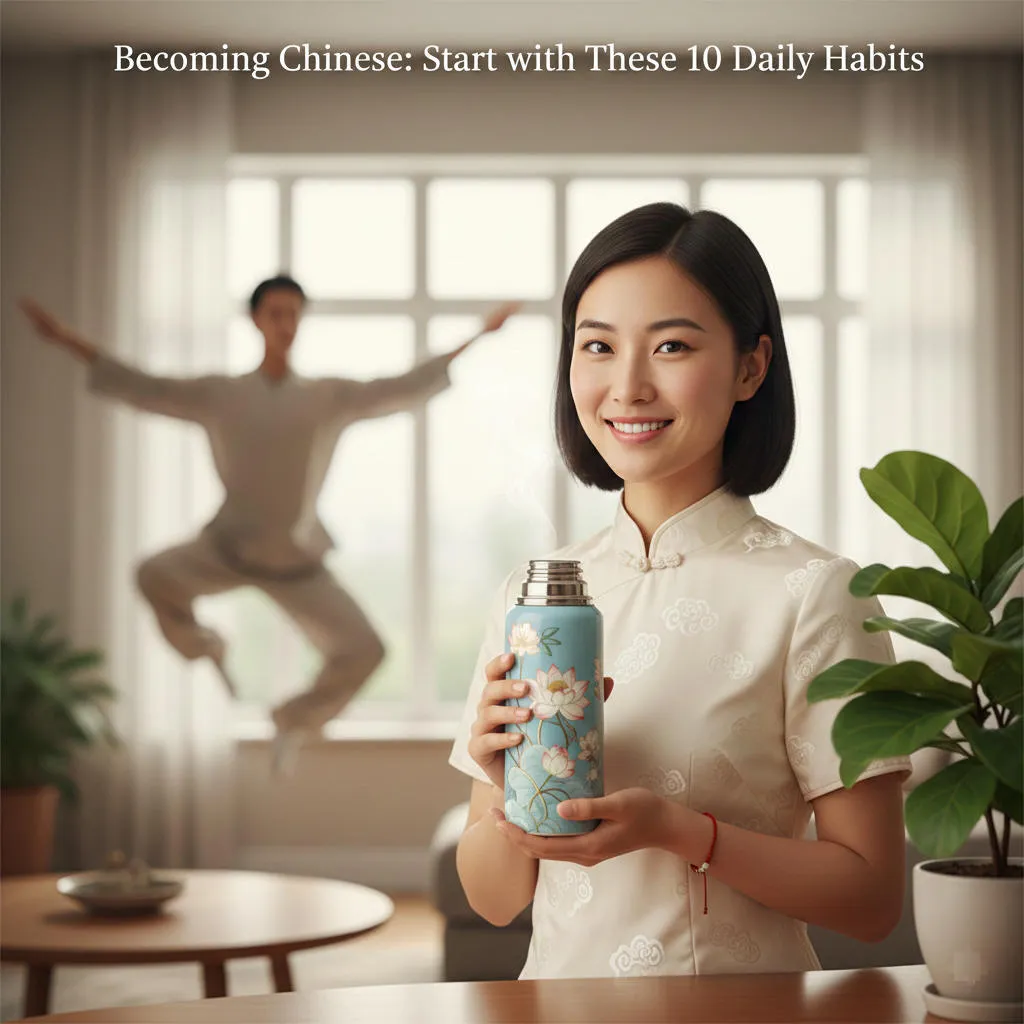
Becoming Chinese: Start with These 10 Daily Habits
Want to “become” Chinese? Start with these 10 daily habits — they’re not fake imitation, they’re how Chinese people really live. They’re the easiest, most straightforward way to feel “Chinese”. Give them a try today, and you’ll quickly feel the warmth and wisdom of Chinese life!
1. Drink Warm Water First Thing in the Morning
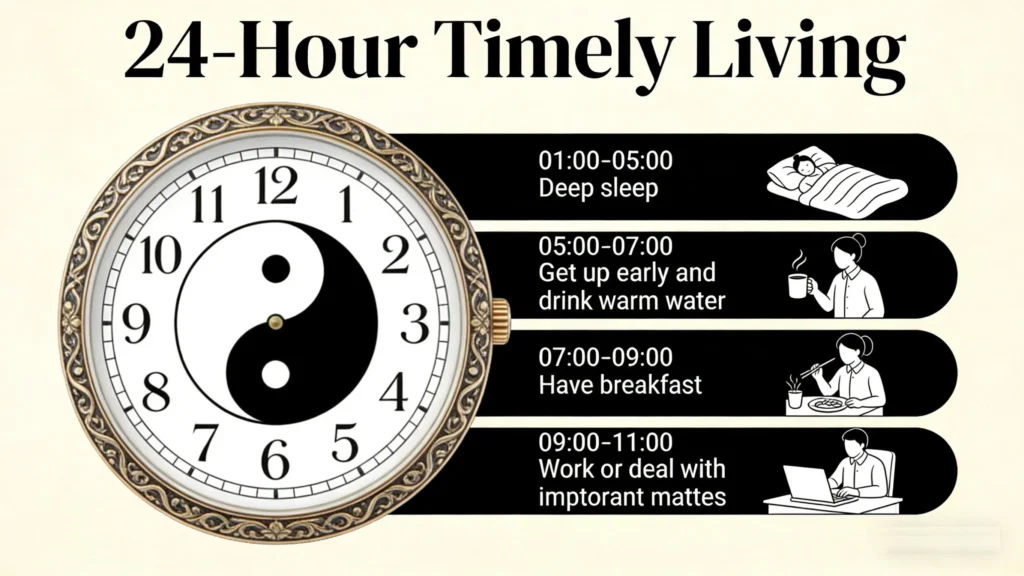
If you want to “become” Chinese, there’s one thing you must do every morning after getting up: drink a glass of warm water — this is the simplest and most popular health-preserving habit among Chinese people, and the best way to start a day of Chinese-style life.
Daily Scenario:
After waking up, most Chinese people skip coffee/tea first — they grab a glass of warm water and sip it slowly. It “wakes their body up”, and it’s our go-to morning ritual. Simple, but so smart!
Metaphysical Theory:
After a night’s sleep, the human body’s “qi and blood ①” is in a “dormant” state. Drinking a glass of warm water in the morning can “awaken the qi and blood ① and nourish the five internal organs”;
it further unblocks the “meridians and collaterals ②” in the body, making the “energy field ⑤” smooth throughout the day. This is a simple ritual of Chinese people’s “nourishing qi first for health preservation”, which is consistent with the TCM concept of “nourishing yang in the morning”.
Scientific Basis:
After a night of metabolism, the human body is in a state of water shortage. Drinking warm water in the morning can quickly replenish the body’s water and awaken the digestive system.
At the same time, it can promote intestinal peristalsis, discharge metabolic waste, gently stimulate blood vessels, avoid blood viscosity, and is beneficial to cardiovascular health.
2. Practice Baduanjin
If you’re serious about Becoming Chinese, you must try practicing Baduanjin. It’s a traditional Chinese health-preserving exercise that doesn’t pursue high intensity but can nourish the body and mind. It’s the core of Chinese-style health preservation and an important way to experience Chinese life — especially suitable for morning practice.
Daily Scenario:
You’ll see it everywhere — parks, communities, even homes! Lots of Chinese people (especially elders) practice Baduanjin morning or night. Slow, gentle moves with breathing — you’ll feel totally relaxed after. No equipment needed, just a little space!
Even young people love it too! Just follow a tutorial at home. It’s quick, easy, and perfect for fitting into your busy day — experience Chinese wellness without the hassle.
Metaphysical Theory:
Baduanjin originated from ancient Chinese metaphysical health-preserving concepts, which hold that the human body has “meridians ③” and “qi and blood”, and each movement corresponds to different meridians.
Through slow movements and regular breathing, it can unblock meridians, regulate qi and blood, nourish the five internal organs, and achieve the purpose of strengthening the body and prolonging life.
Scientific Basis:
Baduanjin is a low-intensity exercise suitable for all age groups. It can exercise joint muscles and improve flexibility and balance.
Regular breathing can also regulate the autonomic nervous system, relieve stress, improve sleep, and long-term practice can enhance immunity.
3. Ditch Ice Water — Stick to Warm/Hot Water
If you want to “become” Chinese, the first habit to change in daily drinking is to say goodbye to ice water and embrace warm water — this is the most representative symbol of Chinese-style life and the core of the imitation trend on foreign networks, applicable all day long.
Daily Scenario:
No matter the season, Chinese people love warm water (around 40℃) — before meals, after waking up, when sick, it’s our top pick. We rarely drink ice water, and we’ll even remind friends: “Skip ice, it hurts your body” — that’s our way of caring!
Warm water is always available in restaurants and at home. Offering a glass of warm water to guests is also a simple way for Chinese people to express kindness.
Metaphysical Theory:
Traditional Chinese metaphysics holds that “the spleen and stomach prefer warmth and dislike cold”. Ice water is a cold qi that can damage the body’s yang qi ④ and lead to poor circulation of qi and blood.
Warm water, on the other hand, can nourish yang qi and balance the body and mind, which is consistent with the health-preserving concept of the Huangdi Neijing (Yellow Emperor’s Internal Classic) and the starting point of “nourishing qi first for health preservation”.
Scientific Basis:
Ice water can stimulate the gastric mucosa, cause spasms, reduce digestive function, and is more harmful when drunk on an empty stomach.
Warm water can gently stimulate the stomach and intestines, promote metabolism, avoid blood vessel constriction, is more friendly to the cardiovascular system, and is a globally recognized healthy drinking method.
4. Do Not Knock Bowls While Eating
If you want to nail Becoming Chinese, you must remember one thing while eating: do not knock bowls. This is the bottom line of Chinese table manners, embodying respect for food. It’s also the most basic etiquette to “be Chinese”, applicable to all dining scenarios during the day.
Daily Scenario:
When we eat, we never tap bowls with chopsticks! Elders always tell kids: “Tapping bowls brings poverty” — it’s rude and unlucky. It’s our way of respecting food and everyone at the table.
Whether it’s a family dinner or eating out, we all follow this rule. It keeps the meal calm and respectful — super easy to remember!
Metaphysical Theory:
Chopsticks are tools of blessing, and bowls are places to hold blessings. Knocking bowls will disperse blessings, implying poverty and disrespect for food.
In ancient times, only beggars would knock bowls to beg for food. This behavior was disrespectful and gradually became a taboo ritual at the dinner table.
Scientific Basis:
The high-frequency sound waves from colliding tableware can stimulate the auditory nerve, affect the secretion of digestive glands, and reduce appetite.
At the same time, knocking bowls is impolite and disturbs others’ dining. Essentially, it is a scientific habit and basic accomplishment of civilized dining.
5. Take a Walk After Meals
Continuing the relaxation after meals, if you want to “become” Chinese, you must not sit or lie down immediately after eating — taking a walk after meals is a common post-meal habit of Chinese people, embodying the wisdom of “nourishing health and qi”, and also a way to enhance feelings among family members. It is especially suitable after dinner, which can naturally connect to the night’s home relaxation time.
Daily Scenario:
After eating, we never sit or lie down right away! A 10-20 minute walk is our go-to — especially after dinner. Walk with family, chat, enjoy the night — it helps digest and brings us closer.
Parks and communities are full of walkers after dinner. It’s simple, relaxing, and one of our favorite daily joys — no fancy plans needed!
Metaphysical Theory:
“Walking a hundred steps after meals helps you live to ninety-nine.” Taking a walk can promote the circulation of qi and blood and avoid poor energy field caused by food accumulation.
At the same time, it can calm the mind, relieve irritability, gather blessings, and is a daily ritual of nourishing health and qi.
Scientific Basis:
Sitting for a long time after meals can easily lead to insufficient blood supply to the stomach, causing digestive problems such as food accumulation and bloating.
Taking a walk can promote intestinal peristalsis, accelerate digestion, promote blood circulation, consume calories, and is beneficial to cardiovascular health and weight management.
6. Do Not Cut Nails at Night
If you want to embrace Becoming Chinese, you must remember: do not cut nails at night. This is a long-standing small taboo among Chinese people. It’s not superstition, but concern for health — specifically referring to night, especially after 11 pm.
Daily Scenario:
Most of us cut nails during the day — never at night (especially after 11pm)! Elders say it “cuts off blessings” — it’s an old habit, but it’s really about safety too.
Stick to morning or afternoon, when the light is good. It’s safer (no cuts!) and fits our traditional habits — easy peasy.
Metaphysical Theory:
Yin qi ⑥ is the strongest at night, and the human body’s qi and blood will converge, while nails are an extension of qi and blood.
Cutting nails at night will damage qi and blood, cut off blessings, and due to poor light, it is regarded as an inauspicious behavior.
Scientific Basis:
After 11 pm, the human body enters the sleep preparation stage, melatonin secretion is strong, and people’s reaction becomes slow and vision deteriorates.
Cutting nails at this time is easy to cut fingers, and the nail cuticle is harder, which is easy to break and damage. The essence of the ancient taboo is concern for safety.
7. Soak Your Feet Before Bed (Game-Changer!)
If you want to “become” Chinese, you must develop the habit of soaking your feet before bed — this is the most ritualistic pre-sleep ritual of Chinese people, embodying the simplest health-preserving wisdom, and also a key step to get closer to Chinese-style life. It is suitable for 10-15 minutes before bed at night.
Daily Scenario:
Lots of Chinese people soak their feet for 10-15 minutes before bed — especially in fall/winter! Add ginger or mugwort leaves, soak until your body’s slightly warm, then hit the hay. It feels SO good, and it’s how we unwind after a long day.
When soaking their feet, people also match it with a slow rhythm to relieve the fatigue of the day and prepare for quality sleep.
Metaphysical Theory:
The soles of the feet are where hundreds of meridians converge. Soaking feet before bed can unblock hundreds of meridians, dispel cold qi, and drive away the turbid qi of the day.
It can calm the mind and help sleep, nourish qi and blood. Adding ginger and mugwort leaves can further enhance the effect of dispelling cold, making it a pre-sleep calming ritual.
Scientific Basis:
The soles of the feet are rich in capillaries and nerve endings. Soaking feet in warm water can promote circulation, accelerate metabolism, and relieve muscle fatigue.
Gingerol can dilate blood vessels, enhance warmth, and the relaxed state of soaking feet can also relieve stress and improve sleep.
8. Mirrors Should Not Face the Bed or Door
If you want to “become” Chinese, you must remember when decorating your home: mirrors should not face the bed or door. This is a core principle of Chinese home decoration, embodying awe for life and reflecting Chinese home aesthetics. It’s a home habit applicable all day long.
Daily Scenario:
When decorating bedrooms, we avoid mirrors facing beds or doors — it feels “off” to us! Some even cover mirrors facing beds with cloth. It’s all about a cozy, comfortable home.
Even in small apartments, we place mirrors smartly — bed and door first! Practical and respectful of our habits.
Metaphysical Theory:
Mirrors can gather qi and reflect light. Facing the bed, they will reflect the human body’s qi and blood, leading to poor sleep and listlessness.
Facing the door, they will reflect the family’s blessings, leading to the loss of blessings — this is a core metaphysical taboo in home decoration.
Scientific Basis:
In a semi-asleep state, the reflection in the mirror can easily shock people, leading to sleep interruption and mental tension.
The light reflected by mirrors can affect melatonin secretion, reduce sleep quality, and facing the door can also disturb the comfort when entering the room.
9. Place Green Plants at Home
If you want to “become” Chinese, you must place green plants at home or in the office — this is not only to beautify the environment, but also the Chinese people’s pursuit of “vitality and blessings”. It is an important symbol of Chinese-style home life, and you can feel the atmosphere it brings all day long.
Daily Scenario:
We love green plants at home or work — pothos, lucky bamboo, succulents… they’re pretty AND we think they bring good luck! It’s our little way of making spaces happier.
Pick plants that fit your space, water them regularly — it adds life to any room. Simple, but so satisfying!
Metaphysical Theory:
Green plants have life and vitality. They can absorb turbid qi, gather prosperity qi, and improve the energy field of home and office.
Different green plants have different meanings, which is a way for Chinese people to entrust good wishes and create a sense of ritual at home.
Scientific Basis:
Through photosynthesis, green plants absorb carbon dioxide and release oxygen, which can purify the air and remove harmful gases.
Green can also relieve eye fatigue, improve mood, reduce stress, which is consistent with the concept of modern indoor environmental science.
10. Wear Red Clothes in the Zodiac Year of Birth
If you want to “become” Chinese, you must understand the custom of wearing red in your zodiac year. This is not superstition, but a folk ritual for Chinese people — a way to entrust good wishes and integrate into Chinese folk culture. It’s applicable all day long in your zodiac year.
Daily Scenario:
We have “zodiac year of birth” — every 12 years, it’s your turn! We wear red (clothes, socks, belts, red strings) to stay safe and smooth. It’s a big part of our folk culture.
Family gives red gifts too — it’s all about love and blessings. A warm, fun ritual that makes the year feel special.
Metaphysical Theory:
In the zodiac year of birth, people “offend Tai Sui ⑦”, their personal energy field is relatively weak, and they are prone to misfortunes and being affected by bad qi.
Red belongs to fire ⑧ and is a masculine color. It can suppress yin evil and drive away bad qi, equivalent to adding a protective shield to the body.
Scientific Basis:
Red can stimulate positive emotions, relieve people’s anxiety about the zodiac year of birth, and bring confidence and enthusiasm.
Wearing red is a collective folk custom, which can convey the blessings of family and friends, form psychological comfort, and is an effective way of psychological adjustment.
Conclusion
Becoming Chinese isn’t about complicated changes — it’s about these 10 small daily things. For you, they’re more like a key to easily step into Chinese life, understand Chinese culture, and truly embrace Becoming Chinese.
From warm water and Baduanjin in the morning, to etiquette and details during the day, and then to relaxation and awe at night, these 10 habits connect a day of Chinese people’s life and embody our yearning for physical and mental balance and a better life.
Understand the logic behind them and try to persist in doing these small things slowly. You will not only gradually experience the warmth and fun of “being Chinese”, but also easily understand the profound connotation of Chinese culture.
II. Glossary
① Qi and Blood: A core term in metaphysics and traditional Chinese medicine, referring to the carrier of human energy and nutrition, running through the whole body. Smooth qi and blood lead to physical and mental balance, while poor circulation leads to fatigue. It is the core pursuit of the 10 habits.
② Meridians and Collaterals: A metaphysical term, referring to the channel for qi and blood circulation, similar to meridians. Smooth meridians and collaterals ensure smooth qi and blood circulation. Drinking warm water in the morning and practicing Baduanjin can unblock meridians and collaterals.
③ Meridians: A term in metaphysics and traditional Chinese medicine, referring to the channel for qi, blood and energy circulation, connecting the internal organs. Smooth meridians lead to a strong body, and the core of Baduanjin is to unblock meridians.
④ Yang Qi: A term in metaphysics and traditional Chinese medicine, referring to the warm qi of the human body, symbolizing vitality. It can resist cold and nourish the internal organs. Habits such as drinking warm water and soaking feet are all for nourishing yang qi.
⑤ Energy Field: A metaphysical term, referring to the balance between the human body’s energy state and the environment. A smooth energy field brings physical and mental comfort. Placing green plants and not letting mirrors face the bed are both ways to balance the energy field.
⑥ Yin Qi: A metaphysical term, opposite to yang qi, referring to cold and calm qi. Yin qi is the strongest at night, and the human body’s qi and blood converge, so rest is needed. The taboo of not cutting nails at night originates from this.
⑦ Offending Tai Sui: A folk metaphysical term, referring to the conflict between one’s zodiac sign and the zodiac sign of the current year. People’s energy field is relatively weak and prone to misfortunes. The zodiac year of birth is a typical case, and wearing red is a ritualistic sustenance.
⑧ Five Elements: A core metaphysical theory, referring to five elements: metal, wood, water, fire and earth. Red belongs to fire, which can suppress yin evil and is the core logic of wearing red in the zodiac year of birth.
Can I really “become” Chinese by doing these 10 things well?
Absolutely — Becoming Chinese isn’t about changing your nationality; it’s about integrating into Chinese life and understanding its culture. These 10 habits will help you fully experience Becoming Chinese and feel its warmth and fun.
Do I need to copy these Chinese-style habits completely?
No — Becoming Chinese is about flexibility. You can adjust them to fit your life (like letting warm water cool a little). The core is understanding the wisdom behind them, which is how you get closer to Becoming Chinese.
Is there a scientific basis for metaphysical concepts such as “energy field” and “turbid qi”?
Yes. The energy field can be understood as the balance between the human body and the environment, and turbid qi refers to metabolic waste. Both pursue physical and mental balance in essence.
Do all Chinese people have these daily habits?
No. The article presents a general trend. There are differences in different regions and age groups, which is cultural diversity. It is enough to focus on developing these 10 habits first.
Will cutting nails at night really “cut off blessings”?
This is a ritualistic saying. The core is to remind people of the safety risks of cutting nails at night (such as cutting fingers) and damage to nails. Essentially, it is concern for health.