Inner Moon and Emotional Core: A Deep Dialogue Between BaZi Month Pillar and Moon Sign
This article decodes the core logic of BaZi Month Pillar, compares its differences and resonances with Moon Sign, and reveals how Five Elements seasonal energy shapes emotional patterns. Combined with practical methods and cases, it helps you unlock emotional energy codes and understand the root of emotions.
I. Opening Introduction: Dive into the Water World of Emotions
Have you ever wondered why some people with Moon in Cancer (needing a family haven) express emotions openly, while others are introverted? Behind seemingly identical emotional needs lie different energy roots.
If you already understand Moon Sign’s description of emotional needs, explore the subtle Eastern emotional map: BaZi Month Pillar, your “inner moon”, is bound to the cosmic rhythm at birth and jointly defines your private emotional universe with Moon Sign.
II. Core Interpretation: The Essence of BaZi Month Pillar
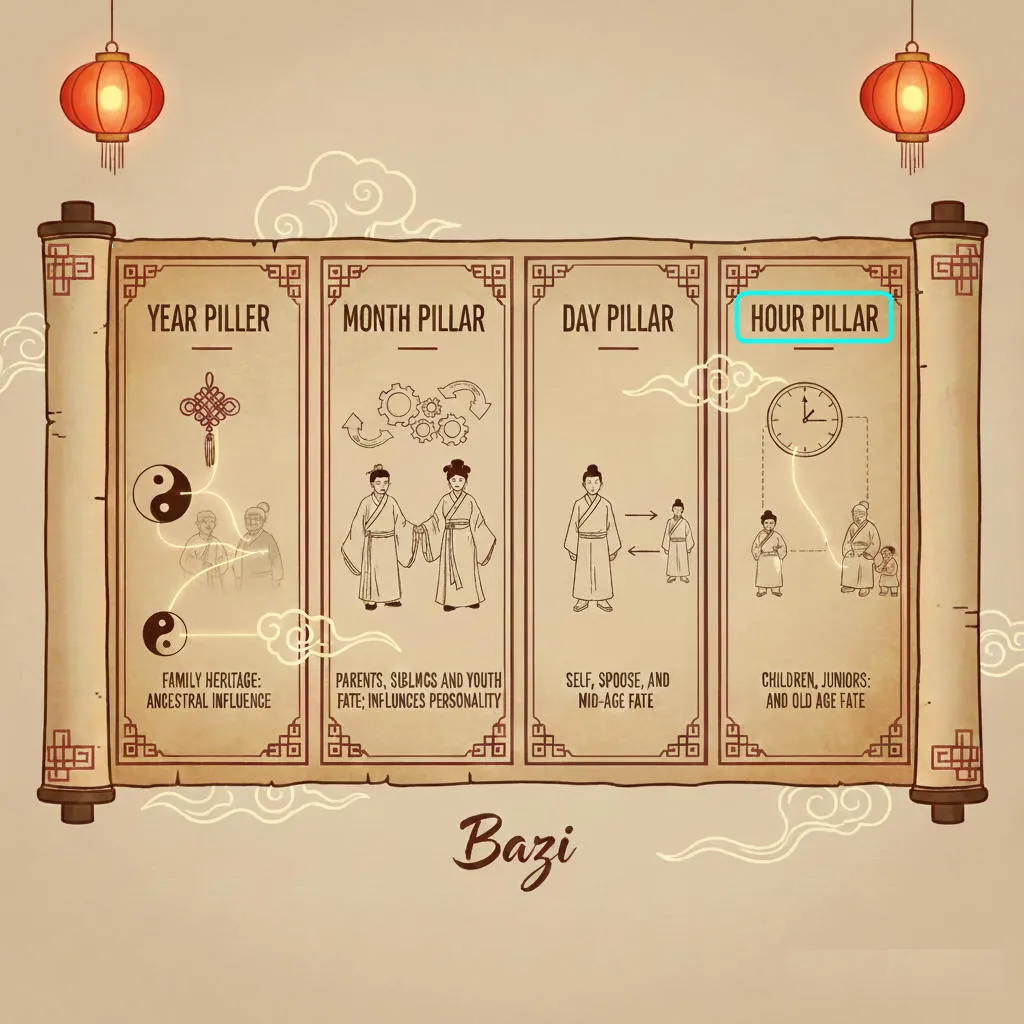
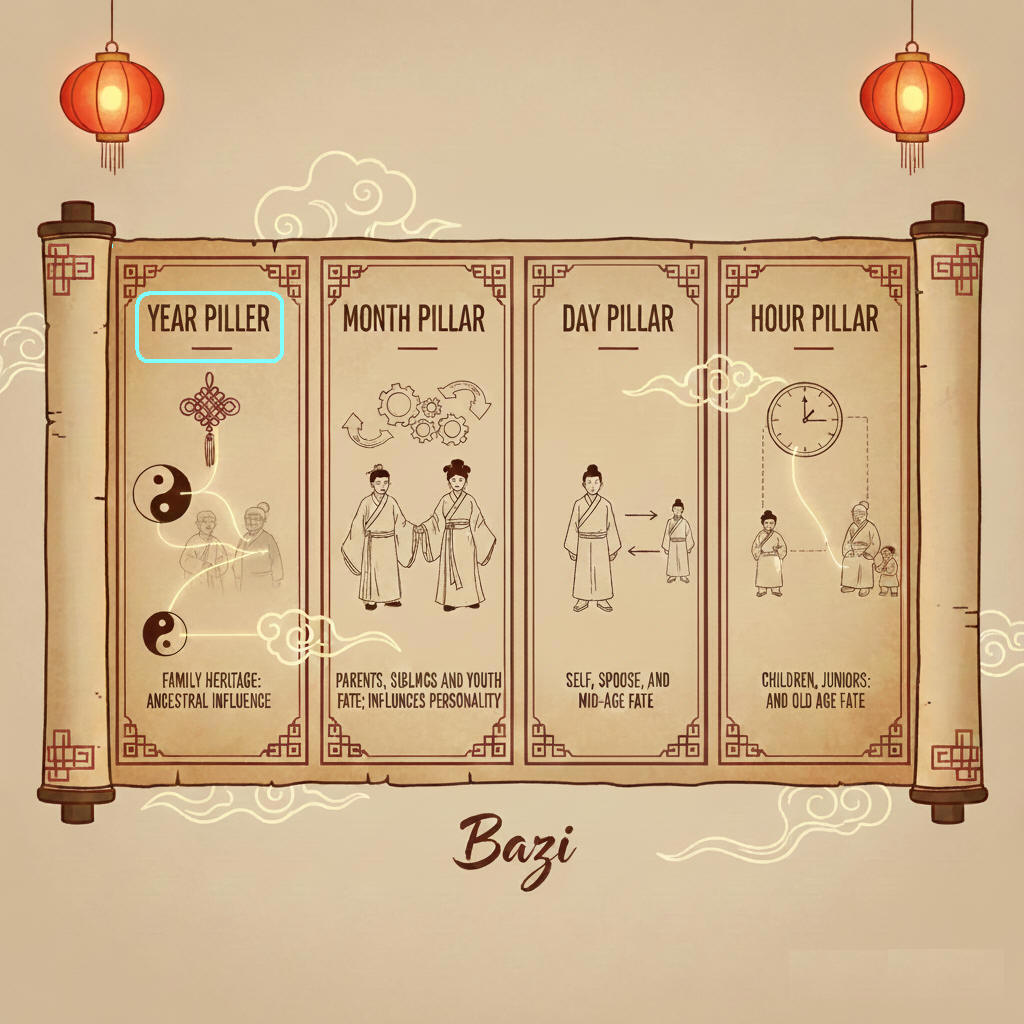
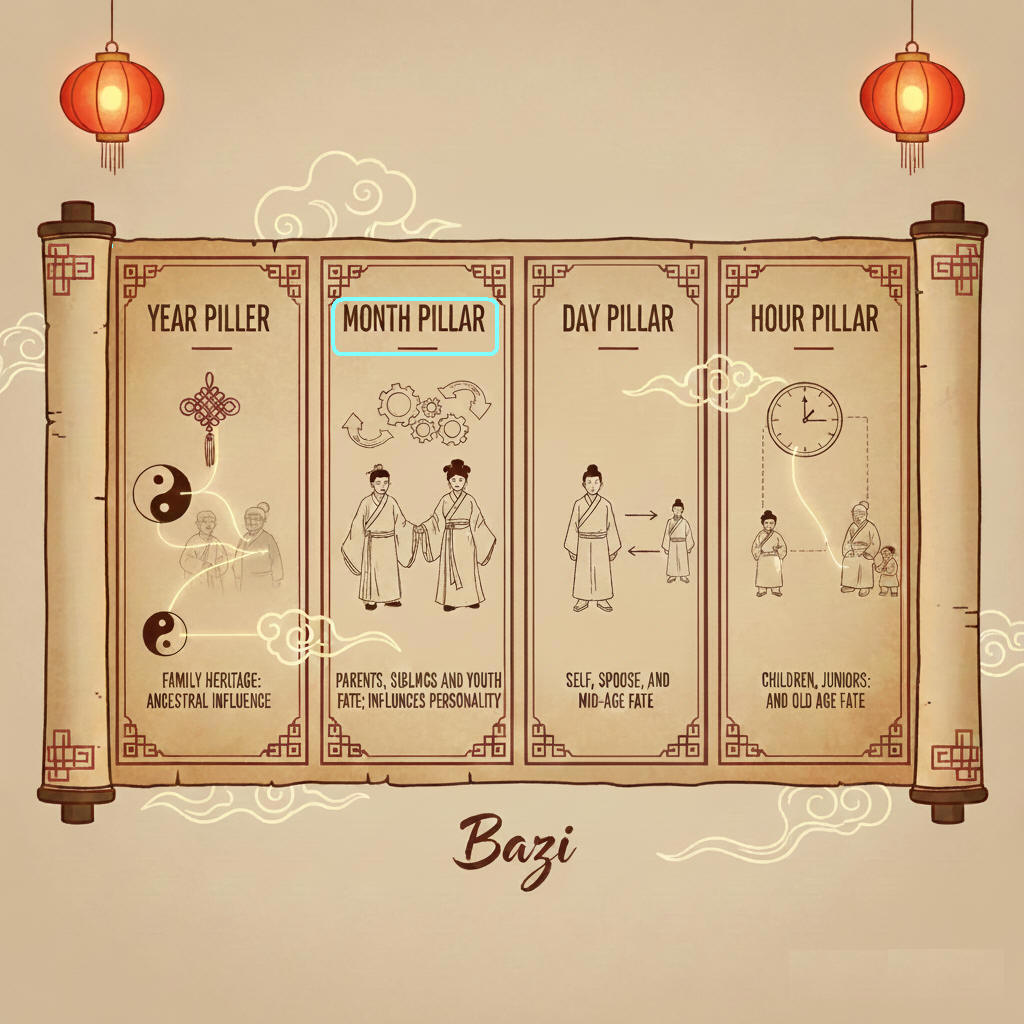
As the second of the four BaZi pillars (composed of the Heavenly Stem and Earthly Branch of the lunar birth month), Month Pillar is the core energy of the destiny chart. It reflects inner self, emotional nature and subconsciousness, defines security patterns and internal family relationships, and determines the basic tone of emotional expression.
Locate your Month Pillar via a formal BaZi calculator (enter birth date accurate to minutes; the second pillar is Month Pillar, divided by solar terms). It consists of Month Branch (seasonal background of emotions) and Month Stem (external carrier of emotions). For example, spring (Yin/Mao months) has prosperous Wood energy: Jia Wood expresses emotions openly, while Yi Wood is delicate and introverted.
III. Preliminary Preparation: Collecting Information on BaZi Month Pillar and Moon Sign
Preliminary preparation focuses on accurate information collection for subsequent interpretation. Follow three steps to ensure data accuracy:
1. BaZi Collection: Use a formal calculator, enter birth date (accurate to minutes; post-23:00 counts as next day), locate Month Pillar and mark Month Branch/Stem;
2. Astrology Collection: Enter the same information in a professional tool to get Moon Sign/House, record core needs (e.g., Moon in Taurus needs “material security”) and corresponding life areas;
3. Cross-Verification: Confirm birth time consistency between BaZi and astrology charts; mark errors if time is vague and verify Month Pillar’s solar term division.
IV. East-West Dialogue: Resonances and Differences Between Month Pillar and Moon Sign
1. Core Resonance: Common Ground in Emotional Core
BaZi Month Pillar and Moon Sign share the same core focus: inner emotional core. Both point to the private self (instinctive reactions, security needs) and recognize that early growth experiences shape emotional patterns—Month Pillar reflects family emotional inheritance, while Moon Sign relates to childhood security cultivation.
2. Core Differences: Interpretive Differences Between Static Needs and Dynamic Energy
Their core difference lies in interpretation dimensions: “static needs” vs “dynamic energy”, detailed in the table below:
|
Comparison Dimension |
West: Moon Sign |
East: BaZi Month Pillar |
|
Interpretive Dimension |
Static needs (e.g., Moon in Cancer needs a “family haven”) |
Dynamic energy (e.g., Wu Fire restrained by Metal-Water in Major Fortune) |
|
Core Logic |
Need classification (e.g., Moon in Sagittarius needs “freedom and exploration”) |
Root tracing (e.g., Shen Metal’s boundary need from restraining energy) |
|
Interpretive System |
Focuses on emotions only, supplemented by Moon House, simple system |
Interconnected with other BaZi pillars, Day Master and Ten Gods, strong relevance |
In short, Moon Sign is an “emotional needs manual” (clarifying security sources), while Month Pillar is an “emotional energy regulator” (revealing need roots and change rules). They complement each other to improve emotional awareness.
Case Study: Ms. Lin (Moon in Pisces, needing deep empathy; Month Pillar: Hai Ren Water, deep introverted emotions). Scenario: Team project setbacks, cold public discussion. Action: She communicated one-on-one post-meeting with empathetic listening. Result: Colleagues opened up, team completed rectification in a week. This shows their resonance (empathy need) and difference (Month Pillar determines private communication style).
V. Decoding the Five Elements of the Month Branch: Your Emotional Season
Month Branch is the core of Month Pillar, determining the most prosperous Five Elements energy at birth and shaping personality/emotional foundation. Practical applications in daily scenarios:
1. Spring Wood (Yin/Mao): Sensitive and empathetic. Set “help boundaries” at work and reserve personal growth time;
2. Summer Fire (Si/Wu): Enthusiastic. Pause 3 minutes before communicating when emotional to avoid extreme words;
3. Late Summer Earth (Chen/Wei/Xu/Chou): Pragmatic. Sort out stable factors (salary, team atmosphere) before job changes;
4. Autumn Metal (Shen/You): Calm and principled. Clarify interpersonal boundaries (e.g., “I need weekend alone time”);
5. Winter Water (Hai/Zi): Intuitive and tolerant. Write private diaries to sort out emotions when drained.
VI. Interactive Practice: Drawing Your Emotional Energy Map
1. Practice Methods: Practical Application of the Five Elements of the Month Branch and Ten Gods of the Month Stem
The core of practice is to transform Month Branch Five Elements and Month Stem Ten Gods traits into actionable emotional management methods in two steps:
1. Five Elements Adaptation: Identify your Month Branch Five Elements and emotional triggers (e.g., Wu Fire is irritable when ignored). Formulate a “trigger-response” plan: take 3 deep breaths to anchor emotions, then vent via exercise or talking;
2. Ten Gods Optimization: Confirm Ten Gods corresponding to Month Stem (e.g., Jia Wood = Injury God, Yi Wood = Positive Seal). Adjust behavior accordingly—Injury God suits creative work but needs speech outlines for serious meetings.
2. Reflection and Calibration: Three Layers of Self-Review and Plan Optimization
Calibrate practice effects through three layers of self-reflection to ensure suitability:
1. Trait Matching Review: Are triggers accurate? Is emotional reaction consistent with traits? Is the response plan effective?
2. Ten Gods Adaptation Review: Is Ten Gods consistent with daily emotions? In which scenarios is it advantageous or needs restraint?
3. System Synergy Review: How do Moon Sign needs complement Month Pillar energy? How to optimize methods (e.g., Pisces empathy + Hai Water introversion = “deep listening + written empathy”);
Note: Beginners tend to make mistakes in Ten Gods judgment and trigger identification. Learn basic numerology first, then calibrate via 1-2 weeks of daily emotional records to avoid blind application.
VII. Conclusion
In summary, BaZi Month Pillar and Moon Sign interpret emotional patterns from different dimensions—Month Pillar focuses on dynamic energy and roots, while Moon Sign on static needs and types.
By accurately obtaining Month Pillar information and practicing with Five Elements/Ten Gods, you can clearly understand emotional roots and optimize management.
Note that numerology is an auxiliary tool for self-awareness, which needs adjustment based on reality and cannot be mechanically applied.
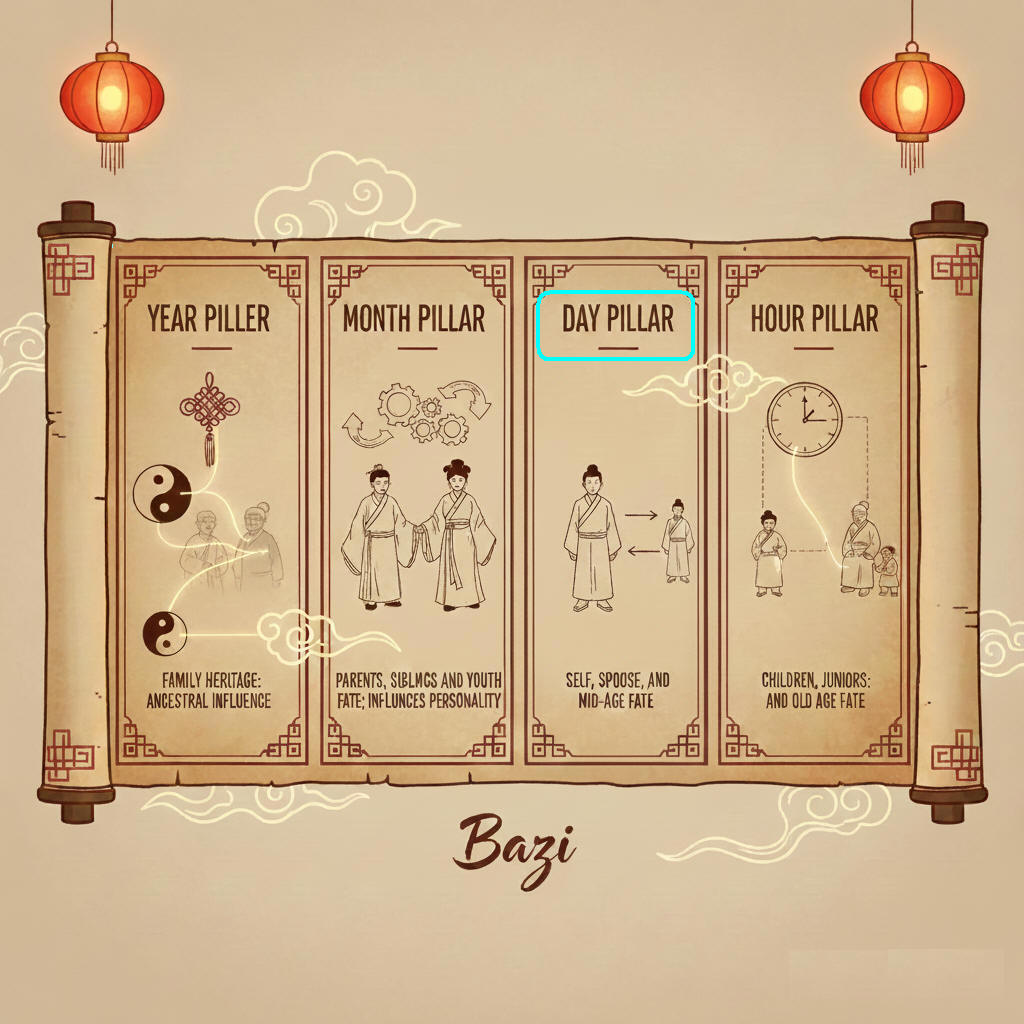
Next, we will explore BaZi Day Pillar, and continue to connect with BaZi Month Pillar to reveal how it defines core self and external personality for comprehensive self-awareness.
VIII. Glossary
1. Month Pillar: One of the four BaZi pillars, composed of lunar birth month’s Heavenly Stem and Earthly Branch. Core energy of the destiny chart, representing inner self, emotional nature, subconscious and security patterns.
2. Month Branch: Earthly Branch of Month Pillar, determining emotional seasonal background and basic energy attributes, core root of emotional patterns.
3. Month Stem: Heavenly Stem of Month Pillar, presenting external emotional tendencies and psychological patterns, direct carrier of emotional expression.
4. BaZi (Eight Characters): Four-pillar system composed of birth date’s Heavenly Stems and Earthly Branches, traditional numerology tool for interpreting life traits and destiny.
5. Five Elements: Five basic energy forms (Metal, Wood, Water, Fire, Earth) interacting via generation, restriction, control and transformation, influencing numerological traits.
6. Ten Gods: Numerological concept based on Yin-Yang and Five Elements relationships, reflecting interpersonal interaction and behavioral patterns. Involved in this article: Injury God, Positive Seal, Positive Officer.
7. Major Fortune: 10-year destiny cycle in numerology, affecting energy strength in the destiny chart and changing emotional patterns.
8. Chart Casting: Process of generating BaZi or astrology charts via birth information, basic step to obtain core numerological data.