
Unlocking the Secrets of Talisman Calligraphy Mastery
Preface: Talisman calligraphy is based on lines and philosophy. The four schools have distinct styles corresponding to their core philosophies. From a talisman master’s perspective, this article deciphers their calligraphy secrets, analyzes the connection between calligraphy and philosophy, and helps you master the core method of “distinguishing schools by talisman calligraphy” to understand the connotation of “brushwork reflects mindset”.
I. Opening: Calligraphy, the Identity Card of Talisman Schools
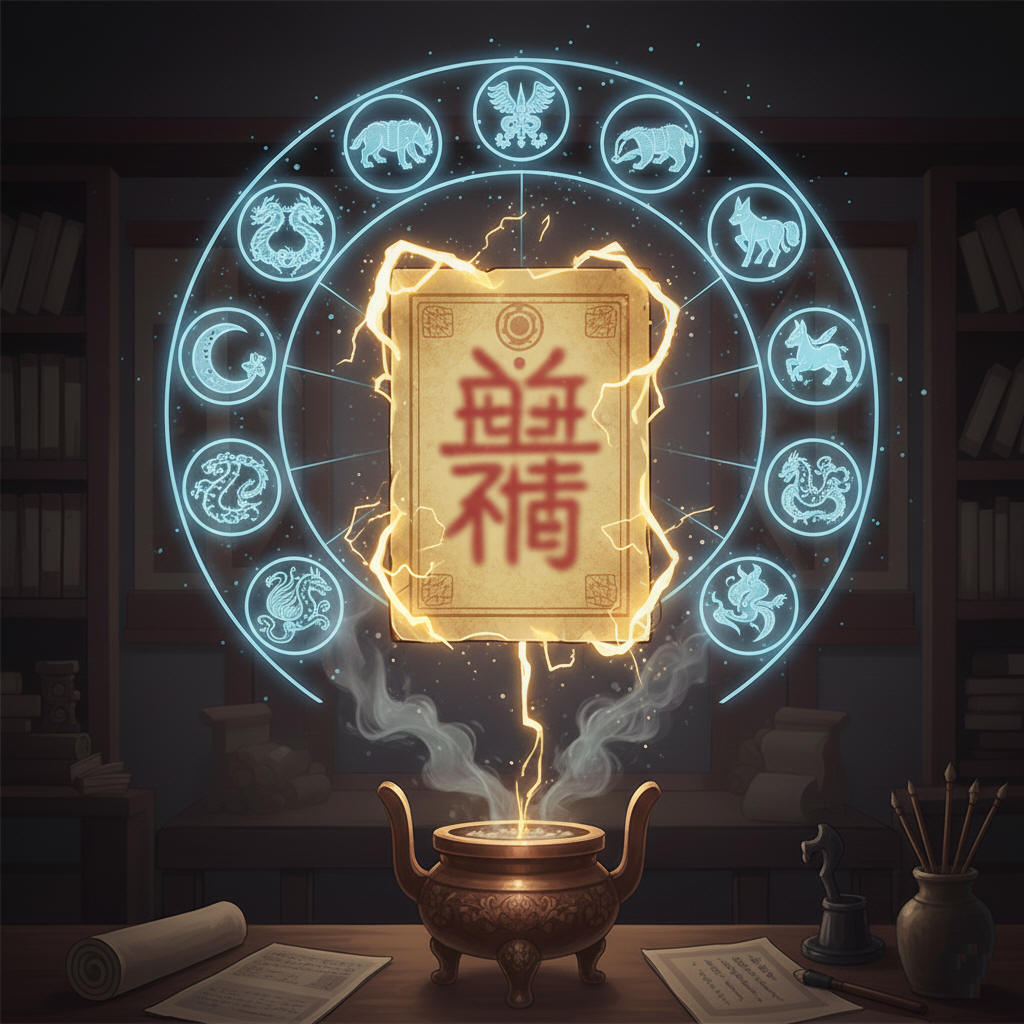
Talisman calligraphy is the most intuitive “identity card” for distinguishing sects. Unlike ordinary calligraphy, it carries a school’s practice philosophy, inheritance norms and energy transmission logic, forming a unique “temperament symbol” through centuries of inheritance.
The core reason lies in that a school’s core demands determine its talisman calligraphy style: Zhengyi (orthodoxy & authority) has solemn and regular calligraphy; Lingbao (saving souls) has gorgeous and intricate calligraphy; Shangqing (internal cultivation) prefers elegant and concise calligraphy; folk Taoist sects (practicality) have straightforward and vigorous calligraphy. Understanding talisman calligraphy helps grasp a school’s core traits, a key entry point for in-depth study of talisman culture. Next, we analyze each school’s characteristics and philosophical core.
II. Zhengyi Calligraphy: Discipline and Authority
As Taoism’s orthodoxy, Zhengyi’s talisman calligraphy embodies “discipline and authority”. We first explore its calligraphy characteristics to understand its solemn and regular core style.
1. Zhengyi Calligraphy Characteristics: Solemn and Regular
When I first learned talisman calligraphy, my master required three months of Zhengyi practice. It was based on regular script, focusing on “horizontal lines level and vertical lines straight”. Zhengyi’s core is precision: uniform line thickness, steady brush movement, no delay or elegance. It exudes solemnity like official court documents.
My first attempt at painting the Zhengyi Evil-Expelling Talisman taught me a lot. I concentrated on the yellow paper, started with a steady stroke, moved at a constant speed with force, made sharp turns, and ended firmly. Shaky lines due to uneven force were corrected by my master. He emphasized that irregular lines would scatter the energy field and fail to convey the authority of “conveying the will of heaven on its behalf”. This pursuit of precision is rooted in Zhengyi’s core philosophy.
2. Philosophical Support for Zhengyi: Official Identity and Strict Precepts
As Taoism’s earliest orthodox school, Zhengyi’s core positioning is “conveying the will of heaven on its behalf and governing all spirits”. Its official identity and strict precepts directly shape its solemn and regular calligraphy style.
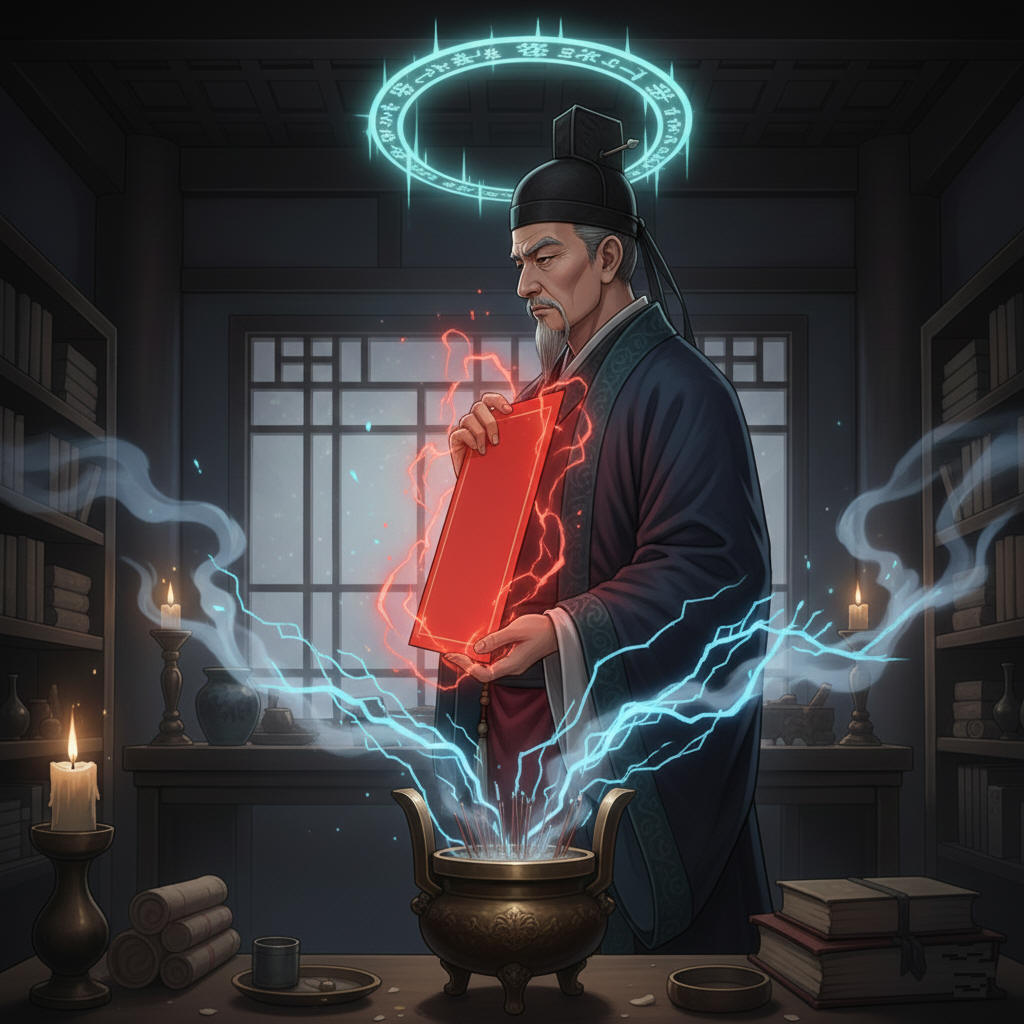
For Zhengyi, talismans are carriers of heavenly will, admitting no arbitrariness. Regular lines visually embody “heaven’s mandate”, evoking awe in believers and ensuring gods clearly receive the will. Strict rituals like hand-washing, incense-burning and scripture-reciting before painting strengthen reverence, ensuring steady brushwork. Under this philosophy, “correctness” of talismans outweighs “individuality”; altering line patterns arbitrarily is a desecration of inheritance and heaven’s mandate.
3. Zhengyi Case Study: Supreme Zhengyi Evil-Expelling Talisman
The “Supreme Zhengyi Evil-Expelling Talisman” (recorded in *Taoist Canon·Zhengyi Script: The Supreme External Record*) is Zhengyi’s representative talisman. I have reproduced it many times for rural exorcism practices.
A memorable case: following standard procedures in a farmer’s clean room, I completed the talisman and performed Zhengyi’s exclusive rituals. Abnormal noises caused by supernatural phenomena disappeared the next day. However, it is less effective in emergencies. Once, hasty painting due to time pressure led to skewed lines of “Imperial Decree”, and the effect only lasted half a day.
Suggestions for different scenarios: Use the simplified Zhengyi Emergency Townhouse Talisman for urgent exorcism (completable in 5 minutes with core strokes only). Wash hands with clean water and recite *Scripture of Purity and Stillness* three times to stabilize the mind before painting. Supplement with the full version when the environment is stable. Solidify regular script skills and practice 15-minute mind-purifying rituals before regular painting.
III. Lingbao Calligraphy: Ritual Sense and Compassion for Salvation
Unlike Zhengyi’s authoritative style, Lingbao’s talisman calligraphy is a carrier of ritual sense. Focused on “saving the souls of the deceased”, it features a gorgeous and intricate style. Below is an in-depth analysis of its characteristics and philosophical connections.
1. Lingbao Calligraphy Characteristics: Flowing Cloud Seal Script
Lingbao’s talisman calligraphy is gorgeous and intricate, centered on “Yunzhuan (Cloud Seal Script)”—a unique font with flowing, winding lines integrating star charts and cloud patterns, creating a strong visual impact.
Learning Yunzhuan took me half a month. Painting Lingbao’s Soul-Saving Talisman requires light, continuous brushwork. It needs rich thickness variations and smooth turns, like “painting clouds” on yellow paper. Mastering a single cloud pattern in the Lingbao Soul-Guiding Cloud Seal Talisman took dozens of practices. This intricate style is tailored to its core philosophy of saving souls.
2. Philosophical Support for Lingbao: Saving the Souls of the Deceased
Lingbao’s core philosophy is “saving the souls of the deceased and universal salvation”. It holds that the deceased suffer in hardship. They need solemn, intricate rituals to connect with gods for rebirth. As a core ritual medium, talismans must match the ritual’s solemnity and information richness.
Gorgeous Yunzhuan embodies this philosophy. Winding lines carry more guidance and salvation prayers. Star charts at the start and cloud patterns at the end symbolize channels connecting heaven and earth for rebirth. Gentle brushwork conveys soothing energy to comfort the deceased. It contrasts sharply with Zhengyi’s authoritative deterrence, perfectly matching the core demand of guiding souls and comforting relatives.
3. Lingbao Case Study: Soul-Saving Rebirth Talisman
The “Lingbao Soul-Saving Rebirth Talisman” (recorded in *Lingbao Infinite Scripture for Saving All Beings*) is typical of Lingbao’s calligraphy, featuring winding Yunzhuan lines like an exquisite painting.
I once used it to save a deceased person’s soul. After accurately mixing cinnabar and pine smoke ink, I spent two hours painting Yunzhuan and performed the “Lantern-Lighting Soul-Guiding” ritual. The deceased’s relatives reported dreaming of their loved one leaving peacefully with a smile. However, high painting thresholds (time and material requirements) can lead to failures—hasty pigment mixing once caused dry lines and broken Yunzhuan, affecting ritual continuity.
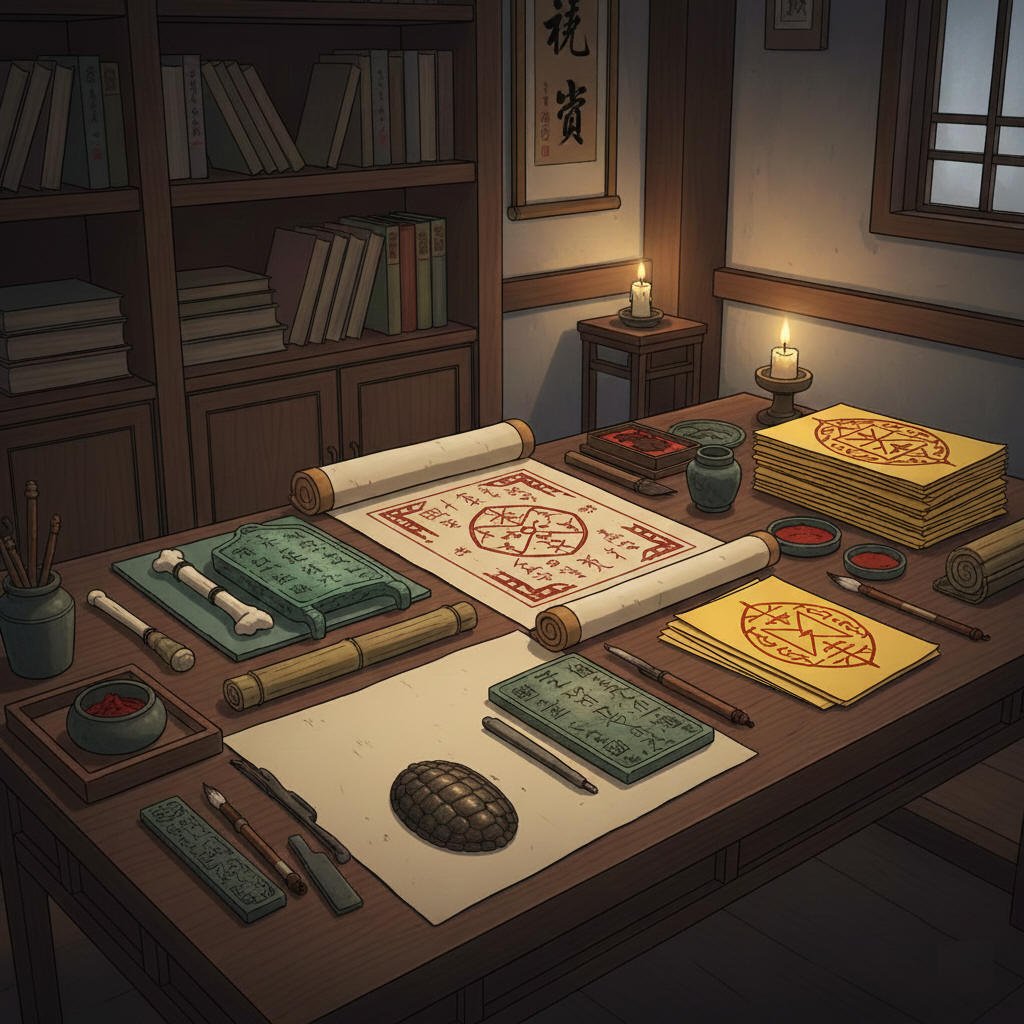
Suggestions: Prepare materials through three steps (grinding-standing-filtering): mix cinnabar and pine smoke ink 1:2, grind clockwise for 30 minutes, add a little rootless water to adjust consistency, stand for 24 hours, and filter impurities. Reserve over 2 hours for painting; complete and verify talismans for large rituals one week in advance.
IV. Shangqing Calligraphy: Internal Cultivation and Freedom
Unlike Zhengyi’s disciplined and Lingbao’s ritualistic styles, Shangqing focuses on the painter’s internal cultivation, interpreting “contemplative internal cultivation” and “the great Dao is simple” with an elegant, concise style.
1. Shangqing Calligraphy Characteristics: Elegant and Concise
Shangqing (Maoshan Sect)’s talisman calligraphy is elegant and concise. Taking the Shangqing Health-Preserving Talisman as an example, its lines are natural and flexible, smooth in brushwork, focusing on “freehand brushwork” to outline core images with simple lines, similar to running script.
My master told me: “Cultivate the mind first, then pick up the brush.” Shangqing’s calligraphy emphasizes “the mind follows the brush”. Painting without restraint, one integrates internal cultivation energy into lines. I meditated for half an hour to unify my mind and spirit before my first attempt at the Shangqing Contemplative Health-Preserving Talisman. The lines were natural and smooth, exuding flexibility—an experience not found in Zhengyi or Lingbao practice. This feature is closely linked to Shangqing’s internal cultivation philosophy.
2. Philosophical Support for Shangqing: Contemplative Internal Cultivation and Simplicity
Shangqing’s core philosophies—”contemplative internal cultivation” and “the great Dao is simple”—jointly determine its elegant, concise style. Contemplative internal cultivation pursues resonance with heaven and earth. It achieves this through concentration and introspection. “Simplicity” advocates abandoning complexity to grasp essence.
Guided by these philosophies, Shangqing’s calligraphy does not pursue Zhengyi’s regularity or Lingbao’s gorgeousness. Simple lines reduce distractions, allowing focus on internal cultivation. They help integrate essence, energy and spirit into brush and ink smoothly. Elegant, flexible brushwork embodies the free flow of internal cultivation energy. It makes talismans “energy media” connecting oneself with the Dao. Long-term practice shows that the painter’s internal cultivation directly determines the talisman’s effect.
3. Shangqing Case Study: Contemplative Health-Preserving Talisman
The “Shangqing Contemplative Health-Preserving Talisman” (recorded in *Shangqing Great Cavern Scripture*) has simple lines outlining the core image of “unity of human and gods”, exuding elegance and flexibility.
I often use it to assist internal cultivation. I meditate for half an hour and contemplate the “Great Cavern True Person” first. Then I paint the talisman and wear it. This significantly improves my concentration and comfort during practice. However, it requires high internal cultivation. Beginners who rushed to paint after one week of practice produced talismans with no “flexible energy” and no calming effect. Some even suffered from qi and blood disorders.
Suggestions for gradual progress: 1-2 months of internal cultivation foundation (meditate 30 minutes daily with Shangqing’s basic contemplation method until perceiving dantian energy); practice line copying on waste paper with a pencil, matching breathing (inhale while moving the brush, exhale when ending); finally paint officially with cinnabar and yellow paper.
V. Folk Taoist Sect Calligraphy: Utilitarianism and Practicality
Different from orthodox Taoism’s ritualistic or cultivation-oriented styles, folk Taoist sects adopt straightforward, vigorous talisman calligraphy, perfectly adapting to the practical demand of solving real problems.
1. Folk Taoist Sect Calligraphy Characteristics: Straightforward and Vigorous
Folk Taoist talisman calligraphy lacks Zhengyi’s regularity, Lingbao’s gorgeousness and Shangqing’s elegance, focusing on straightforwardness and vigor. Lines are direct and decisive, with few rules, often integrating elements from various schools for practicality.
An old folk Taoist master taught me: “Don’t be constrained by rules; convey the intention of healing into lines.” I painted my first folk Infant Fever-Reducing Talisman in less than a minute. I used decisive, rapid brushwork. The lines were simple but powerful, reflecting folk Taoism’s practical utilitarianism.
2. Philosophical Support for Folk Taoist Sects: Practical Utilitarianism
Folk Taoism’s core demand is extreme practicality, rooted in people’s urgent needs to solve illnesses, expel evil and avoid disasters. It is not attached to orthodox Taoism’s official system or complex doctrines.
For folk Taoism, a talisman’s value lies in “quick effectiveness and problem-solving”. This determines its core logic of “efficiency and effectiveness”, abandoning redundant formalism. This shapes its straightforward style: direct lines shorten painting time, adapting to emergencies like sudden illnesses. Integrating diverse elements allows flexible adaptation to different scenarios. It is often combined with hand gestures and blood sacrifice for quick effects.
3. Folk Taoist Sect Case Study: Meishan Healing Talisman
The Meishan Healing Talisman of southern Meishan School is typical, passed down orally with straightforward, rough lines using simple images like crosses and circles to transmit energy.
I once used it to treat an elderly person’s rheumatism. I adopted decisive brushwork and Meishan’s exclusive healing hand gestures. I painted the talisman with cinnabar mixed with a little of my essence and blood. The pain was significantly relieved the next day. However, oral inheritance leads to unsystematic practices and regional differences. Blood sacrifice also poses health risks, such as inflammation from unsterilized needles.
Suggestions: Prioritize inheritances with clear master-disciple lineages; record patterns and effects. Use disposable sterile blood collection needles for blood sacrifice, disinfect with 75% alcohol, and prefer alternatives like “cinnabar + mugwort leaf juice”.
VI. Comparative Practice: Differences and General Solutions
We have clarified each school’s characteristics, philosophy and practical points. Below, we sort out core differences, analyze root causes of demand divergence, and propose general solutions to form a complete cognitive chain of “understanding differences, grasping roots, and mastering applications”.
1. Core Sorting: Calligraphy-Philosophy-Scenario Correlation
1. Zhengyi: Solemn/regular lines; philosophy of discipline/authority; applicable to official sacrifices and large exorcism rituals; note: prone to failure in emergencies, emphasizing mind-purification and ritual preparation.
2. Lingbao: Intricate Yunzhuan with star charts; philosophy of saving souls/solemn rituals; applicable to salvation for the deceased; note: time-consuming and material-demanding, requiring full preparation.
3. Shangqing: Elegant/flexible simple lines; philosophy of internal cultivation/simplicity; applicable to self-cultivation and chronic disease conditioning; note: high internal cultivation requirements, requiring gradual practice.
4. Folk Taoism: Straightforward/rough lines; philosophy of practical utilitarianism; applicable to sudden illnesses and mild pain relief; note: unsystematic inheritance and health risks, requiring standardized operation.
2. Root Cause Analysis: Core Differences in Calligraphy
Differences in talisman calligraphy essentially stem from divergences in inheritance cores and demands. They form the logic of “calligraphy adapting to philosophy”. Zhengyi uses regular lines to show authority. Lingbao uses intricate Yunzhuan to carry prayers. Shangqing uses simple lines to match internal cultivation. Folk Taoism uses direct lines to improve emergency efficiency. These are not “superior-inferior” differences but “adaptation” differences. Proper matching ensures effectiveness.
3. Practical Implementation: Common Problems and Solutions
1. Varying entry thresholds: Zhengyi/Lingbao need skill/material foundations; Shangqing needs internal cultivation; folk Taoism needs inheritance identification.
Solution: Beginners start with simple folk talismans (e.g., basic fever-reducing talismans) for 1-2 months; those preferring orthodoxy practice basic Zhengyi calligraphy while cultivating the mind, avoiding high-threshold talismans directly.
2. Insufficient preparation affecting effects: Zhengyi/Lingbao have high material/time requirements, prone to failure when rushed.
Solution: Sort material lists and time budgets in advance; prepare materials and practice 3-5 days early; complete and verify large-ritual talismans one week in advance.
3. Lack of safety and standardization: Blood sacrifice risks; arbitrary brush modification.
Solution: Use sterile tools for blood sacrifice; prefer alternatives. Abide by inheritance patterns; consult masters for doubts.
VII. Interactive Practice: Distinguishing Schools Through Calligraphy
To consolidate knowledge, we conduct interactive practice of “guessing schools by talisman calligraphy” to strengthen identification ability.
1. Core Identification Points
1. Zhengyi: Regular like regular script, sharp angles; 2. Lingbao: Flowing Yunzhuan, intricate with star charts/cloud patterns; 3. Shangqing: Elegant like running script, simple images; 4. Folk Taoism: Straightforward/vigorous, rough/simple, integrated.
2. Case Verification
1. Supreme Zhengyi Evil-Expelling Talisman: Solemn/regular lines → Zhengyi; reason: matches discipline/authority philosophy, showing orthodoxy.
2. Lingbao Soul-Saving Rebirth Talisman: Intricate Yunzhuan → Lingbao; reason: fits ritual/soul-saving demands, carrying guidance prayers.
3. Shangqing Contemplative Health-Preserving Talisman: Simple/elegant lines → Shangqing; reason: adapts to internal cultivation, helping focus and embodying energy.
4. Meishan Healing Talisman: Straightforward/rough lines → Folk Taoism; reason: reflects practicality, enabling quick painting for emergencies.
VIII. Conclusion: Brushwork Reflects Mindset
Through systematic analysis, we understand the core connotation of “brushwork reflects mindset”. Each school’s talisman calligraphy is not arbitrary but a linear expression of core philosophy, an intuitive “identity card” of the school’s temperament.
As a talisman master, I emphasize that learning calligraphy is not just mastering skills. It is more about understanding the underlying philosophy and culture. Only by deeply binding calligraphy with philosophy can we grasp the logic of “calligraphy adapting to philosophy, philosophy adapting to scenarios”. This allows us to truly master talismans’ essence. I hope you can accurately identify styles and apply knowledge flexibly. This will let talisman culture play its value in standardized inheritance.
IX. Glossary
1. Yunzhuan (Cloud Seal Script): Lingbao’s unique talisman font with flowing, winding lines integrating star charts and cloud patterns.
2. Contemplative Internal Cultivation: Shangqing’s core philosophy—cultivating essence, energy and spirit through contemplating gods and introspection, supporting its elegant/concise calligraphy to achieve unity with the Dao.
3. Conveying the Will of Heaven on Its Behalf: Zhengyi’s core philosophy—representing heaven to convey will, showing official authority and orthodoxy.
4. Rituals: Standard Taoist ritual procedures (hand-washing, incense-burning, scripture-reciting) assisting energy transmission of talisman calligraphy.
5. Hand Gestures: Specific hand movements guiding energy to enhance talisman effects with calligraphy.
6. Blood Sacrifice: Folk Taoism’s auxiliary painting method—mixing essence/blood with pigments to enhance energy, often paired with straightforward calligraphy but with health risks.