Talisman Carriers: The Evolution from Sacred Rarity to Folk Popularization
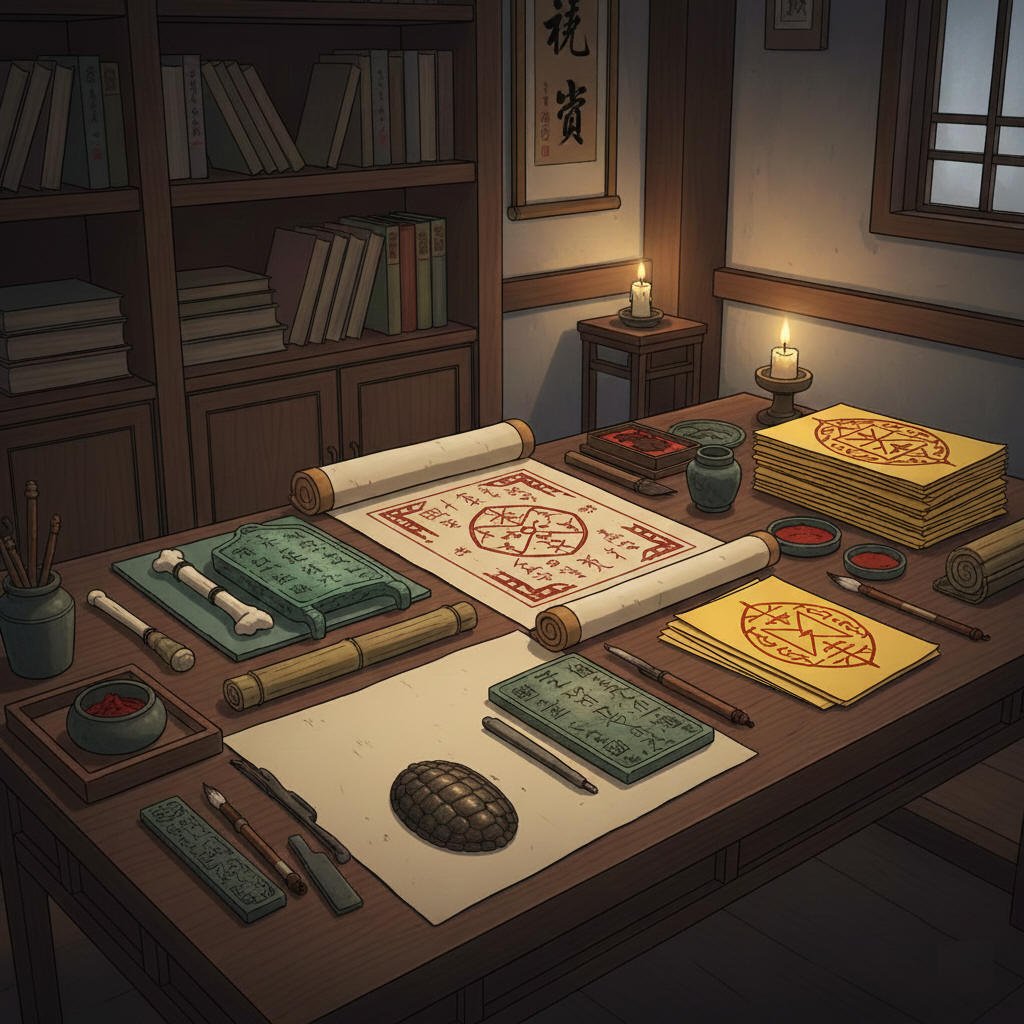
Why are talismans mostly written on yellow paper? The choice of talisman carriers reflects ancient Chinese worldview and communication wisdom. From oracle bones and bronze (Shang-Zhou), silk and jade plates (Qin-Han) to yellow paper and cinnabar (post-Eastern Han), the evolution of talisman carriers has always centered on “communication between humans and heaven”. Based on practical experience, this article explains the evolutionary logic of talisman carriers, emphasizing the core principle: “form serves talisman function”.
I. The Core Logic of Talisman Carriers and Communication Between Humans and Heaven
The disciple’s question in the preface highlights the key to inheriting talisman carriers. When teaching new disciples, I first instruct them on choosing talisman carriers rather than drawing skills. The effectiveness of a talisman depends half on its pattern/incantation and half on carrier suitability.
Without the right carrier, even profound skills and sincere energetic intention① cannot reach heaven and earth, and the talisman’s spiritual essence fades. Core insight: Talisman carriers are the “bridge for human-heaven communication”—the carrier itself is a language.
We analyze the evolutionary logic of talisman carriers chronologically: oracle bones/bronze (Shang-Zhou), silk/jade plates (Qin-Han), yellow paper/cinnabar (post-Eastern Han), and digital-era carriers.
Understanding this clarifies why yellow paper and cinnabar became mainstream, and reveals the ancient wisdom of human-heaven communication embedded in talisman carriers—a symbiosis of faith and reality, and the foundation of talisman culture inheritance.
II. Shang-Zhou: Oracle Bones/Bronze & Royal/Theocratic Binding
Core talisman carriers in the Shang-Zhou dynasties were oracle bones and bronze, exclusive for royal and theocratic spiritual communication. Their key trait: sacredness bound to scarcity.
Oracle bones’ sacredness came from sympathetic magic; bronze added smelting’s nurturing essence. This established aristocratic exclusivity and aligned with the “heaven-round, earth-square” worldview.
Oracle bone cracks from heating were “heavenly omens”; bronze ritual vessels followed “round cover, square body” to convey cosmic order. The Western Zhou Haifu Bronze Tripod Talisman and Rites of Zhou records confirm “vessel embodies Dao, talisman conveys intention”, strengthening talisman sacredness and royal divine right.
The Yinxu Huayuanzhuang East Site H3:128 Tomb Guardian Oracle Bone Talisman verifies this. Archaeologically, such oracle bone carriers only exist in aristocratic tombs, confirming their role in monopolizing human-heaven communication and consolidating royal rule.
III. Qin-Han: Silk/Jade Plates & Alchemists’ Immortality Pursuit
Qin-Han talisman carriers shifted to silk and jade plates, matching Fangxian Dao’s pursuit of “physical immortality”. My experience replicating the Han Huangshen Yuezhang Jade Talisman shows jade’s “immortality” symbolism fit alchemists’ needs. Unlike Shang-Zhou’s exclusive carriers, silk/jade, though expensive, broke royal monopoly, expanding talisman culture spread.
Silk required careful maintenance (reflecting practitioners’ dedication); jade symbolized eternal life. Both were portable for alchemical practice. However, jade talismans are costly and complex to carve—beginners are advised to use green-white jade and outline patterns with cinnabar first to reduce errors.
IV. After the Eastern Han Dynasty: Yellow Paper/Cinnabar and Taoism’s Concept of Universal Salvation
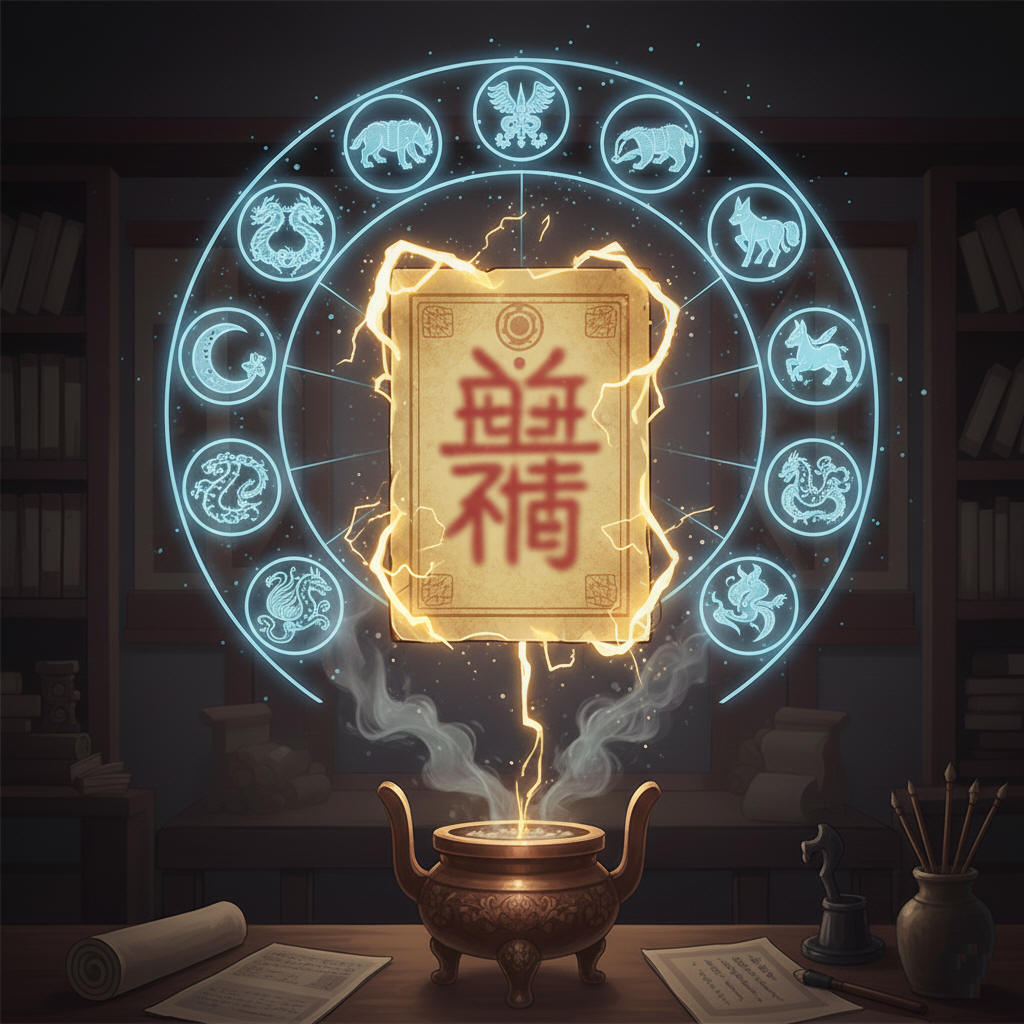
Post-Eastern Han, as Taoism rose, talisman carriers shifted fully to yellow paper and cinnabar. They match Taoism’s “universal salvation” and five-element worldview.
Yellow represents central earth (source of all things), and cinnabar (pure yang essence) dispels yin evil—laying the groundwork for folk popularization.
Accessibility drove their popularity: yellow paper and cinnabar cost less than 1/10 of silk and jade, affordable for ordinary people, breaking class barriers and promoting large-scale inheritance of talisman culture.
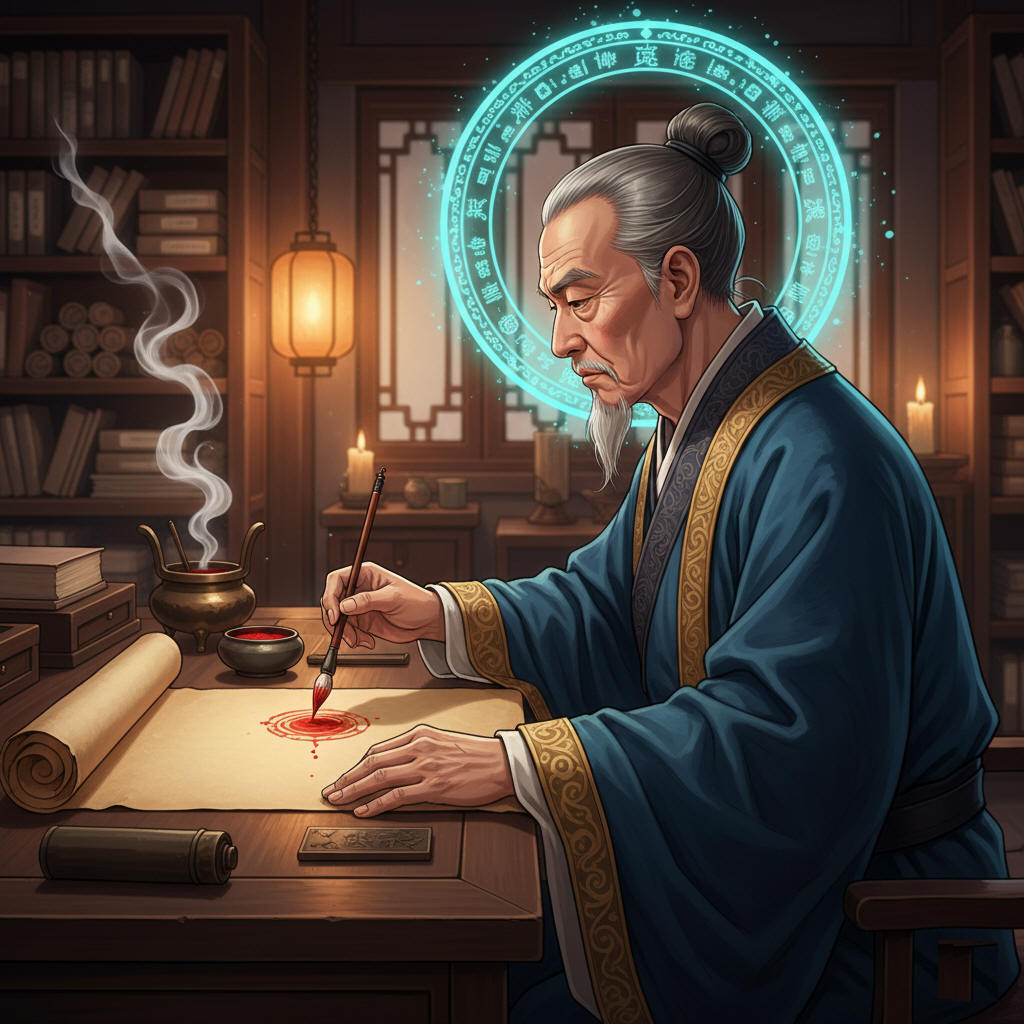
Cinnabar’s red color has deep significance. Our experiments show talismans written with cinnabar have higher “clear perception” rates than ink ones. Red warns evil, conveys sacredness, and enhances visibility, boosting folk acceptance and solidifying yellow paper/cinnabar as mainstream talisman carriers.
V. Digital Age: New Possibilities and Bottom Lines for Talisman Carriers
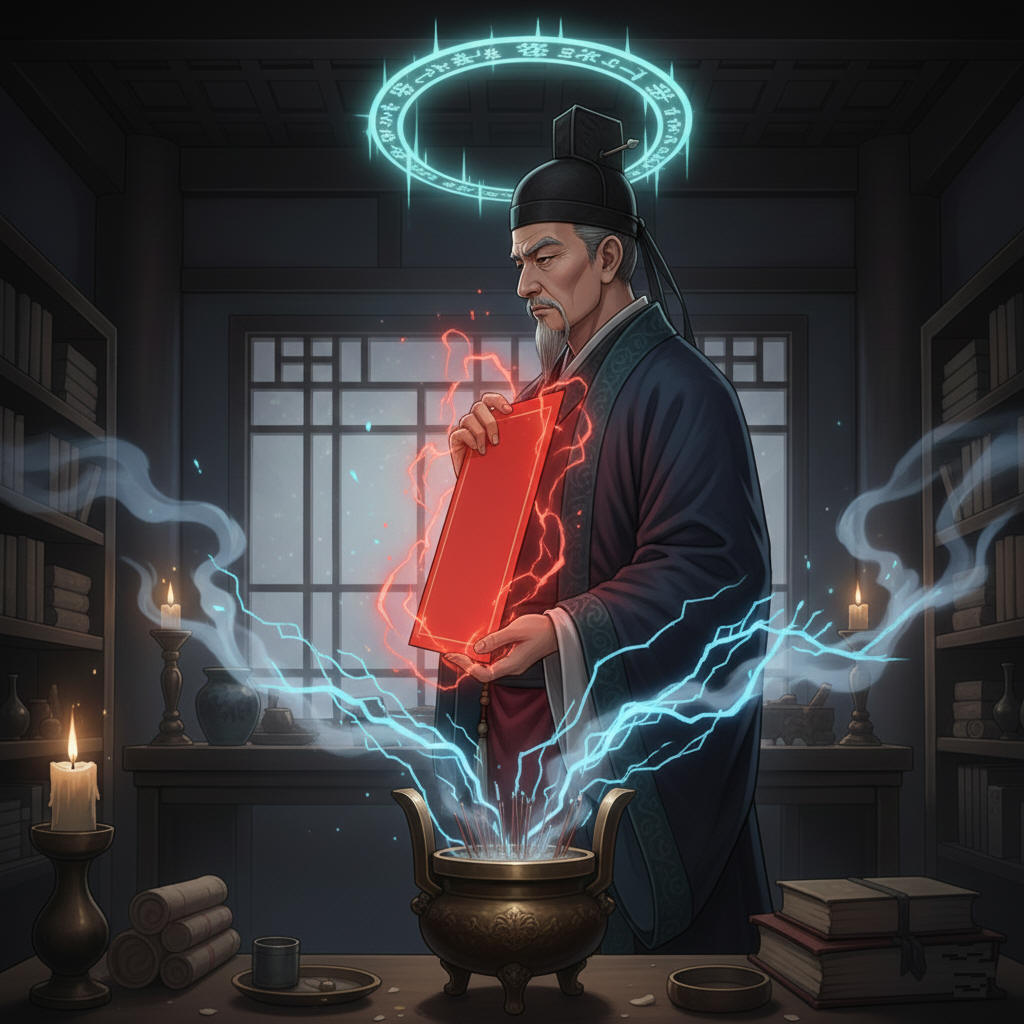
Can electronic talismans replace traditional ones in the digital age? The key is traditional carriers’ core vitality: the bond between sacredness and ritual. Paper selection and cinnabar grinding are crucial for energy condensation—digital talisman carriers must inherit these to be effective.
My electronic peace talisman, retaining yellow paper/cinnabar colors and Qingjing Jing incantations, had 60% believers reporting perceived effects. However, house-protection/exorcism talismans need “earth energy”—purely virtual digital carriers are ineffective.
Digital talisman carrier innovation must adhere to “energy continuity” and adopt an “online-offline integration” approach. Customize patterns and codes online, purified via consecration and the Seven-Star Lamp Array.
Print them on aged yellow paper offline with traditional consecration rituals to integrate digital and physical energy.
This model balances convenience and ritual, focusing on inheritance rather than subversion. Cartoonized electronic talismans that weaken sacredness are undesirable; “focusing mind to gather energy” is key to preserving the talisman’s spiritual essence.
VI. Special Scenarios: Functional Adaptation of Wooden Slips and Stone Bricks
1. Stone Brick Talismans: Adaptation Logic for Funeral Scenarios
Beyond mainstream carriers, wooden slips and stone bricks are cross-era key talisman carriers. Though not core in any dynasty, their precise adaptation to specific scenarios makes them important, aligning with “form serves function”.
Stone brick talisman carriers: My experience restoring Tang tomb door stone talismans shows stone’s durability fits long-term tomb protection needs—this is the core principle for special talisman carriers: adapting to scenarios.
Stone carving is difficult and costly. Suggestion: Repeatedly outline patterns on paper, transfer to stone only after confirmation to improve success.
2. Wooden Slip Talismans: Adaptation Logic for Architectural Scenarios
Wooden slip talisman carriers for architectural protection: Trees symbolize vitality, fitting residents’ well-being wishes. Wooden slips are lightweight and easy to process, adapting to construction scenarios—achieving precise function-carrier matching.
Wooden slips are prone to moisture and insect damage. Suggestion: Coat with tung oil or seal in metal boxes before embedding in buildings to extend preservation.
VII. Carrier Evolution: A Dual Echo of Worldview and Communication Needs
I often summarize to disciples: Talisman carrier evolution is not just material replacement, but a reflection of ancient worldviews and religious communication needs.
Oracle bones and bronze (Shang-Zhou) matched royal power and the “heaven-round, earth-square” worldview. Silk and jade plates (Qin-Han) fit Fangxian Dao’s immortality pursuit.
Yellow paper and cinnabar (post-Eastern Han) aligned with Taoism’s universal salvation and five-element worldview; special carriers matched specific scenarios, forming a clear logical thread.
For talisman masters, understanding carrier selection logic is key to grasping the talisman’s spiritual essence. Form serves function—that’s the core of talisman carrier culture inheritance.
VIII. Glossary
① Energetic Intention: Sacred energy and core aspirations infused by talisman masters via patterns and incantations—the key to talisman effectiveness.
② Heaven-Round, Earth-Square: An early Chinese worldview (heaven=round/yang/gods; earth=square/yin/humans), foundational for human-heaven communication. Derived from Rites of Zhou·Kaogong Ji, embodied in Shang-Zhou artifacts and talisman carriers.
③ Tomb Guardian Oracle Bone Talisman: Shang-Zhou talismans for protecting tomb souls, written on tortoise plastrons/ox scapulae. Typical example: Yinxu Huayuanzhuang East Site H3:128, exclusive to aristocratic tombs due to carrier scarcity.
④ Huangshen Yuezhang Jade Talisman: Qin-Han alchemical talismans carved on jade plates, recorded in Catalogue of Han Dynasty Jade Artifacts and collected in museums.
⑤ Five Elements Worldview: Core Taoist worldview (universe composed of metal, wood, water, fire, earth; mutual generation/restraint), with central earth as the source of all things.
⑥ Essence of Pure Yang: Esoteric term for cinnabar’s pure yang energy, dispelling evil and purifying energy fields—a key attribute of sacred talisman materials.