Anatomy of a Talisman: Decoding the Synergistic Code of Talisman Head, Core, and Footer
Talismans are shrouded in mystery. From a talisman master with over 20 years of experience, this article breaks away from mystification, focuses on talisman disassembly core, divides talismans into three key components—Talisman Head, Talisman Core, and Talisman Footer—and analyzes their functions and synergy. It helps you grasp the basic framework of understanding talismans for rational exploration.
I: Talisman · Heaven-Human Communication System
A common question about talismans is “Do they work?” The key lies in understanding their essence.
Talismans are not random scribbles but a refined “heaven-human communication system” optimized through generations of inheritance.
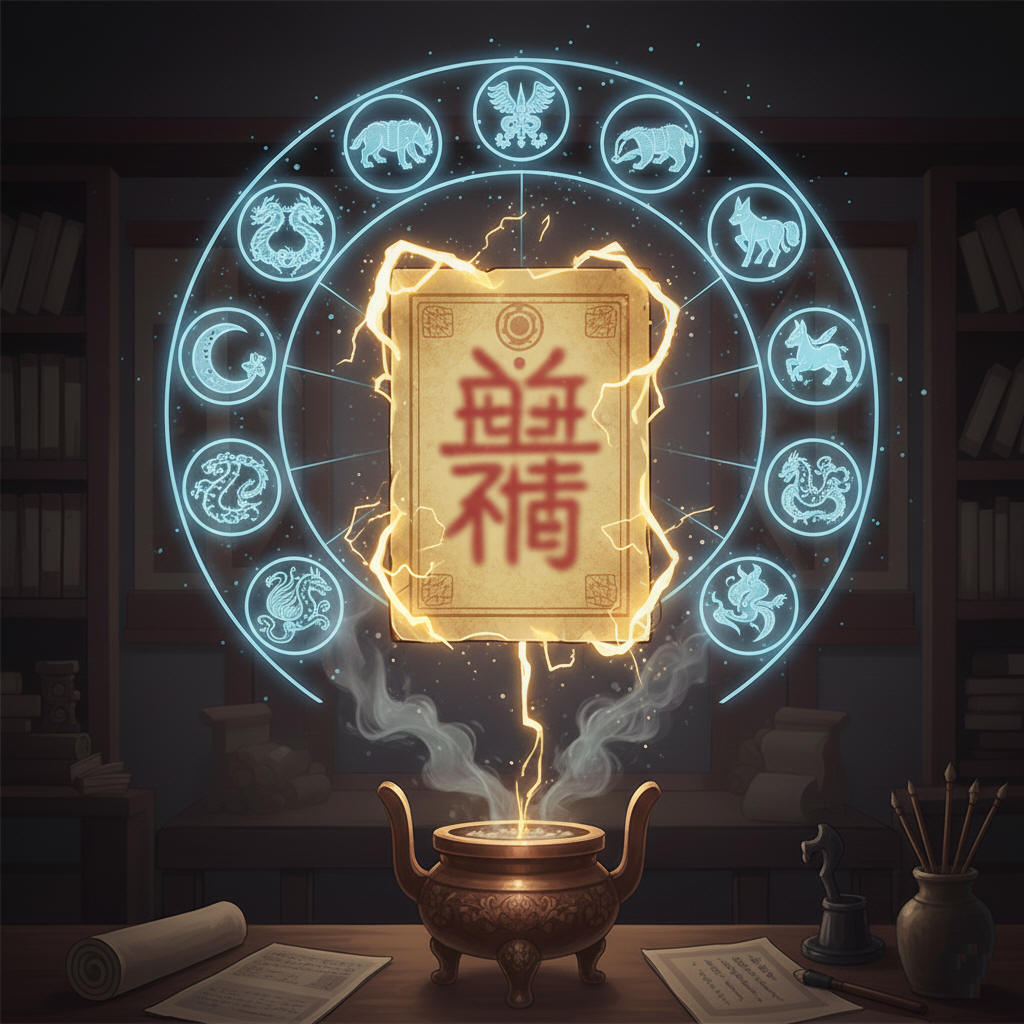
Similar to modern communication devices needing receivers, chips, and terminals, a complete talisman has three core parts: Talisman Head (energy connection), Talisman Core (appeal transmission), and Talisman Footer (precise execution), forming a full functional chain.
My master emphasized that “the core of a talisman is ‘connection'” after three months of letting me copy Talisman Head. Today, I’ll disassemble this system to make you a “talisman symbol decoder.”
II: Talisman Head · Energy Connection Hub
1. Core Function of the Talisman Head
Two cases prove the importance of the Talisman Head. Hastily drawn or modified Talisman Heads can lead to failure or minor backlash. As the signal receiver for heavenly and earthly energy, the standardization of the Talisman Head directly determines whether the energy channel can be opened.
Masters warn that an irregular Talisman Head causes energy chaos. Its fixed pattern, recorded in the Taoist Canon, is a time-tested “energy connection code”. Any modification will lead to failure. Standard drawing is the foundation for a talisman to take effect.
2. Analysis of Talisman Head Types
The mainstream standardized Talisman Heads in Taoism are Three-Hook and Big Dipper types, rooted in the “harmony between heaven and humans” view, serving as “energy communication protocols” for quick energy identification.
Analysis and Origin of Typical Talisman Heads:
1. Three-Hook Talisman Head: Symbol ☊, connects Three Pure Ones energy, suitable for Zhengyi School’s peace/house-protecting talismans, meaning inheriting positive energy and connecting three realms. Reference: Taoist Canon · Zhengyi Section – House-Protecting Peace Talisman.
2. Big Dipper Talisman Head: Graphical (complete/simplified) Big Dipper, connects Big Dipper Star Lord energy, suitable for longevity/blessing/fortune-turning talismans. Reference: Taoist Canon · Dongshen Section – Big Dipper Longevity Talisman.
Their core value is versatility and accuracy, recognizable by heavenly and earthly energy without extra interpretation, making them mainstream.
Core Summary: Talisman Head is the energy entrance. Mainstream types are Three-Hook (Three Pure Ones) and Big Dipper (Big Dipper Star Lord). Fixed pattern, no modification allowed to avoid failure/backlash.
III: Talisman Core · Core Appeal Energy Kernel
After understanding the Talisman Head, the “signal hub” for connecting heavenly and earthly energy, let’s focus on the second core component—the Talisman Core. If the Talisman Head is the energy entrance, then the Talisman Core is the “soul” that endows energy with core instructions, directly determining the appeal direction of the talisman.
1. The Talisman Core is the “Soul” of the Talisman
The Talisman Core is the “core instruction chip” of the talisman, carrying core appeals and driving energy operation. It is the key to the effectiveness of the talisman—even if the Talisman Head and Talisman Footer are standardized, a talisman without a Talisman Core is just an empty shell.
I once conducted a comparative experiment: two identical peace talismans, one with a complete Talisman Core and the other deliberately omitted, were worn by people with similar physical constitutions. As a result, the person wearing the talisman without a Talisman Core soon encountered a small accident, while the one wearing the talisman with a Talisman Core had no problems.
The experiment confirms the irreplaceability of the Talisman Core. It endows the scattered energy (connected by the Talisman Head) with core instructions. Without it, the energy will collide randomly and may cause backlash. Crucially, the Talisman Core must match the function of the talisman to avoid failure or energy conflict.
An enthusiast once used the “Gang” character as the Talisman Core when drawing a Wenchang Academic Assistance Talisman (for academic assistance), which caused the child to perform poorly in exams and suffer from irritability and insomnia.
This is because the powerful energy of the “Gang” character conflicts with the gentle literary energy required by the Wenchang Talisman. Later, referring to the “Taoist Canon”, I redrew the Talisman with the “Wen (Literature)” character as the Talisman Core, paired with the Big Dipper Talisman Head. The child’s condition then returned to normal.
In summary, the Talisman Core is the “instruction core” of the talisman, and the appeal direction must fully match the attribute of the Talisman Core—this is the core premise for the effectiveness of the talisman.
2. The Secret Characters of the Talisman Core are the “Energy Code” of the Talisman
The Talisman Core is presented in the form of “secret characters,” which are symbolic condensations of specific energy. Each character corresponds to a clear energy meaning and appeal direction, among which “Gang” and “Chi (Imperial Edict)” are the most core basic secret characters.
Meanings of Classic Secret Characters in Talisman Cores:
1. Gang: Derived from the handle of the Big Dipper, it governs positive heavenly and earthly energy and exorcises evil spirits and suppresses disasters. It is suitable for exorcism and house-protecting talismans, requiring strong and vigorous strokes. Example: “Zhong Kui Exorcism Talisman”.
2. Chi: Extended to “acting under the mandate of heaven”, it governs high-level divine energy. It is suitable for transcendence and evil-breaking talismans, requiring complex Rituals. Example: “Supreme Ultimate Transcendence Talisman”.
3. Fu: Governs positive and gentle energy, praying for blessings and attracting good fortune. It is suitable for peace talismans, requiring neat and square writing. It is a common Talisman Core in Zhengyi peace talismans.
4. Lu: Helps attract luck and emoluments, suitable for career talismans, requiring matching with prayer-style Talisman Footers.
5. Shou (Longevity): Nourishes lifespan, suitable for longevity talismans, often paired with the Big Dipper Talisman Head.
6. Yu: Regulates energy and drives away negative energy from lesions, suitable for healing talismans. Example: “Heavenly Physician Healing Talisman”.
The shape of these secret characters is highly compatible with the energy field, serving as the direct carrier of the core appeals of the talisman.
Core Summary of This Chapter: The Talisman Core is the energy core of the talisman, presented in the form of secret characters such as “Gang,” “Chi,” and “Fu.” It needs to be accurately bound to the function of the talisman; incorrect use may easily lead to failure or energy conflict.
IV: Talisman Footer · Energy Scope Terminal
With the Talisman Head for connecting energy and the Talisman Core for clarifying appeals, a third core component—the Talisman Footer—is needed to “set rules.” Like a terminal interface, it enables energy to act on targets precisely, avoiding random diffusion, and is a key guarantee for the safe effectiveness of the talisman.
1. Core Function of the Talisman Footer
The Talisman Footer is the “terminal interface” of the talisman, whose core function is to clarify the target, method, and scope of energy action. The Talisman Head connects energy, the Talisman Core issues instructions, and the Talisman Footer sets rules to ensure that energy acts on targets precisely without diffusion or accidental injury.
I once drew an exorcism talisman for Aunt Zhang, omitting scope definition in the Talisman Footer. Only writing “Exorcise Evil” caused energy diffusion, injuring her poultry.
My master pointed out the issue: undefined scope led to chaotic energy. Redrawing with clear scope and target in the Talisman Footer solved the problem completely.
It is evident that the core value of the Talisman Footer is to “draw boundaries and set rules” for talisman energy, ensuring precise and safe execution.
2. Three Types of Talisman Footers
Talisman Footers are mainly divided into three types: Divine General Type, Imperial Edict Type, and Prayer Type. There is no distinction between superiority and inferiority; the core selection principle is to match the function and appeal intensity of the talisman.
Three Types of Talisman Footers:
1. Divine General Type: Enhances execution power, presented in the form of silhouettes or names of divine generals (e.g., Zhong Kui).
Suitable for powerful appeals such as severe exorcism and house protection, its core is to invite divine generals to execute energy actions.
2. Imperial Edict Type: Improves effectiveness efficiency, presented in short phrases such as “Hurry, hurry, as per imperial edict”.
Suitable for scenarios such as sudden illnesses and emergency fortune-turning, its core is to urgently mobilize energy under the mandate of heaven.
3. Prayer Type: Clarifies the scope of action, presented in prayer texts (e.g., “Pray for the peace of the whole family”).
Suitable for gentle appeals such as peace and blessing, its core is to accurately submit prayer appeals.
Core Adaptation Logic: Use Divine General Type or Imperial Edict Type for powerful appeals, and Prayer Type for gentle appeals.
3. Adaptation of Talisman Footer and Talisman
Core Taboo: The Talisman Footer must be strictly adapted to the function of the talisman. Mismatched rigidity and softness will inevitably cause problems. A powerful Talisman Footer paired with a gentle talisman will disrupt the energy field. A gentle Talisman Footer paired with a powerful talisman will result in insufficient effectiveness.
Typical cases can intuitively illustrate this: powerful appeals such as exorcism require powerful Talisman Footers like Divine General Type or Imperial Edict Type; using Prayer Type will only temporarily suppress the problem, which is prone to recurrence; gentle appeals such as peace require Prayer Type Talisman Footers; using Imperial Edict Type will make the energy overly powerful, leading to irritability and increased conflicts among residents.
Essentially, the adaptation logic is the matching of energy intensity and appeal intensity; only a balance of rigidity and softness can enable the talisman to function precisely.
Core Summary of This Chapter: The Talisman Footer is the energy boundary of the talisman, divided into three types. It needs to be adapted to the function of the talisman (use Divine General/Imperial Edict Type for powerful appeals, and Prayer Type for gentle appeals); otherwise, it may easily cause energy chaos.
V: Peace Talisman Differences Between Schools
After mastering the independent functions and adaptation logic of the Talisman Head, Talisman Core, and Talisman Footer, let’s examine from the perspective of schools. By comparing peace talismans of the two mainstream Taoist schools—Zhengyi and Shangqing—we can see how the combination of core components changes with different philosophies.
1. Zhengyi Peace Talismans: Regular Structure Reflects Authority
The core feature of Zhengyi peace talismans is regularity and rigor, which is deeply bound to its philosophy of “seek gods externally and act under the mandate of heaven.”
It holds that the energy of talismans comes from the grace of gods; it is necessary to prove orthodoxy through standardized structures and strict rituals. Structurally, the Talisman Head is fixed as the standard Three-Hook Talisman Head (connecting the energy of the Three Pure Ones), the Talisman Core uses the neat and square “Fu” character (carrying the peace appeal), and the Talisman Footer is mostly a combination of “Imperial Edict + Prayer Type.”
Core Structural Parameters: 1. Talisman Head: Standard Three-Hook Talisman Head (☊); 2. Talisman Core: “Fu” character (neat and square); 3. Talisman Footer: Imperial Edict + Prayer Type; 4. Inheritance: Ritual inheritance; 5. Example: “House-Protecting Peace Talisman” (“Taoist Canon · Zhengyi Section”); 6. Advantages and Disadvantages: Stable energy and strong authority, but complex rituals and time-consuming.
Unlike the regularity of Zhengyi talismans, Shangqing peace talismans take a concise route, which is deeply bound to its core philosophy.
2. Shangqing Peace Talismans: Concise Structure Emphasizes Internal Cultivation
The core feature of Shangqing peace talismans is conciseness and flexibility, derived from its philosophy of “cultivate mind internally and rely on Contemplative Internal Cultivation.”
It holds that the core of energy lies in the internal cultivation of the talisman drawer; there is no need for complex structures and rituals. Structurally, the Talisman Head adopts a simplified Big Dipper Talisman Head (adapting to one’s own energy field), the Talisman Core is the “Qing (Purity)” character (emphasizing the connection of energy channels), and the Talisman Footer is mostly a short prayer text or can be omitted.
Core Structural Parameters: 1. Talisman Head: Simplified Big Dipper Talisman Head; 2. Talisman Core: “Qing” character (energy channel connection); 3. Talisman Footer: Short prayer text (may be omitted); 4. Inheritance: Cultivation inheritance; 5. Example: “Shangqing Pure Heart Peace Talisman” (“Taoist Canon · Shangqing Section”); 6. Advantages and Disadvantages: Gentle energy and strong adaptability, but requires extremely high cultivation of the drawer.
The structural differences between the two types of talismans seem to be formal, but essentially stem from the differences in the core cultivation philosophies of the two schools.
3. The Core of Structural Differences Lies in Philosophical Divergences
The structural differences between Zhengyi and Shangqing peace talismans essentially stem from the philosophical divergence between the two schools: Zhengyi seeks divine help externally, while Shangqing cultivates the mind internally. There is no absolute superiority or inferiority; they only adapt to different scenarios and groups of people.
The Zhengyi School advocates that energy comes from the grace of gods, requiring regular structures and strict Rituals to prove orthodoxy and obtain divine empowerment; the Shangqing School holds that the core of energy is the Contemplative Internal Cultivation of the talisman drawer, and simple symbols can carry appeals. This philosophical divergence also affects the inheritance method: Zhengyi emphasizes the strict inheritance of Rituals, while Shangqing emphasizes the understanding and inheritance of internal cultivation realms.
Core Summary of This Chapter: The structural differences between Zhengyi and Shangqing peace talismans stem from philosophical divergences (Zhengyi seeks divine help externally, Shangqing cultivates the mind internally). The former is regular and emphasizes rituals, while the latter is concise and emphasizes internal cultivation—there is no absolute superiority or inferiority.
VI: Talisman Disassembly Practical Guide
Having completed the theoretical analysis of component disassembly and school differences, we now enter the practical stage. Here, I have summarized a “Three-Step Disassembly Method” suitable for beginners to help you transform theory into practical disassembly ability.
1. Core Points of the Three-Step Talisman Disassembly Method
Combining the core logic above, I have summarized a “Three-Step Disassembly Method” suitable for beginners. Its core is “locating the area + identifying the shape”. It is simple to operate and highly accurate.
Step 1: Find the Talisman Head—located at the top of the talisman (the top one-third area), focusing on identifying the three-hook or Big Dipper pattern, which are the mainstream Talisman Heads of basic talismans.
Step 2: Find the Talisman Core—located in the middle area of the talisman, mostly square secret characters such as “Gang,” “Chi,” “Fu,” and “Qing.” The font is usually thicker and more eye-catching, making it easy to identify.
Step 3: Find the Talisman Footer. It is located at the bottom of the talisman, presented in the form of text phrases (e.g., “Hurry, hurry, as per imperial edict”) or character silhouettes (e.g., Zhong Kui). Note that Shangqing talismans may have no obvious Talisman Footer. A talisman can be judged as complete if the Talisman Head and Talisman Core are confirmed to exist.
Beginners only need to practice with more basic talismans; with proficiency, they can disassemble talismans quickly. The core is to understand the logic rather than memorize by rote.
2. Practical Disassembly of Classic Talisman Patterns
Taking a classic Zhengyi peace talisman as an example, we will demonstrate the practical disassembly of a talisman using the “Three-Step Disassembly Method”:
Practical Disassembly of Classic Talisman Patterns:
1. Zhengyi “House-Protecting Peace Talisman”: The Talisman Head is the top “☊” Three-Hook Talisman Head (connecting the energy of the Three Pure Ones), the Talisman Core is the middle “Fu” character (core appeal of praying for peace), and the Talisman Footer is the bottom phrase “Supreme Laojun, hurry, hurry, as per imperial edict · Protect the peace of the whole family” (Imperial Edict + Prayer Type).
Reference in classics/philosophy: “Taoist Canon · Zhengyi Section.” The overall style is regular and authoritative, in line with the core characteristics of Zhengyi talismans.
2. Shangqing “Pure Heart Peace Talisman”: The Talisman Head is the top simplified seven-star connection (Big Dipper Talisman Head), the Talisman Core is the middle “Qing” character (meaning purity and attracting positive energy), and there is no obvious Talisman Footer (relying on Contemplative Internal Cultivation to control energy).
Reference in classics/philosophy: “Taoist Canon · Shangqing Section.” The style emphasizes internal cultivation and downplays form, making it a typical representative of Shangqing talismans.
You can practice with several publicly available basic talisman patterns using this method. With more practice in disassembling talismans, you will naturally form a “conditioned reflex” and be able to see the core structure of a talisman at a glance.
Core Summary of This Chapter: The core of talisman disassembly is the “Three-Step Method” (finding the Talisman Head – finding the Talisman Core – finding the Talisman Footer). The key is “locating the area + identifying the shape.” For special cases, refer to the FAQ section.
VII: Talisman Disassembly Core Summary
Today, from the first-person perspective of a talisman master, we have completely disassembled the three core components of a talisman: the Talisman Head is the “signal hub” for connecting heavenly and earthly energy, the Talisman Core is the “energy core” carrying core appeals, and the Talisman Footer is the “execution terminal” defining the scope of energy. These three components work together to form a complete “heaven-human communication system”, and the effectiveness of the talisman relies on the adaptation and standardization of the three.
Key Taboo Reminder: It is not recommended to copy talismans by yourself! Random copying may easily lead to structural deviations and lack of rituals. Not only will it fail to take effect, but it may also cause adverse consequences due to energy chaos. You need to find a talisman master from a formal school with clear inheritance to draw talismans.
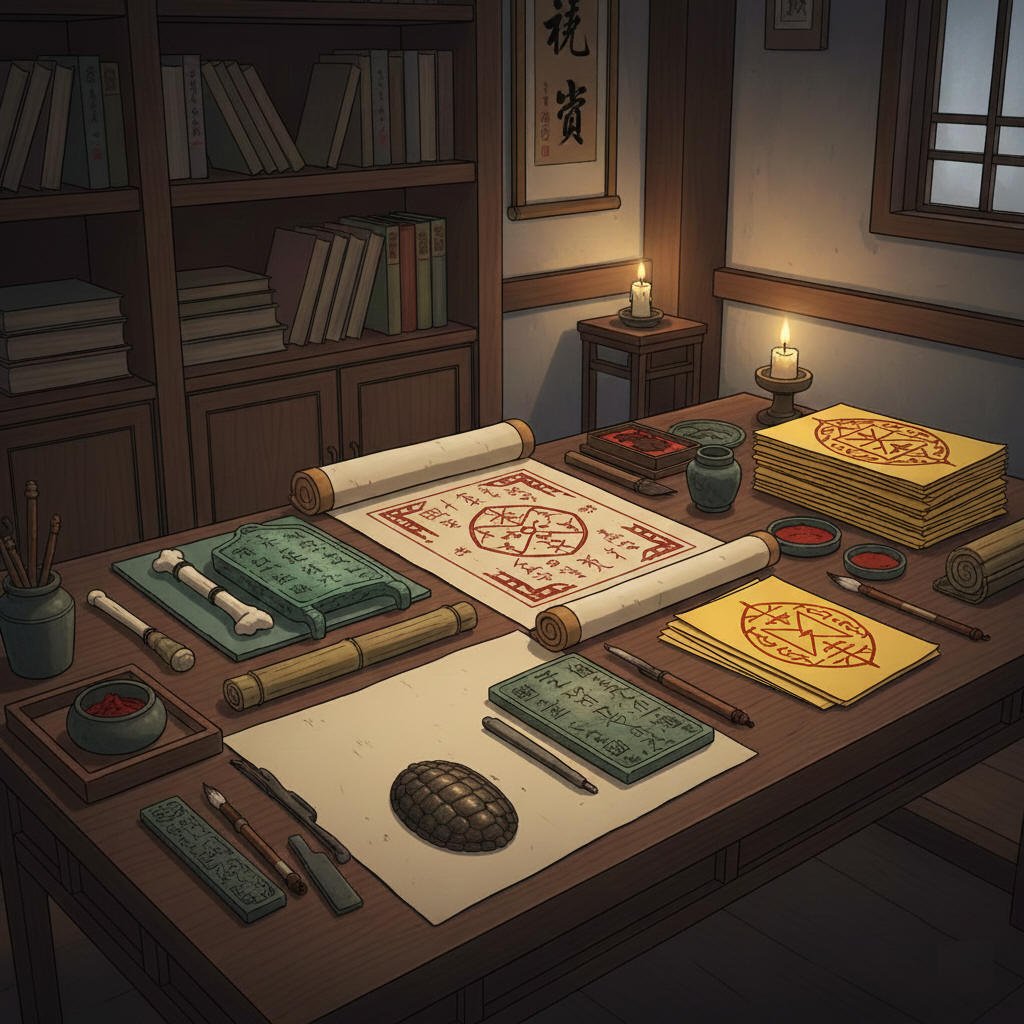
In the next issue, we will trace the “carrier code” of talismans—from oracle bones and bronze to yellow paper and cinnabar—to see how the carriers of talismans have evolved and the cultural logic behind different carriers. You can think about a question in advance: “Why have yellow paper and cinnabar become the mainstream carriers of Taoist talismans?” We will reveal the answer in the next issue.
FAQ: Q&A
The following are the core questions most frequently encountered by beginners in practical talisman disassembly. Targeted answers are given based on the previous theory and practical logic to help you avoid disassembly mistakes.
Q1: Why do some talismans have no obvious Talisman Footer? (Mobile Disassembly Tip) Core reasons: ① The drawer has profound Contemplative Internal Cultivation (Shangqing School’s senior masters control energy through Contemplative Internal Cultivation); ② The function of the Talisman Footer is integrated into the Talisman Core. For such cases, beginners can first practice basic methods.
The core is to understand the synergistic logic of the Talisman Head, Talisman Core, and Talisman Footer, without the need for rote memorization.
Q2: How to quickly distinguish between formal talismans and counterfeit ones?
Focus on three core points: ① Talisman Head Pattern: The Talisman Head of formal talismans (three-hook/Big Dipper) is standardized without modification; ② Talisman Core Adaptability: The Talisman Core of formal talismans is consistent with the attribute of the appeal, without mismatches such as using the “Fu” character for exorcism; ③ Inheritance Traceability: Formal talismans can be linked to the “Taoist Canon” or clear schools, while counterfeits are mostly random scribbles.
Q3: For different appeals, should we prioritize talismans from the Zhengyi or Shangqing School?
It depends on demand adaptation: choose Zhengyi if you pursue stability and authority (e.g., family house protection, long-term blessing); choose Shangqing if you pursue gentle adaptation to individuals (e.g., pure heart and stress relief, short-term fortune-turning) and can find a senior talisman master with profound Contemplative Internal Cultivation.
VIII: Glossary
• 【Talismans】: Taoist symbolic system for heaven-human communication and energy mobilization. Consists of Talisman Head/Core/Footer; requires specific rituals. Essence: a heaven-human communication system.
• 【Talisman Head】: Top core component of talismans, connects heavenly-earthly energy. Common types: Three-Hook (Three Pure Ones), Big Dipper (Big Dipper Star Lord); fixed pattern, unmodifiable.
• 【Talisman Core】: Middle core component, carrying core appeals and driving energy. Common secret characters: Gang, Chi, Fu, Qing, Wen, Yu. Appeal direction is strictly bound to character attributes.
• 【Talisman Footer】: Bottom core component, clarifies energy target/scope/method. Types: Divine General (invite gods), Imperial Edict (boost efficiency), Prayer (gentle appeals).
• 【Three-Hook Talisman Head】: Zhengyi School’s core, symbol ☊, connecting Three Pure Ones. Requires symmetrical hooks and straight lines; for peace/house-protecting talismans.
• 【Big Dipper Talisman Head】: Graphical Big Dipper, connects Big Dipper Star Lord. Forms: complete/simplified; for longevity/blessing/fortune-turning talismans.
• 【Gang Character】: Derived from Big Dipper’s handle, represents positive energy. For exorcism/house-protecting talismans; requires vigorous, straight strokes.
• 【Chi Character】: Means “act under heaven’s mandate”, high energy level. For transcendence/evil-breaking talismans; requires complex rituals before drawing.
• 【Zhengyi School】: Mainstream Taoist school. Talismans: regular structure, strict rituals. Core philosophy: “seek gods externally”; emphasizes ritual inheritance.
• 【Shangqing School】: Important Taoist school. Talismans: concise, focuses on internal cultivation. Core philosophy: “cultivate mind internally”; emphasizes drawer’s cultivation.
• 【Contemplative Internal Cultivation】: Shangqing School’s core practice. Enhances energy field purity and control via focused thinking and breath regulation; foundational for Shangqing talismans.
• 【Rituals】: Standard processes for drawing/using talismans (purification, incensing, chanting, etc.). Affects the stability and accuracy of energy connection.
• 【House-Protecting Peace Talisman】: Classic Zhengyi talisman. Structure: Three-Hook Head + “Fu” Core + Imperial Edict+Prayer Footer. Function: stabilize family energy field, drive away negative energy.
• 【Big Dipper Longevity Talisman】: Taoist longevity talisman. Structure: Big Dipper Head + “Gang” Core. Function: connect Big Dipper energy to extend life.
• 【Zhong Kui Exorcism Talisman】: Exorcism talisman. Structure: Three-Hook Head + “Gang” Core + Zhong Kui Divine General Footer. Function: drive away evil, stabilize energy field.
• 【Supreme Ultimate Transcendence Talisman】: High-level transcendence talisman. Structure: “Chi” Core + Three Pure Ones Imperial Edict Footer. Function: transcend the deceased under heaven’s mandate.
• 【Wenchang Academic Assistance Talisman】: Academic talisman. Structure: Big Dipper Head + “Wen” Core + Prayer Footer. Function: use Wenchang Star energy to assist studies.
• 【Heavenly Physician Healing Talisman】: Emergency medical talisman. Structure: Big Dipper Head + “Yu” Core + Imperial Edict Footer. Function: relieve sudden illnesses.
• 【Shangqing Pure Heart Peace Talisman】: Shangqing peace talisman. Structure: simplified Big Dipper Head + “Qing” Core (Footer often omitted). Relies on the drawer’s internal cultivation to stabilize the energy field.
• 【Taoist Canon】: Authoritative collection of Taoist classics. Compiles doctrines, cultivation methods and talisman rituals; core material for studying Taoist culture and talismans.