Zodiac Clash and Harmony Guide: Leverage Chinese Almanac Wisdom for Daily Decisions
Compared with Western zodiac horoscopes, traditional Chinese Zodiac Clash and Harmony① is a more localized guide to temporal energy. This article explores modern applications of this millennia-old Zodiac Wisdom to help balance daily rhythms and interpersonal harmony.
I. Chinese Almanac and Zodiac: Core Framework
As a key carrier of Zodiac Wisdom, the Chinese Almanac integrates astronomical calendars, climate and agricultural rules, embodying ancient wisdom of adapting to nature.
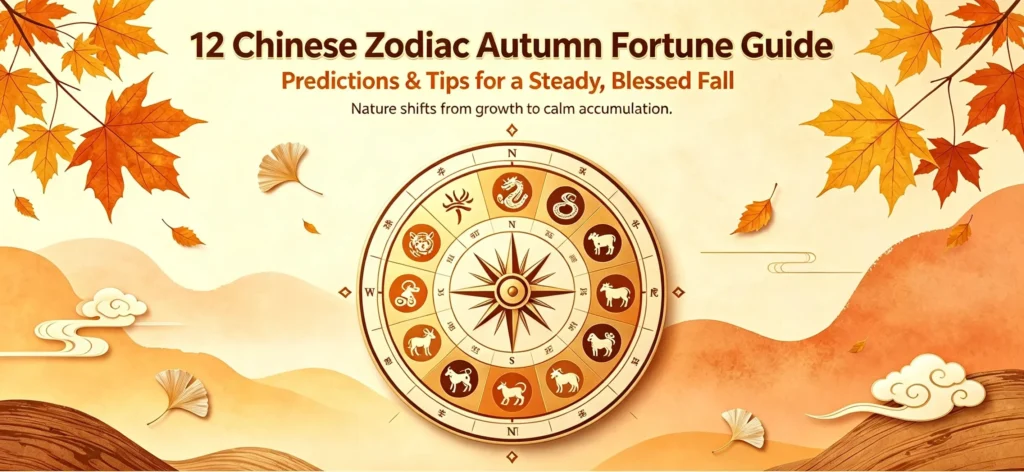
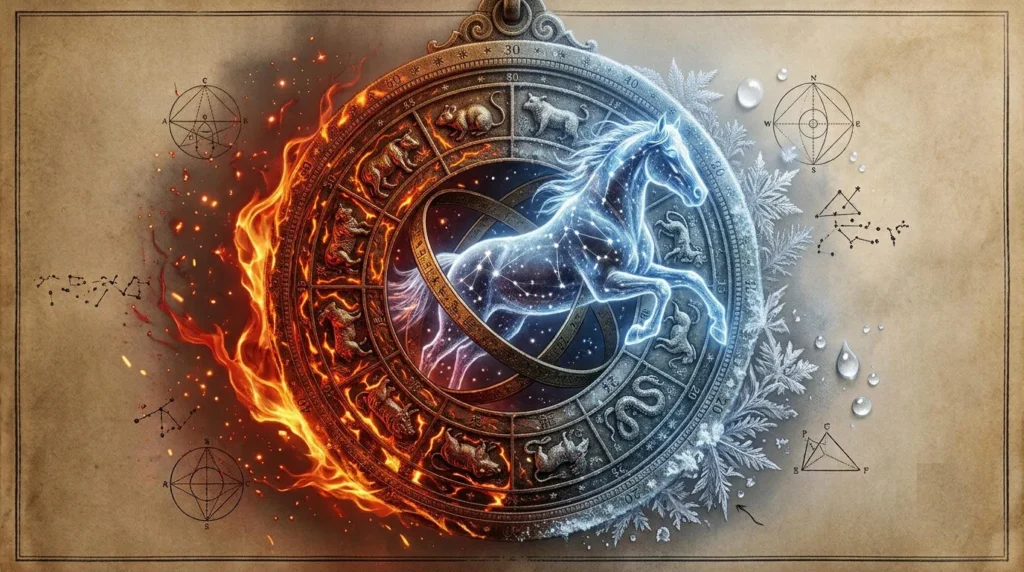
The Zodiac originated in ancient times. Its core lies in the temporal system linking zodiac signs to Earthly Branches②, with each sign having unique personality traits, similar to Western constellations.
Zodiac Clash and Harmony is the core of the almanac’s zodiac system: “Clash” means conflicting energy (hindering progress), while “Harmony” means compatible energy (facilitating smooth advancement).
They form the basic framework of Zodiac Wisdom (not superstition), with subsequent chapters focusing on their energy logic and practical uses.
II. Energy Logic of Zodiac Clash and Harmony
1. Theoretical Basis: Core Definitions of Clash and Harmony
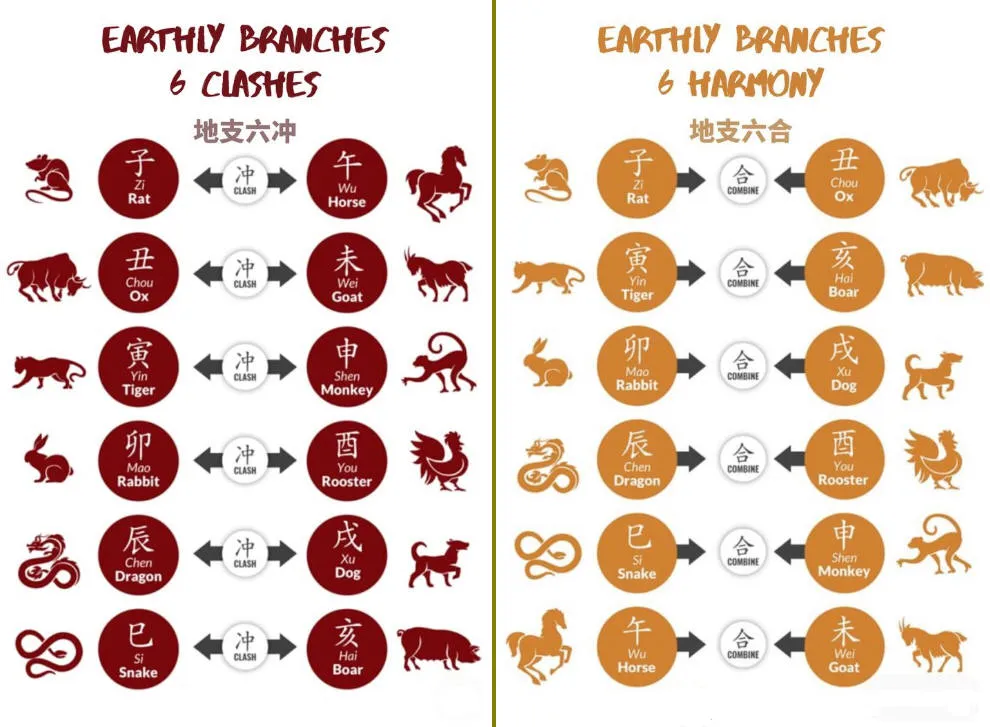
Centered on Earthly Branches energy, Zodiac Clash and Harmony includes two core types: Six Clashes⑦ and Six Harmonies, which form the basis of zodiac energy guidance.
Six Clashes refer to six restrictive relationships among Earthly Branches: their conflicting energy may hinder actions, requiring caution. Key pairs: Tiger-Monkey (Yin-Shen Clash③), Dragon-Dog, Ox-Goat, etc.
Six Harmonies refer to six harmonious relationships among Earthly Branches: their resonant energy enables smooth collaboration. Key pairs: Rat-Ox, Tiger-Pig, Rabbit-Goat (Mao-Wei Harmony④), Snake-Monkey (Si-Shen Harmony, part of Six Harmonies⑤), etc.
2. Case Applications: Practical Manifestations of Clash and Harmony
Practical impacts and response logic of Zodiac Clash and Harmony can be intuitively understood through cases, making abstract Zodiac Wisdom tangible.
Case 1: Zodiac Clash and Harmony – Six Clashes (Yin-Shen Clash) – Practical Response to Conflicting Energy
1. Corresponding Theory: The Yin-Shen Clash (Tiger vs. Monkey) among Six Clashes is a typical representation of conflicting energy;
2. Case Background: I coordinated a corporate project and scheduled a meeting with a monkey-born client on Yin Day (Tiger). The meeting was critical to the project launch.
3. Process & Outcome: Disagreements on budget and delivery caused a stalemate. Recognizing the Yin-Shen Clash③, I rescheduled to Chen Day (no clash). The rescheduled meeting reached a consensus smoothly, ensuring the project timeline.
4. Theoretical Verification: It confirms the core logic that “zodiac clash tends to cause obstacles, requiring caution and slowing down the pace.”
Case 2: Zodiac Clash and Harmony – Six Harmonies (Mao-Wei Harmony) – Practical Application of Harmonious Energy
1. Corresponding Theory: The Mao-Wei Harmony (Rabbit vs. Goat) among Six Harmonies is a typical representation of harmonious energy;
2. Case Background: I led a creative marketing project and held a kick-off meeting on Mao Day (Rabbit). The core planner was goat-born, matching Mao-Wei Harmony④.
3. Process & Outcome: The team unified ideas quickly, finalized the project direction and division of labor in 1.5 hours (1 hour saved). The project progressed smoothly and was successfully implemented.
4. Theoretical Verification: It confirms the core logic that “zodiac harmony is conducive to collaborative advancement.”
III. Modern Practical Applications: Three Core Scenarios of Zodiac Wisdom
1. Timing with Clash and Harmony
The core application of Zodiac Wisdom in personal affairs is timing with Clash and Harmony. Match Zodiac Clash and Harmony energy to task types.
Choose harmonious days for creative tasks (inspiration boost). Avoid conflicting days for decision-making (reduce mistakes).
Last month, I used Zodiac Clash and Harmony to check the Chinese Almanac for a new project kick-off: Si Day (Snake) matched my monkey-born sign (Si-Shen Harmony⑤). The meeting unified ideas quickly, finalizing the plan in one session – a typical example of harmonious energy aiding progress.
Limitation: This method may reduce time flexibility. Reserve 1-2 buffer days for emergencies.
2. Interpersonal Tuning with Clash and Harmony
In interpersonal collaboration, Zodiac Wisdom helps tune relationships with Clash and Harmony: prioritize harmonious zodiac pairs for team building; use clash logic to resolve conflicts accurately.
When collaborating with a tiger-born colleague (I’m monkey-born), I recognized the Yin-Shen Clash③ causing workflow conflicts. Adjusting our collaboration mode (dividing tasks clearly, weekly progress syncs) resolved conflicts, ensuring timely project completion.
Limitation: Zodiac Clash and Harmony only explains part of conflicts (not personality/ability). Use it as an auxiliary reference, focusing on problem essence first.
3. Auspicious Selection with Clash and Harmony
In traditional customs, Zodiac Wisdom supports auspicious selection with Clash and Harmony: integrate its logic into weddings/housewarmings to express wishes for peace. It’s a cultural ritual, not rigid rules.
My cousin chose a Six Harmonies day (matching both zodiacs) for her wedding via the Chinese Almanac and Zodiac Clash and Harmony. The wedding went smoothly, fulfilling wishes for peace – a vivid example of this culture in practice.
Limitation: It may restrict date choices. Select from 2-3 auspicious options to balance culture and practicality.
IV. Philosophical Core of Zodiac Wisdom
The core philosophy of Zodiac Clash and Harmony is traditional Chinese “Yin-Yang Balance⑥”, focusing on “adapting to natural rhythms”.
Ancients believed zodiac signs bind to Earthly Branches②. Aligning actions with their energy flow achieves “harmony between humans and nature” — advance on harmonious days, slow down on conflicting days.
This “going with the flow” is the core value of zodiac culture.
Clarify its boundaries to avoid fatalism. Zodiac Clash and Harmony only provides energy references, not determining outcomes.
Use it as an auxiliary tool for Zodiac Wisdom (adjusting rhythms, mediating conflicts). Major decisions rely on practical judgment to balance tradition and life.
V. Conclusion: Rationally Inheriting Zodiac Wisdom and Integrating It into Modern Life
Zodiac Clash and Harmony is not a “fate code” but a practical auxiliary tool, embodying ancient Zodiac Wisdom in observing time and relationships.
Inherit Zodiac culture rationally: adopt the “going with the flow” philosophy from Zodiac Clash and Harmony (leverage harmonious days, slow down on conflicting days). View it practically to integrate this ancient wisdom into modern life, gaining calmness and cultural warmth.
Glossary
① Zodiac Clash and Harmony: Core energy relationship of the Zodiac system (Clash: conflicting energy; Harmony: compatible energy). It’s the key basis for the Chinese Almanac guiding daily actions and the essence of Zodiac Wisdom.
② Earthly Branches: Core symbols of traditional Chinese calendars (Zi, Chou, Yin, Mao, etc.), corresponding one-to-one with 12 zodiac signs – the foundation for interpreting Zodiac Clash and Harmony energy.
③ Yin-Shen Clash: One of Earthly Branches’ conflicting relationships (Tiger-Monkey), representing energy restriction and potential obstacles.
④ Mao-Wei Harmony: One of Earthly Branches’ harmonious relationships (Rabbit-Goat), representing energy harmony and facilitating collaboration.
⑤ Six Harmonies: Six stable harmonious Earthly Branches relationships, corresponding to six zodiac pairs – the ideal energy resonance in the Zodiac system.
⑥ Yin-Yang Balance: Core traditional Chinese philosophy (all things consist of opposing yet unified Yin-Yang energy). Zodiac Clash and Harmony essentially pursues this balance.
⑦ Six Clashes: Six opposing Earthly Branches relationships, corresponding to six zodiac pairs. It represents energy restriction, hindering actions – the core conflict form in Zodiac Clash and Harmony.