Poetry on the Doorstep: Chinese Spring Couplets and the Taoist View of Harmony They Embody
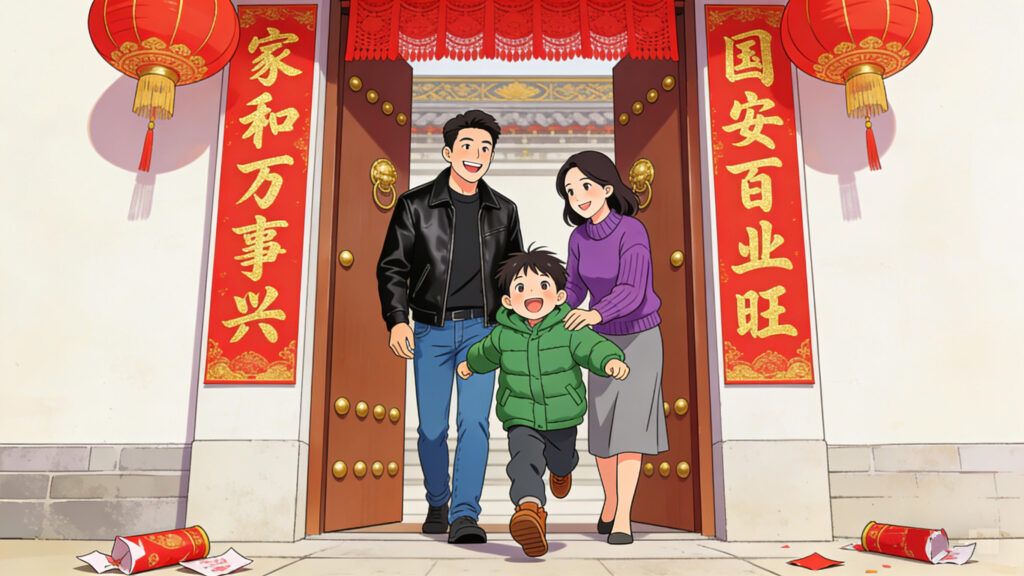
Red Chinese spring couplets are a unique cultural symbol during the Spring Festival, sharing the universal human desire for new-year blessings. Behind their red paper and golden characters lies profound Taoist wisdom of harmony. This article explores the connection between Chinese spring couplets and Taoist views of harmony.
I. Historical Evolution of Chinese Spring Couplets
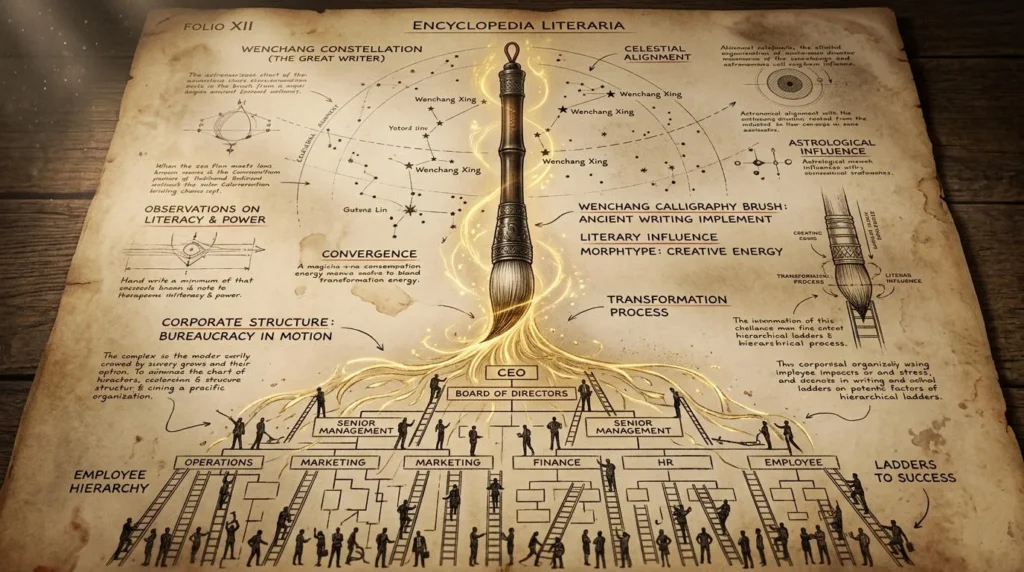
Chinese spring couplets originate from the ancient custom of peachwood charms[1], which were believed to ward off evil. The first recorded written couplet, composed by Meng Chang of the Later Shu Dynasty, marked the transition from peachwood charms to written blessings.
Emperor Zhu Yuanzhang of the Ming Dynasty popularized spring couplets among the public. Supported by the rise of urban culture, increased literacy rates and the democratization of calligraphy, spring couplets spread from the imperial court to ordinary households. They evolved from “physical protection” to a cultural ritual integrating blessings, literature and aesthetics—with the seeds of Taoist harmony embedded in this transformation.
II. Form, Content & Symbolic Connotations of Chinese Spring Couplets
1. Beauty of Form: The Art of Antithesis and Rhythm
A standard Chinese spring couplet includes the upper scroll, lower scroll and horizontal scroll. Its core artistic feature is strict antithesis and tonal patterns, which embody the Taoist concept of yin-yang balance. For example:
|
Here, “spring breeze” corresponds structurally to “fine rain”, and “caresses willows” to “moistens all things”. Tonal patterns create a rhythmic flow: the upper scroll typically ends with a falling tone, while the lower scroll concludes with a level tone. This rigor reflects the cultural pursuit of order and harmony.
2. Richness of Content: Diverse Thematic Expressions of Blessings
The content of Chinese spring couplets is closely linked to life, forming diverse themes that implicitly express Taoist harmony. They are mainly divided into three categories:
1) Blessings for Good Fortune and Prosperity
focus on wealth and health
Lucky stars shine brightly, bringing wealth to the family; The earth revives, bringing health to all”
focus on academic progress
Diligence is the path to knowledge; Persistence leads to success”
2) Odes to Spring and Scenery
depicting grand spring scenery
Spring colors fill the world; Morning glow illuminates mountains and rivers”
capturing delicate early-spring beauty
Plum blossoms bloom to greet spring; Willow branches sway to send warmth”
3) Special Occasion-Specific Couplets
Commercial:
Business thrives across the seas; Wealth flourishes through rivers
Family:
Harmony in family brings blessings; Peace in nation fosters prosperity
These couplets meet different people’s wishes and make Taoist harmony more perceptible in daily life.
3. Secrets of Symbolism: The Cultural Significance of Color and Material
The visual symbols of Chinese spring couplets carry profound cultural meanings and Taoist harmony. Red paper dispels yin energy and gathers yang energy, embodying the concept of yin-yang balance, while golden or black characters represent solemnity and eternity.Exquisite materials—such as rice paper (ideal for brush writing) and pine soot ink (ensuring long-lasting characters)—paired with calligraphic styles like dignified regular script and fluent running script, make couplets a comprehensive art form. The process of writing and pasting them carries a solemn ritual sense, embodying the Taoist practice of “harmony between mind and hand.”
III. Core of Taoist Harmony in Chinese Spring Couplets
1. Harmony Between Humans and Nature: Temporal Resonance with the Natural World
The Taoist concept of “harmony between humans and nature[3]” in Chinese spring couplets emphasizes the organic unity of heaven, earth and humans. A classic example:
|
This couplet links natural changes (“heaven adds years”, “spring fills the universe”) to human blessings (“gains longevity”, “blessings fill the home”), reflecting the harmonious principle of “following natural order”. Another example, “Spring returns to the earth, making thousands of mountains beautiful; Blessings descend on the world, bringing joy to ten thousand households”, similarly connects spring’s revival with earthly blessings, conveying the philosophy of resonance between humans and nature.
2. Yin-Yang Balance: A Cosmic View Reflected in Antithetical Form
The strict antithesis of spring couplets perfectly reflects the Taoist core concept of “yin-yang balance[4]”. Taoism holds that yin and yang are opposing yet unified forces; their mutual complementarity achieves harmony.
This is embodied in both the contradictory yet complementary meanings—such as “cold” (yin) corresponding to “spring” (yang) and “peach” to “willow” in the couplet
Cold fades, peach blossoms turn tender; Spring returns, willow leaves grow new
—and the balance of parts of speech and tones. This formal balance metaphorically represents cosmic order, implying the Taoist wisdom that “all things carry yin and embrace yang”.
3. Dao Follows Nature: Life Philosophy in Natural Imagery
The Taoist idea of “Dao follows nature[5]” advocates conforming to natural laws, and this is vividly conveyed through natural imagery (plum blossoms, bamboo, spring water) in Chinese spring couplets. These images are not merely scenery descriptions but concrete expressions of the “Tao” and Taoist harmony.
For instance,
Bamboo conveys peace and blessings; Plum heralds auspicious spring
symbolizes adhering to natural seasons, while
New spring water melts lingering snow; Rising sun illuminates the future path
uses natural laws to metaphorize that following timing brings vitality and hope, conveying the philosophy of “governing by non-interference.”
4. Interaction Between Humans and Heaven: The Metaphysical Logic of Blessing Rituals
Writing and pasting Chinese spring couplets is a practical manifestation of the Taoist concept of “interaction between humans and heaven[6]”. The core metaphysical logic is that human thoughts and actions can resonate with heaven and earth. Writing gathers wishes into tangible words, while pasting serves as a ritual to communicate these wishes to heaven and earth—embodying the Taoist pursuit of “aligning humans with heaven” and transforming subjective wishes into objective well-being.
IV. Appreciation & Creation of Chinese Spring Couplets
1. Cross-Cultural Interpretation Guide: The Four-Step Method to Understand Spring Couplets
Western readers can understand Chinese spring couplets through a four-step guide: split into upper and lower scrolls, identify core imagery, appreciate antithesis, and comprehend artistic conception. This method helps deeply grasp the cultural connotations and Taoist harmony embodied in the couplets. Taking “Spring breeze brings warmth into Tusuo wine; Plum blossoms bloom to greet the new spring” as an example, the steps are as follows:
• Split into scrolls: The upper scroll sets the warm atmosphere of “spring breeze bringing warmth”, while the lower scroll highlights the vital signal of “plum blossoms blooming”.
• Identify imagery: “Spring breeze” symbolizes new warmth, “Tusuo” (ancient New Year medicinal wine) implies warding off evil and ensuring health, and “plum blossoms” represent resilience and hope in early spring.
• Appreciate antithesis: “Spring breeze” pairs with “plum blossoms” (natural imagery), “brings warmth” with “blooms” (action/state), and “into” with “greet” (verbs), achieving tonal balance with a falling tone for the upper scroll and a level tone for the lower.
• Comprehend conception: The couplet conveys wishes for the end of winter and a peaceful New Year through vivid spring scenes.
2. Creation Practice: From Imitation to Innovation
Creating Chinese spring couplets can start with simple imitation, focusing on the core principles of “positive connotation + antithetical structure” and integrating basic Taoist harmony concepts. Beginners are advised to start with short sentences, imitate the structure and imagery of classic couplets, and gradually incorporate personal wishes to lower the difficulty.
• Basic imitation: “Joy fills the residence, happiness fills the heart” (following symmetrical structure).
• Advanced creation: “Willows turn green to welcome spring; Plum fragrance accompanies blessings” (integrating Taoist “Dao follows nature”).
The key is to integrate sincere wishes with linguistic beauty, and flexibly incorporate Taoist concepts of nature and balance. This endows spring couplets with both personal emotional warmth and traditional cultural heritage, without rigidly adhering to complex metrical rules.
3. Contemporary Innovation and Global Resonance
In contemporary times, Chinese spring couplets are breaking cultural boundaries through diverse innovations, promoting Taoist harmony across cultures. Key examples include:
• Cultural and creative: Palace Museum’s “royal-style couplets” combine traditional elements with modern design.
• Commercial: International brands integrate couplet elements into daily consumption scenarios.
• Cross-cultural: Overseas Chinese communities promote the custom through competitions and campus activities.
These innovations preserve the cultural core of Chinese spring couplets and the spiritual connotations of Taoist harmony, making them important carriers of cross-cultural communication and demonstrating the timeless vitality of traditional culture.
V. Conclusion: Cultural Resonance & Philosophical Echoes
Chinese spring couplets are more than just holiday decorations—they are miniature poems, public wishes, and concrete expressions of Taoist harmony. Their core wishes for happiness, health, and harmony resonate universally.
For example, spring couplet competitions in overseas Chinese communities comfort homesickness, while international brands’ integration of couplet elements spreads Eastern aesthetics globally. People from all cultural backgrounds can perceive the shared aspiration for a better life in these red couplets.
Moreover, the Taoist wisdom embodied in them—harmony between humans and nature, yin-yang balance, and Dao follows nature—is not an outdated ancient theory but a spiritual guide for modern life.
For example, the concept of “following nature” offers insights for ecological protection, while the wisdom of yin-yang complementarity provides guidance for achieving physical and mental balance. Gazing at the red couplets on the door, we discern not only thousands of years of cultural wisdom and emotional warmth but also philosophical power that continuously nourishes the present.
VI. Glossary
[1] Peachwood charms: Early form of Chinese spring couplets, peachwood products hung on doors during the New Year to ward off evil, the embryonic form of couplet culture.
[2] Peachwood talismans: Another name for peachwood charms, believed to have evil-warding spiritual power, the original form of Chinese spring couplets.
[3] Harmony between humans and nature: Core Taoist concept, emphasizing the organic unity of heaven, earth and humans, and harmonious coexistence with natural laws.
[4] Yin-Yang balance: Core Taoist cosmology, philosophical basis of couplet antithesis, holding that yin and yang are opposing yet unified, and balance is the ideal state of things.
[5] Dao follows nature: Core Taoist idea, advocating that the Dao operates in accordance with natural laws, and human activities should conform to nature.
[6] Interaction between humans and heaven: Integration of metaphysics and Taoism, core logic of couplet rituals, holding that human thoughts can resonate with heaven and earth.