
Painting the Talisman Begins with Mind Cultivation: A Guide to Talisman Mental Cultivation
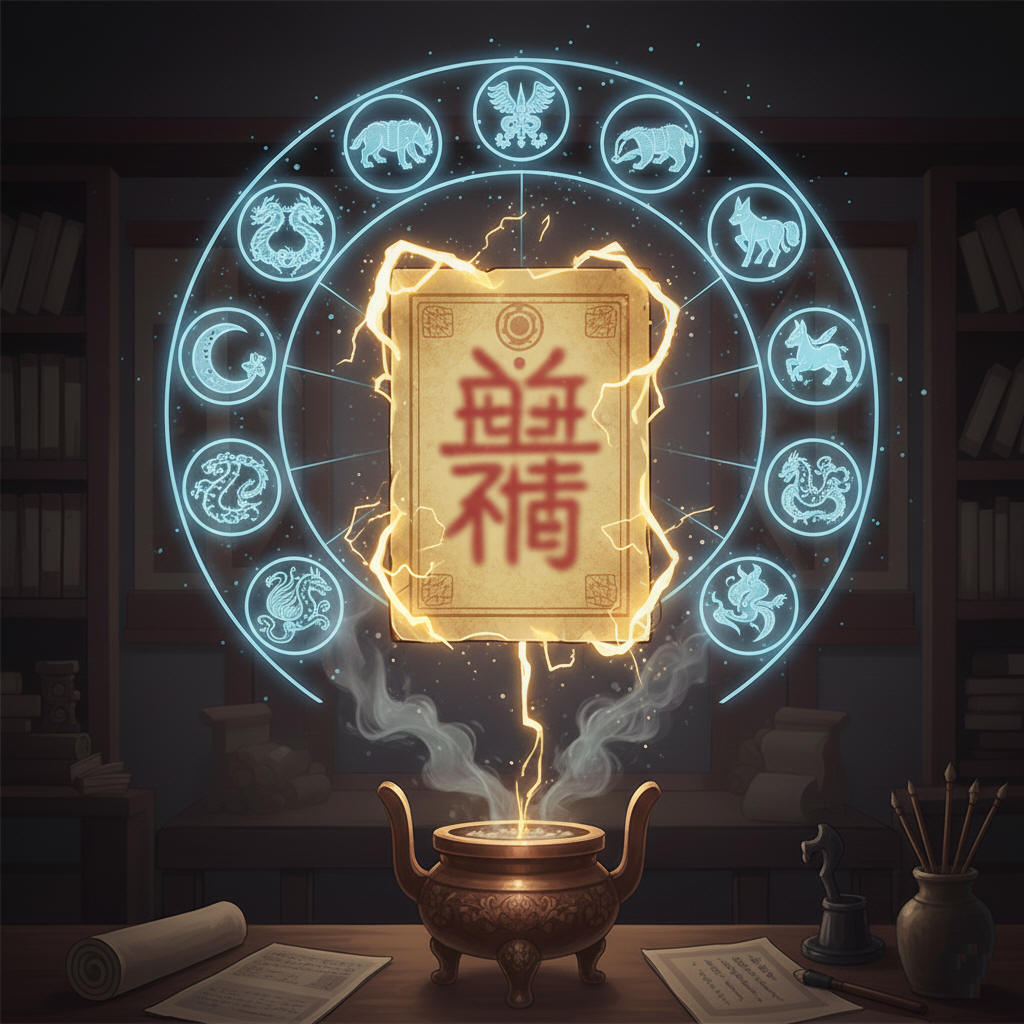
The core of talisman culture is “mental cultivation” — not an illusory spell, but an efficient physical and mental state driving talismans to work. This article decomposes its logic of painting the talisman, bridges traditional metaphysics and modern science, helping you grasp the core of talisman appreciation and practice from “form” to “spirit.”
I. The Role and Significance
In the talisman system, cinnabar, yellow paper and brushwork are “form,” while mental cultivation is “spirit.”
Many fail to make them effective when painting the Talisman, mainly due to the lack of mental cultivation drive.
Tangible symbols are just carriers; only when intangible physical and mental energy is infused can talismans truly “come alive.”
After clarifying its core role, we will start with traditional practical steps, interpret its essence from a modern scientific perspective.
We will also sort out its development through ancient-modern comparison and finally break down inheritance requirements.
Our core task is to decode mental cultivation, helping you understand “the unity of form and spirit” as a actionable practice rather than a metaphysical concept.
II. Traditional Steps
1. Concentration:
Core Positioning: The foundation of mental cultivation, focusing on highly concentrated attention;
Practical Points: Choose a quiet environment, place only yellow paper, cinnabar brush and clean water on the desk, sit quietly for 3 minutes to eliminate distractions, and focus on the contact point between the brush tip and paper;
Key Notes: Undivided attention is essential; external interference scatters energy and affects subsequent effects.
2. Visualization:
Core Positioning: The core link, constructing an energy model through intention to connect body-mind with the universe;
Practical Points: After concentrating, construct concrete energy images (e.g., visualize starlight entering the body and converging at the brush tip when painting the Big Dipper Talisman);
Key Notes: It is not empty fantasy but energy concretization based on traditional cosmology; accurate construction requires long-term practice.
3. Energy Absorption:
Core Positioning: A key step in energy transformation, converting cosmic energy connected via visualization into talisman driving force;
Practical Points: Cooperate with breathing rhythm — inhale to guide heaven and earth energy into the lungs, exhale to push it from the brush tip into yellow paper, and keep the brush moving with energy;
Key Notes: Form an “intention-energy-talisman” cycle with concentration and visualization; uncoordinated intention, breathing or brushwork makes talismans ineffective.
III. Modern Interpretation
1. Concentration → Deep Focus (Flow State):
Correspondence: Traditional concentration directly corresponds to “deep focus (flow state)” in modern psychology;
Core Essence: Efficient concentration and precise allocation of attention resources to eliminate interference;
Modern Interpretation: Similar to programmers immersed in coding or artists in creation, focusing only on core actions without external interference.
2. Visualization → Concrete Imagination:
Correspondence: Traditional visualization can be interpreted as modern “concrete imagination” training;
Core Essence: Construct clear images through active intention to connect body-mind with the outside world;
Modern Interpretation: Analogous to athletes’ pre-competition rehearsal, activating neural pathways to improve body-mind coordination via concrete images.
3. Energy Absorption → Body-Mind-Intention Coordination:
Correspondence: Traditional energy absorption and three-step coordination can be interpreted as modern “body-mind-intention coordination” training;
Core Essence: Achieve energy transformation and transmission through synchronized breathing, intention and action;
Modern Interpretation: Similar to yoga meditation’s “breathing-posture-intention” training, optimizing physical and mental states via multi-sensory linkage.
IV. Comparison Between Ancient and Modern Times
The core logic of ancient and modern mental cultivation is consistent, but there are changes in cognition, operation and goals. Comparing them helps sort out its development and provide paths for modern inheritance.
1. Core Logic Comparison:
Traditional: Core logic is “heaven-human induction,” based on traditional cosmology;
Modern: Core logic is “body-mind coordination,” based on modern physical and mental science;
Similarities & Differences: Different cognitive paths but the same goal — optimizing energy and efficiency by adjusting physical and mental states.
2. Operation Method Comparison:
Traditional: Focus on “contemplation and energy absorption,” targeted for talisman practice;
Modern: Focus on “meditation and rehearsal,” universal for physical and mental improvement;
Similarities & Differences: Both improve concentration; traditional focuses on “energy injection into talismans,” modern on “general state optimization.”
3. Core Goal Comparison:
Traditional: Core goal is “activating talismans,” serving talisman practice;
Modern: Core goal is “improving personal state,” serving daily life;
Similarities & Differences: Different focuses but consistent “body-mind coordination” logic, supporting modern multi-dimensional application.
V. Inheritance Rules
Inheritance follows clear principles and risk control requirements. Below are core requirements from three dimensions: inheritance essence, taboos and modern adaptation.
1. The Essence of “Sincerity Leads to Efficacy”:
Core Interpretation: Not religious piety, but “concentration determines operation precision” — a popular expression of the high concentration required;
Practical Example: Disciples are required to cultivate mind and concentrate for 3 months before learning to paint talismans; those eager for success fail without cultivation;
Enlightenment: Sufficient concentration is the premise for accurate coordination of concentration, visualization and energy absorption.
2. Inheritance Taboos:
Core Interpretation: Taboos like “not passing on casually” aim to avoid energy loss from blind practice and misuse by evil people, not secrecy;
Practical Example: Someone learning from ancient books alone suffered from insomnia, which was relieved by professional guidance;
Enlightenment: Traditional “mentorship through oral teaching” ensures inheritance accuracy and avoids risks.
3. Modern Inheritance:
Core Interpretation: The core value lies in extracting concentration and body-mind coordination concepts to adapt to modern needs;
Practical Example: Simplified concentration training reduced anxiety and improved work efficiency for office workers;
Enlightenment: Its core concepts empower modern work and study, helping cope with fast-paced life.
VI. Talisman Mental Cultivation: Cultural Appreciation
Below is an appreciation framework centered on it, helping you see its essence through symbols.
1. Core Appreciation Logic:
Core Definition: Integrate talisman form and carrier with mental cultivation as the main thread;
Core Logic: Follow “elements adapt to mental cultivation → activate energy → endow symbolic value”; form is the energy carrier;
Practical Value: Help appreciators avoid focusing only on form and establish “form-spirit connection” cognition.
2. Core Appreciation Criteria:
Core Definition: A hierarchical standard for measuring talisman-mental cultivation adaptability and energy transmission rationality;
Core Logic: Progress from “mental cultivation adaptability,” “energy transmission sense” and “concept consistency,” interpreting effects via brushwork and structure;
Practical Value: Provide actionable methods to turn “seeing mental cultivation through symbols” into specific judgment dimensions.
3. Cultural Connotation Interpretation:
Core Definition: Explore traditional cultural concepts carried by mental cultivation behind talisman form;
Core Logic: Embodies Taoism’s “unity of heaven and man” and ancient cosmology;
Practical Value: Help appreciators get rid of “metaphysical superstition” and understand talismans as ancient symbols for adjusting physical and mental states.
VII. Modern Value
The value has surpassed talisman practice — its core is concentration and body-mind coordination.
It bridges traditional-modern cognitive gaps and addresses modern pain points.
Traditional “cultivate mind first, then practice” logic empowers modern work and study, such as relieving anxiety and improving efficiency via simplified training.
This article focuses on “painting the talisman begins with cultivating the mind”: traditional forms an “intention-energy-talisman” cycle to achieve “unity of form and spirit,” consistent with modern flow training. Its modern value lies in improving talisman appreciation framework and helping cope with fast-paced life via concentration and coordination.
VIII. Glossary
① Visualization: A core traditional metaphysics technique, constructing clear images via intention to connect body-mind with cosmic energy.
② Energy Absorption: Converting cosmic/heaven-earth energy into talisman-injectable energy via intention and breathing, a core energy transformation step.
③ Heaven-Human Induction: A core Taoist thought, holding interactive relationship between human and cosmic universes.
④ Sincerity Leads to Efficacy: A core talisman inheritance concept, referring to high concentration required for mental cultivation, determining operation precision and effect.