4 Steps to Worship Gods Correctly in Chinese Buddhist Temples
I. Introduction
Worship Gods in Chinese Buddhist temples carries a thousand-year-old traditional culture and ritual norms, with its core being respect, sincerity, and compliance with the Dharma.
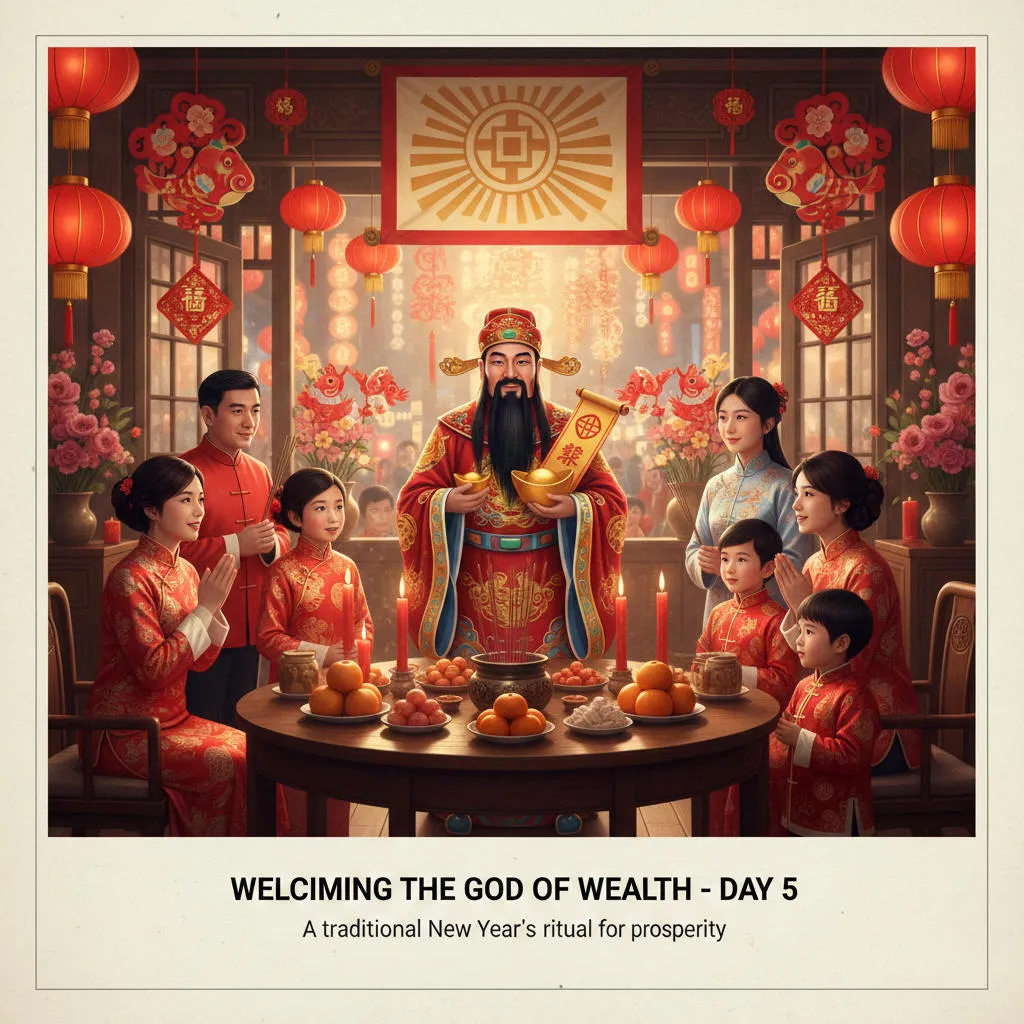
It is not only an important way to express awe and entrust wishes, but also a carrier for inheriting folk culture—and New Year worship is the top priority.
Every Spring Festival, going to Buddhist temples to worship gods and pray for a smooth New Year, good fortune, and health is a traditional custom for many Chinese people. Many European and American friends also take this opportunity to experience Chinese folk culture and entrust their New Year expectations.
However, due to differences in religious culture and worship logic between China and the West, many people easily fall into the misunderstanding of blind worship and improper rituals, making it difficult to truly convey their sincerity.
Based on this, this article breaks down 4 key steps, helps you avoid common mistakes, and uses simple expressions and practical cases to enable you to quickly master the correct way to worship.
You will not only express respect accurately, but also understand the culture and significance behind Chinese worship, so you can better participate in various worship scenarios such as New Year worship and truly convey every sincere wish.
II. Recognize the Right Gods: The First Step in Temple Worship, Avoid Unnecessary Efforts
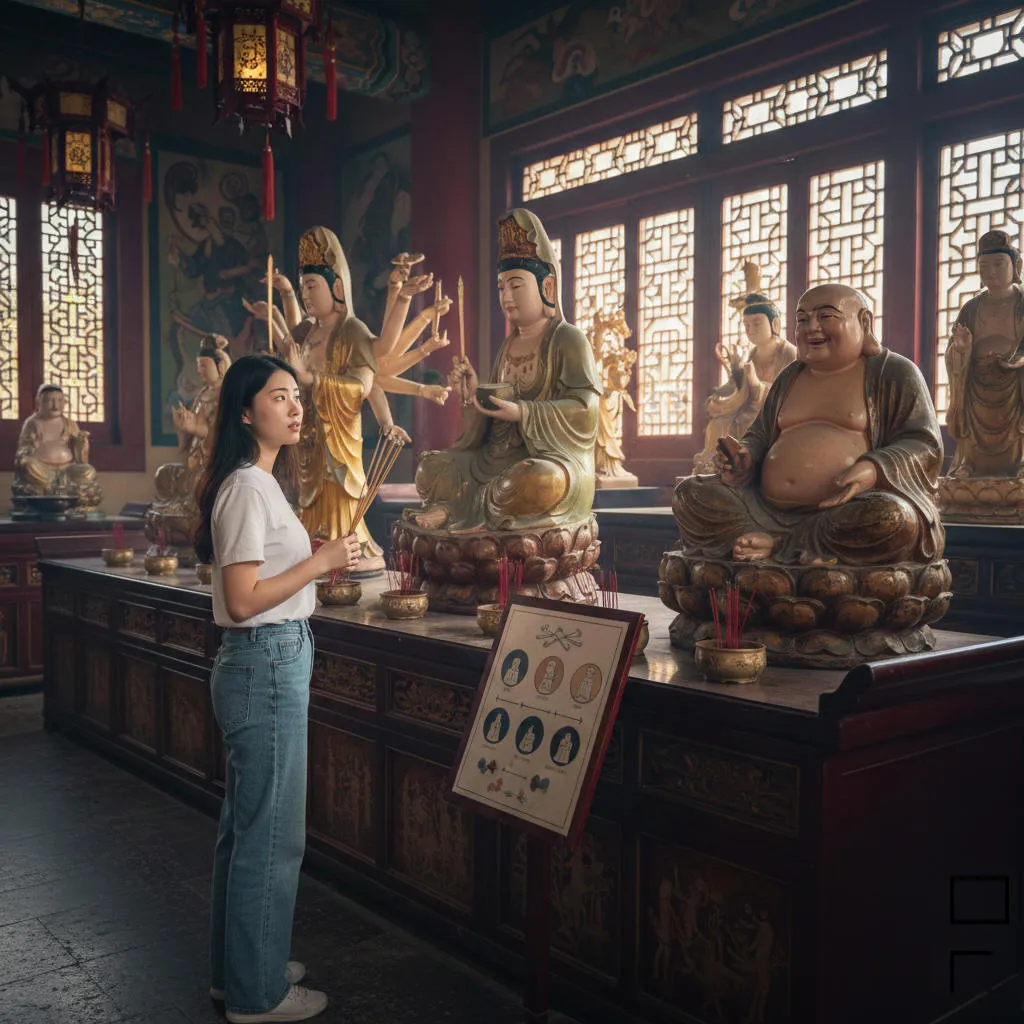
Each god in a Chinese Buddhist temple has its own duties. Before worship, you need to distinguish their corresponding responsibilities to avoid blind worship.
Unlike the worship logic of European and American religious venues, Chinese Buddhist temples have a clear god system, with each god focusing on specific blessings.
Accurate connection helps you convey your sincerity better. Especially during New Year worship, choosing the right god makes your New Year wishes more targeted.
The Buddhist ritual norms released by the Shanxi Provincial Department of Culture and Tourism mention that the core of worship is respecting the gods and keeping your mind free of distractions.
Recognizing the right gods is the first prerequisite for conveying this respect, as well as the key to making worship effective and wishes more targeted.
1. Common Gods That Don’t Need Special Worship (Daily Respect Is Enough)
These gods focus on blessings such as mentality, peace, and academic performance, and do not focus on “special wishes.”
Just express your respect during worship—you do not need to pray for specific wishes:
• Maitreya Buddha: Symbolizes tolerance and joy. It helps you stay open-minded and worry less. It is a lucky symbol at the temple entrance. Worship it to pray for peace of mind.
• Vajra Prajna Bodhisattva: Protects the Dharma, guards the temple, and wards off evil. It is like the temple’s guardian, keeping the temple pure. Worship it to show respect for the Dharma.
• Guanyin Bodhisattva: Compassionate and merciful. It focuses on peace, health, marriage, and children, with its core being relieving suffering. Worship it daily to pray for your family’s health and safety.
• Manjushri Bodhisattva: Focuses on wisdom and enlightenment, emphasizing studies, exams, and critical thinking. Known as the god of academic achievement, it is perfect for students.
• Ksitigarbha Bodhisattva: Helps transcend ancestors and resolve karmic obstacles. If you have bad luck or sick family members, worship it specifically to pray for blessings.
2. Common Gods for Special Worship (Choose as Needed, Suitable for New Year Wishes)
These gods have clear special blessings. You can worship them based on your core needs, and matching the right rituals makes it more in line with the Dharma.
It is especially suitable for New Year worship, a time to entrust good expectations:
• Medicine Buddha: Helps eliminate disasters, prolong life, and increase blessings. Worship it to pray for health and avoid illnesses for yourself or your family. Focus on this during New Year worship for your family’s safety.
• Zhao Gongming (Martial God of Wealth): Attracts wealth, wards off evil, and eliminates disasters. Perfect for businessmen and those seeking partial wealth. Pray for prosperous fortune in the new year during New Year worship.
• Guan Yu (Ksitigarbha Bodhisattva): Stands for loyalty, righteousness, and stable positive wealth. Great for entrepreneurs, workplace professionals, and those maintaining their careers. Pray for a smooth career and stable family property in the new year.
• Fan Li (Civil God of Wealth): Helps make money through wisdom. Suitable for people who earn money with professional skills and business acumen. Pray for career breakthroughs and abundant wealth in the new year.
• Siddhartha Gautama Buddha: The founder of Buddhism. He teaches all beings and enlightens minds. Worship him to pray for peace of mind and the ability to distinguish right from wrong.
3. Practical Case: Correct New Year Worship (Career Wish)
Scenario: An entrepreneur wants to pray for a stable career and sufficient positive wealth in the coming year during New Year worship.
Plan: Choose Guan Yu (Ksitigarbha Bodhisattva). Burn incense and make wishes strictly according to temple rituals. Make a clear vow: In the new year, I will operate with integrity and work hard. I wish for a smooth career and sufficient positive wealth, so I can support my parents and help others.
Result: After worship, the entrepreneur became more focused on his business and calmer. His career improved steadily in the second half of the new year. He also kept his promise and regularly participated in public welfare giving ③, forming a virtuous cycle of making wishes, practicing, and gaining.
Shortcoming: If you only care about the form of worship and do not practice honest operation, it is difficult to realize your wishes just by praying.
Suggestion: After worship, adhere to right livelihood ④. Base yourself on legitimate occupations and turn your New Year wishes into down-to-earth actions. This better aligns with the gods’ blessing power, which is also the core logic that all special worship should follow.
III. Follow Rituals: 4 Easy Steps for Temple Worship
Rituals do not have to be complicated. The key is respect and simplicity—and this applies perfectly to New Year worship as well.
These 4 simple steps apply to all gods. You can use them for daily worship or New Year wishes. Whether you are a first-time worshipper or have some experience, you can quickly master and practice them in a standardized way.
1. Preparations: Keep It Simple and Sincere
1) Physical & Mental Purity: Come with a Pure Heart
• Wash your hands and rinse your mouth before worship to keep your body and mind clean.
• Wear simple, neat clothes. Avoid short skirts, shorts, or slippers—save those for casual occasions.
• Put your phone on silent, let go of distractions, and do not bring pets. Keep the atmosphere solemn.
2) Offering Preparation: Sincerity Over Luxury
You do not need fancy things; sincerity is everything. Here is what you need—it is very simple:
• Basic: 3 sticks of incense (for the Three Jewels) + 3 cups of pure water (change it daily).
• Optional: Fresh fruits (odd numbers only—1, 3, or 5 work). Avoid rotten or taboo fruits such as pomegranates or durians.
• New Year tip: Choose apples for peace or oranges for smooth luck. They fit the festive atmosphere well.
• Pro tip: Most temples provide free incense. There is no need to bring a lot—waste is not advisable.
2. Worship Process: 4 Steps to Do It Right
Follow these steps—and you will do it correctly, I promise.
1. Choose the right hall: Go straight to the god you want to worship and do not pray randomly. Enter through the side door—the middle one is for monks. Cross the threshold on the left if you are male and on the right if you are female. Do not step on the threshold.
New Year crowds? Be patient, do not push, and keep calm.
2. Burn incense: Hold the incense above your eyebrows, stand straight, and whisper your greeting. For example: “Namo XX God, I am here to pray sincerely.” Light the incense and let it burn out naturally—do not blow it out. Insert it in the middle first, then the right, and finally the left. Step back and pay your respects.
3. Make a wish: Keep it short, positive, and sincere. A maximum of 3 wishes. Avoid greed and evil thoughts.
Example: “Namo Guan Yu, I pray for a smooth career and honest wealth this year. I will work hard and help others. Thank you.”
4. Wrap it up: Perform three prostrations with hollow palms. Raise your hands when standing to receive blessings. Whisper “thank you” and stay quiet for a moment. Take the offered fruits home—do not waste them. Leave sideways and do not turn your back to the gods. In this way, a complete worship process is successfully completed, showing awe and conveying your wishes calmly.
3. Taboo Alert: Avoid These Mistakes
• Do not touch Buddha statues or tap niches. Do not take photos casually. If allowed, turn off the flash.
• Do not stretch your legs, lean against walls or tables, or spit. New Year crowds? Be kind and polite.
• Do not complain if your wishes do not come true. Do not compare offerings. Keep a positive attitude.
• Do not make evil wishes—harming others is wrong. Avoid morning and evening classes (6-8 AM, 5-7 PM) and do not disturb the monks.
See? These rituals are simple and respectful—no fancy steps are needed. Remember, rituals are just a way to show respect; the real key to worship is your sincere heart. Now, let us delve into this core part and understand what a true sincere intention is.
IV. Cultivate a Sincere Intention: The Core of Temple Worship, Sincerity Matters More Than Form
We just talked about the simple worship rituals. They are important, but not as important as your sincere heart. In Chinese Buddhist temple worship, a sincere intention matters far more than form. As the Buddhist classic Universal Gate Chapter states, “Sincerity moves the spirit.”
This sincerity is never utilitarian flattery; it is the original intention of being respectful, kind, and keeping promises.
Especially during New Year worship, a sincere heart touches the gods more than expensive offerings.
Many European and American friends easily fall into the misunderstanding of focusing on form, thinking that the more expensive the offerings and the more incense, the easier their wishes will come true. But this is not the case.
The Shanxi Provincial Department of Culture and Tourism clearly states that the core of worship is respecting the gods with your heart and practicing your wishes through good deeds.
Buddhas and Bodhisattvas do not lack offerings. As relevant norms emphasize, only sincerity and good deeds are the most precious gifts for worship, which is also the key to breaking the form misunderstanding and making worship more meaningful.
1. Transform the Intention: From Selfishness to Benefiting Both Yourself and Others, Making Worship More Meaningful
During worship, let go of the utilitarian mentality of only seeking your own well-being and ignoring others. Transform your intention into being kind and benefiting others.
Especially during New Year worship, considering both yourself and others when making wishes shows more sincerity. Here are examples:
• When praying for health: “May I and my family have a healthy and smooth New Year. May all people in the world stay away from illnesses and be safe and happy.”
• When praying for wealth: “May I have sufficient positive wealth and a stable life in the new year. May I support my parents, help the poor, do good with my wealth, practice giving, and live up to the gods’ blessings.”
2. Eliminate Obsessions: Do Not Chase Immediate Results or Empty Hopes, Worship Properly
1. Do not chase immediate results: Worship is an aid, not a shortcut to realizing wishes. The gods’ blessings essentially awaken your kindness and motivation.
They do not directly give you what you want. After New Year worship, work harder and stick to your original intention. Do not doubt or give up easily if there are no short-term results.
2. Do not covet empty hopes: Do not pray for partial or unexpected wealth from gambling, speculation, or other improper means. Do not make evil wishes that harm others to benefit yourself.
Such empty wishes go against the law of cause and effect ①. They are not only difficult to realize but may also bring disasters. New Year wishes should be positive, practical, and kind.
3. Do not have a transactional mentality: Avoid the utilitarian idea of donating a large sum of money to repay vows if your wishes come true. The core of fulfilling vows ⑤ is keeping promises and continuing good deeds.
It is not a conditional exchange with the gods. Even a word of gratitude or a small good deed is the most sincere way to repay vows.
V. Practice Continuously: Worship Is Not the End, Good Deeds Are the Key to Blessings
The core logic of worship in Chinese Buddhist temples is the law of cause and effect. Worship itself is just the beginning of planting good causes, not the end of all efforts.
Continuous, down-to-earth practice is the key to bearing good fruits. As the folk saying goes, “Buddha saves those who are destined, and even more so those who are willing to work hard.”
Especially during New Year worship ⑥, every good wish you make needs to be realized through subsequent good deeds and efforts.
1. Plant More Blessings: Accumulate Good Causes to Help Realize Wishes
1. Respect parents and elders: Parents are the first blessed land in the world. Supporting, accompanying, and respecting them is the most basic and sincere good deed, which helps you accumulate blessings quickly.
During the New Year, spend more time with your parents and fulfill your filial duties. This is an important way to practice good deeds and follow the law of cause and effect.
2. Practice giving: Giving does not require comparing amounts; do what you can. Small donations, helping the poor, and rescuing stray animals all count.
Even a kind word or a helping hand is an act of giving. During the New Year, do more good deeds and accumulate more virtues to gain more blessings for the new year.
3. Support the Three Jewels: You can support the spread of the Dharma by rejoicing in temple merits, sponsoring the printing of Buddhist scriptures, and participating in public welfare Dharma assemblies.
Maintain a respectful attitude towards the Dharma and monks. This respect and good deeds plant good causes that increase both wisdom and blessings, which also aligns with the core of the law of cause and effect.
2. Right Livelihood: Work Hard to Make Wishes Come True
1. Professional compliance: Engage in work that does not harm others, go against your conscience, or violate Buddhist teachings. Stay away from improper industries such as killing, fraud, and gambling.
Right livelihood is the foundation of long-term blessings. At the new start of the New Year, adhere to right livelihood and operate with integrity to move forward steadily and achieve smoothness.
2. Diligence and hard work: Continuous efforts after worship are the key to making wishes come true. Work hard and improve your abilities.
Do not be lazy, perfunctory, or impetuous. Turn your New Year wishes into daily motivation. This persistence follows the guidance of the law of cause and effect.
3. Rational planning: Maintain a humble attitude towards wealth and life. Do not be extravagant or stingy. Practice the four-part method of wealth.
Balance your own life, supporting your family, and helping others. This clarity and kindness are the core of practicing giving.
3. Fulfill Vows and Practice: Keep Promises, Be Grateful, and Continue the Worship Intention
If you made a promise during worship—such as donating merit money, reciting scriptures, or volunteering—fulfill it in a timely manner when your wish comes true.
Do not go against your original intention or break your promise. If you did not make a clear promise, express gratitude through giving and good deeds to continue your worship intention.
Especially after making New Year wishes, fulfilling promises and continuing good deeds in a timely manner helps accumulate more blessings. This is also the core of fulfilling vows and the key to extending the intention of worship and nurturing good causes.
VI. Conclusion
Worship in Chinese Buddhist temples is never a utilitarian demand; it is a respectful expression and sincere practice. Its core is always sincerity, proper rituals, and good deeds.
Especially New Year worship, it is not only a way to inherit the thousand-year-old folk culture and entrust good New Year expectations but also a practice of self-cultivation.
— Recognizing the right gods is the premise of conveying your sincerity accurately. Following rituals is the foundation of expressing awe. Cultivating a sincere intention is the core of worship. And down-to-earth practice is the key to making wishes come true and gaining blessings.
The 4 core steps in this article are designed to help you avoid worship misunderstandings and master the correct way to worship.
Whether it is daily worship or New Year wishes, you can fully express your respect for the gods and also understand the cultural connotation and true meaning of practice behind worship, making worship a real bridge between your wishes and good deeds.
May every reader treat the gods with sincerity, practice their original intention through good deeds, find peace in worship, and realize their expectations through practice. May you understand the deep meaning of Chinese worship and inherit this thousand-year-old folk culture and the original intention of being kind.
VII. Glossary
① Law of Cause and Effect: A core term in Chinese Buddhism. It means “good deeds bring good fruits, and evil deeds bring evil fruits”—a person’s words, deeds, and thoughts (karma) produce corresponding results (fruits).
Both worship and good deeds are acts of planting good causes, and your subsequent life experiences are the embodiment of bearing good fruits. It emphasizes that “your own cause brings your own fruit; you are responsible for your
② The Three Jewels: Refers to the Three Jewels of Buddhism—Buddha (Siddhartha Gautama Buddha and all Buddhas and Bodhisattvas), Dharma (Buddhist classics and teachings), and Sangha (people who practice the Dharma).
The 3 sticks of incense used during worship represent respect for the Three Jewels of Buddhism.
③ Giving: A core good deed in Buddhism. Its core is giving. It mainly includes material giving (money, materials, and other physical things), Dharma giving (explaining good knowledge and Buddhist teachings, conveying positive energy).
There’s also fearless giving—giving others courage and helping them stay away from fear and difficulties. It’s an important way to accumulate blessings and practice kindness.
④ Right Livelihood: Refers to a legitimate way of making a living. Specifically, it’s a career that doesn’t harm others, go against your conscience, or violate Buddhist teachings.
Sticking to right livelihood is the foundation of long-term blessings.
⑤ Fulfilling Vows: It refers to keeping your original promise and expressing gratitude when your wish comes true after making a vow during worship.
Its core is keeping promises, not currying favor with money. It’s an indispensable ending part of worship rituals and an important embodiment of practicing kindness.
⑥ New Year Worship: A traditional Chinese folk custom. Every Spring Festival, people go to Buddhist temples to worship gods.
Praying for good wishes like a smooth New Year, good fortune and health, and prosperous wealth is an important way to inherit folk culture, entrust good expectations, and express awe.
Do I have to kneel when worshipping? Is not kneeling a sign of insincerity?
No, kneeling is not mandatory. The core of sincerity is having a pure heart and full respect, which has nothing to do with kneeling.
If the temple has cushions, you can choose to kneel and perform three prostrations to express the highest respect; if you are unwell or unable to kneel, standing and bowing three times is acceptable.
The key is to have a correct attitude, not perfunctory or casual—and this is especially true for New Year worship. Sincerity is far more important than form.
Do offerings have to be expensive? Can I worship without offerings?
Offerings don’t need to be expensive, and they are not mandatory. The essence of offerings is to express your sincerity. Even a cup of pure water or a stick of incense is fully in line with worship norms as long as you are sincere.
On the contrary, excessively comparing the value of offerings will deviate from the core of worship and become utilitarian and mundane.
For New Year offerings, you can choose ordinary fresh fruits with auspicious meanings. The focus is not on the price, but on the sincerity of your heart.
If my wish doesn’t come true after worship, does that mean the gods are not effective?
No. Worship is an “aid,” not a “shortcut” to realizing wishes. The realization of a wish requires the combination of three elements: good causes + aids + your own efforts.
If your wish is not fulfilled, it may be because you have not accumulated enough good causes, or the time is not yet ripe. At this time, you should not complain or give up. Instead, reflect on yourself, persist in doing good deeds, and work hard steadily.
Sincerity and practice will eventually bring a response—especially after making New Year wishes, you need to practice your original intention with actions to realize your expectations.
Can I worship and pray to multiple gods at the same time?
Yes, but you need to be focused and not perfunctory. You can burn incense and make wishes to each god in turn, focusing on your core needs when making wishes—don’t be greedy or messy.
Maintain the same respect for every god, and avoid “blind worship and lack of concentration.”
During New Year worship, you can pray to the corresponding gods in an orderly manner according to your multiple reasonable expectations, and treat every wish sincerely.
What should I do if I accidentally step on the temple threshold or touch a Buddha statue?
There’s no need to be overly anxious or guilty. If you accidentally step on the threshold, just step over gently and pay more attention to abiding by the norms during subsequent worship.
If you accidentally touch a Buddha statue without causing damage, you can put your palms together and whisper “Sorry, no offense intended” to express your respect and apology.
The core is to “correct your mistakes when you realize them.” As long as you don’t intentionally desecrate the gods, there’s no need to overthink it.
Are there any special requirements for offerings during New Year worship?
The core is “sincerity and compliance with norms,” and there are not too many special requirements. You can choose fresh fruits with auspicious meanings (such as apples and oranges), keeping the quantity odd.
Avoid rotten, smelly, and temple-taboo fruits; strictly prohibit meat, alcohol, and other food. There’s no need to be extravagant and wasteful.
Offerings that fit the New Year atmosphere and can express your sincere heart are the most appropriate choices.